



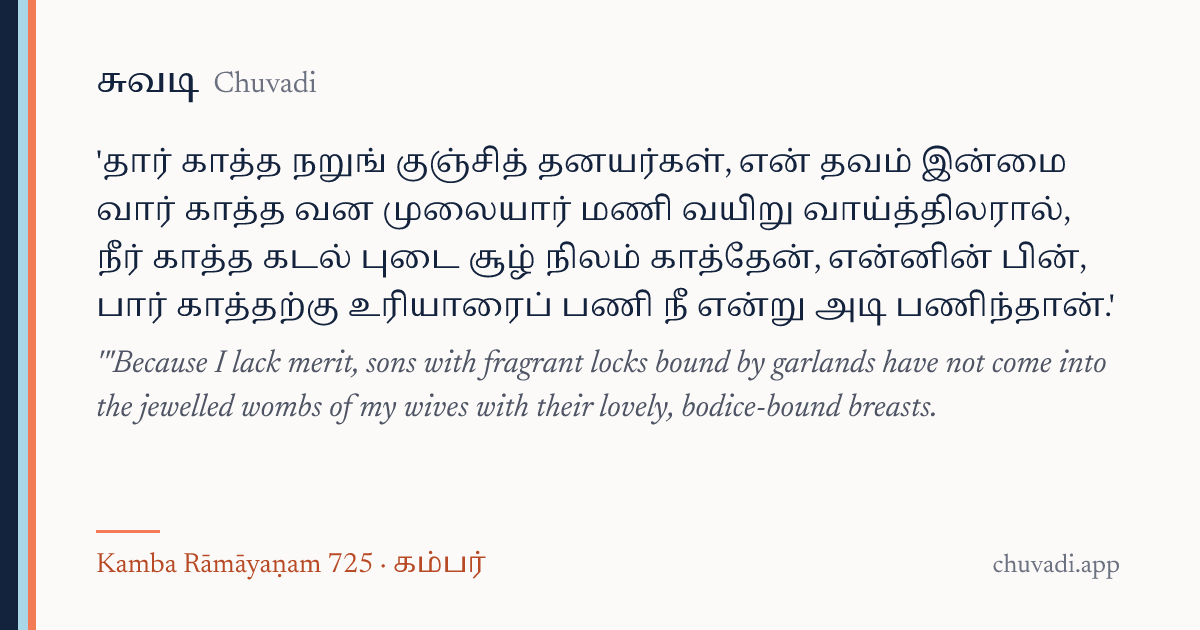
கம்பராமாயணம் 725 · பால 11.16
பாடல் · The poem
Tap a word to see its gloss in the commentary and where else it occurs.
பாட வேறுபாடு · Project Madurai reads
பொருள் · Meaning in Tamil
என் தவம் இன்மை - (முற்பிறப்பில்) நான் நற்றவம் செய்யாமையால்; தார் காத்த - பூமாலை யணிகின்ற; நறுங்குஞ்சி - நறுமணமுள்ள முடியை உடைய; தனயர்கள் - மைந்தர்கள்; வார் காத்த வனமுலையார் - கச்சு அணிந்த அழகிய தனங்களையுடைய என் மனைவியரின்; மணி வயிறு வாய்த்திலர் - அழகிய கருப்பத்தி(ல்) தோன்றவில்லை; ஆல் - ஆதலால்; நீர் காத்த கடல் காத்த - நீர் நிறைந்த கடலால் சூழப்பட்ட; நிலம் காத்தேன் - நிலவுலகம் முழுவதையும் ஆட்சி புரிந்த; என்னின்பின் - எனக்குப் பின்பு; பார் காத்தற்கு - இந்த உலகைக் காப்பதற்கு; உரியாரை - உரிய நல்ல மைந்தரை; நீ பணி என்று - (நான் பெறுமாறு) நீ அருள் செய்க என்று கூறி; அடி பணிந்தான் - (தசரதன் அக் கலைக்கோட்டு முனிவரின்) திருவடிகளை வணங்கினான்.
'கோசலைதன் மணிவயிறு வாய்த்தவனே' (பெருமாள் திரு. 8: 1). வயிறு வாய்த்தல் - பண்புடைய மக்களைக் கருப்பத்தில் கொள்ளுதல்.
ஆங்கிலம் · English translationAI
Translation
- '"Because I lack merit, sons with fragrant locks bound by garlands
- have not come into the jewelled wombs of my wives with their lovely, bodice-bound breasts.
- I have guarded the land girdled by the water-holding sea; after me,
- grant me those fit to guard the earth," he said, and bowed at his feet.'
What the poem says
Tacarataṉ begs the sage Kalaikkōṭṭu Muṉivaṉ for help. Because of some lack of merit in a past life, he says, no son has been born to his queens. He has ruled the sea-girt earth, but who will protect it after him? He asks for sons fit to rule and bows at the sage's feet.
The commentary compares a line of Kulacēkara Āḻvār praising Irāmaṉ as the one who graced Kōcalai's womb.