



கம்பராமாயணம் 7252 · யுத்த 14.194
பாடல் · The poem
Tap a word to see its gloss in the commentary and where else it occurs.
பாட வேறுபாடு · Project Madurai reads
பொருள் · Meaning in Tamil
உற்றவாறு என்றும் - (இராவணன் அம்புகள்) தாக்கிய விதம் (என்னே!) என்றும்; ஒன்று நூறாயிரம் உருவா - ஒருமலை, பல்லாயிரம் துண்டுகளாக; இற்றவாறு என்றும் - சிதைந்த விதம் (என்னே!) என்றும்; இடிப்புண்டு - (அம்மலைகள் ஒன்றோடு ஒன்று) மோதி; பொடிப் பொடியாகி - தூள் தூளாக மாறி; அற்றவாறு என்றும் - அழிந்தவிதம் (என்னே!) என்றும்; அரக்கனை - இராவணனை (பார்த்து); கொடியோன் - இந்தக் கொடியவன்; அடுசிலை கற்றவாறு என்றும் - பகைவரை அழிக்க வில் வித்தை கற்றிருக்கிற திறம் (என்னே!) என்றும் கூறி; வானவர் கைத்தலம் குலைந்தார் - தேவர்கள் கைநடுக்கம் உற்றனர்
வானவர் எறிந்த மலைகள் இராவணன் அம்பால் அழிவதைக் கண்ட தேவர்கள் வேறு ஒன்றும் செய்ய இயலாமையால் “உற்றவா என்னே! இற்றவா என்னே! அற்றவா என்னே! கற்றவா என்னே!” என்று அடுக்கி வியந்தனர்.
ஆங்கிலம் · English translationAI
Translation
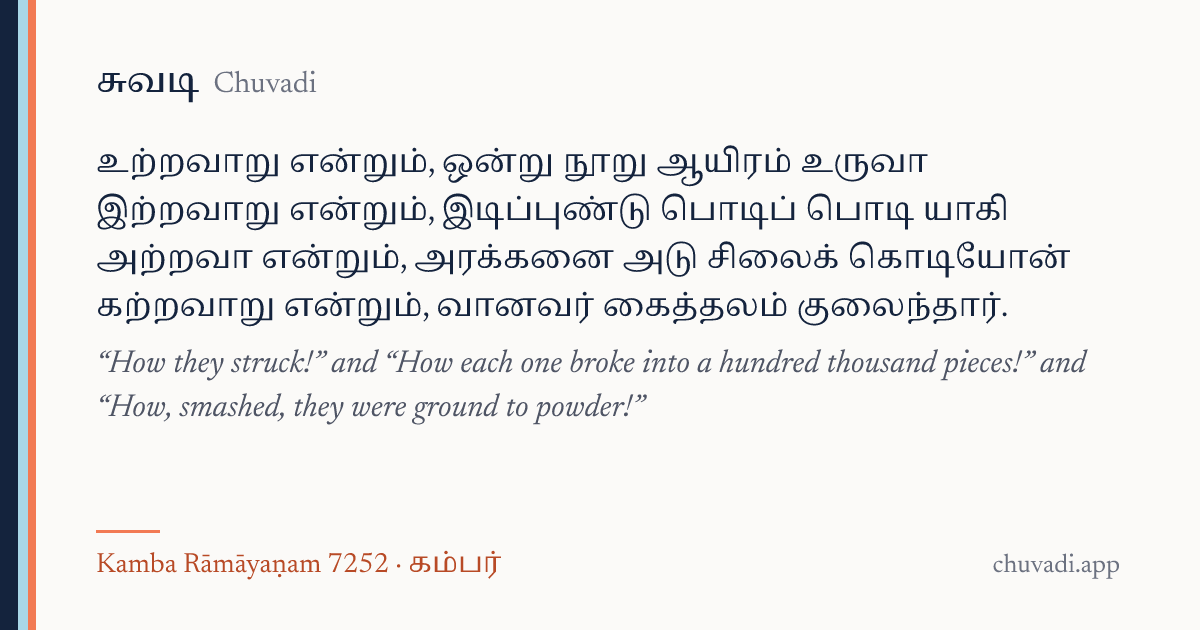
- “How they struck!” and “How each one broke
- into a hundred thousand pieces!” and “How, smashed, they were ground to powder!”
- and “How this cruel one has learned the killing bow!” they said of the demon,
- and the gods wrung their hands.
What the poem says
The gods watch, helpless, and can only exclaim: how the arrows struck, how each mountain shattered into a hundred thousand pieces, how they were ground to dust, and how well this villain has learned his archery. They wring their hands in dismay.
The four exclamations rhyme in the Tamil.