



கம்பராமாயணம் 7260 · யுத்த 14.202
பாடல் · The poem
Tap a word to see its gloss in the commentary and where else it occurs.
பாட வேறுபாடு · Project Madurai reads
பொருள் · Meaning in Tamil
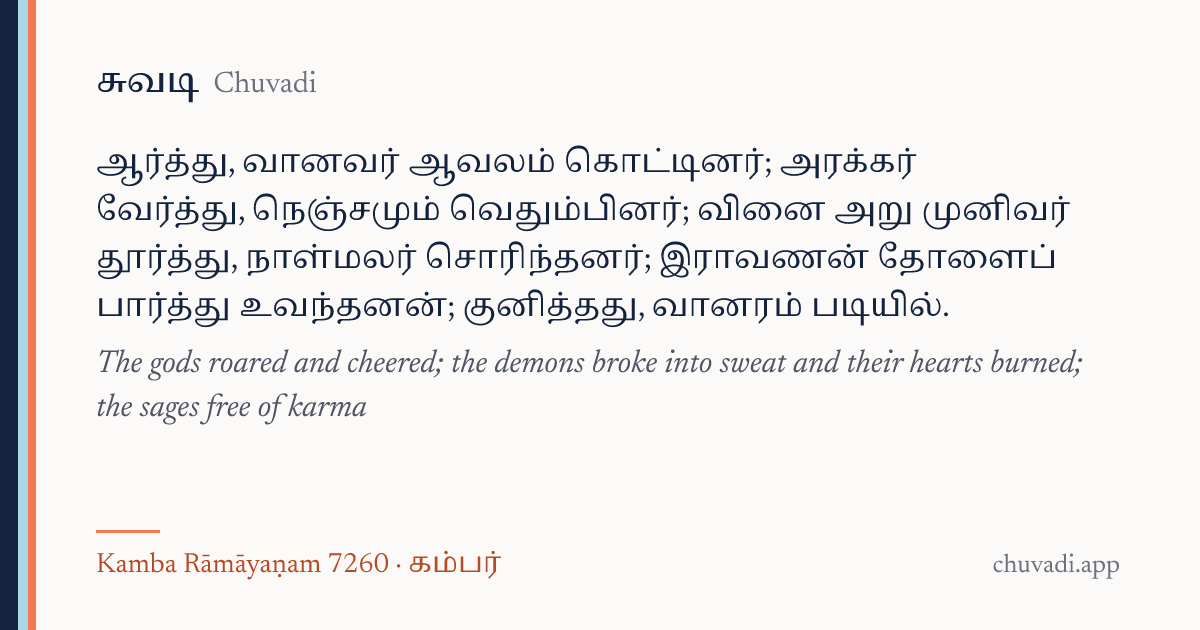
வானவர் ஆர்த்து ஆவலம் கொட்டினர் - தேவர்கள் ஆர்ப்பரித்து ஆரவாரம் செய்தனர்; அரக்கர்கள் வேர்த்து நெஞ்சமும் வெதும்பினர் - (இது கண்டு) அரக்கர்கள் உடல்களும் வியர்த்து உள்ளமும் கொதித்தனர்; வினை அறு முனிவர் - இருவினைகளையும் வென்ற முனிவர்கள்; நாள்மலர் சொரிந்து தூர்த்தனர் - அன்றலர்ந்த மலர்களைத் தூவிப் (போர்க்களத்தை) நிறைத்தார்கள்; வானரம் படியில் குனித்தது - வானரச் சேனை தரையின் மேல் குதித்துக் குதித்தாடியது; இராவணன் தோளைப் பார்த்து உவந்தனன் - இராவணனோ இலக்குவன் தோள் ஆற்றலைப் பார்த்து உவந்த வண்ணம் நின்றான். ஆவலங்கொட்டல் - வெற்றி கண்டு ஆவென்று வாய்கொட்டி யார்த்தல். “குரங்கு நல்வலம் குலைந்தது என்று ஆவலம் கொட்டி” (கம்ப. 5802) இராவணன் பகைவர் வீரத்தை வியக்கும் பண்பை “தோளைப் பார்த்து உவந்தனன்” என்ற தொடர் உணர்த்தும். இலக்குவன் வீரச் செயல் கண்டு விண்ணும் மண்ணும் மகிழ்ந்தது போலவே பகைவன் இராவணனும் மகிழ்ந்தான் என்று கூறிய வீர நயப்பினை உணர்க.
ஆங்கிலம் · English translationAI
Translation
- The gods roared and cheered; the demons
- broke into sweat and their hearts burned; the sages free of karma
- heaped fresh flowers, showering them down; Irāvaṇaṉ looked at those shoulders
- and was glad; and the monkeys danced upon the ground.
What the poem says
The gods cheer, the demons sweat and seethe, sages who are free of karma shower flowers, and the monkeys dance on the ground for joy.
Irāvaṇaṉ, looking at the strength of Ilakkuvaṉ's arms, is pleased too. Once again he shows a warrior's readiness to admire an enemy's valour.