



கம்பராமாயணம் 7277 · யுத்த 14.219
பாடல் · The poem
Tap a word to see its gloss in the commentary and where else it occurs.
பொருள் · Meaning in Tamil
மாணியாம்- (மாவலிக்காக) வாமனம் பிரம்மச்சாரியாய்; உலகளந்த நாள் - மூன்று உலகங்களையும் (ஈரடியால்) அளந்த நாளில்; அவனுடை வடிவை - அந்தப் பரம்பொருளின் வடிவத்தை; ஆணியாம் உணர் மாருதி - சிறப்பாக உணர்ந்துள்ள அனுமன்; அதிசயம் உற்றான் - வியப்பினையடைந்தான்; காணியாகப் பண்டு உடையனாம் - (திருமாலின் வடிவினைத் தாங்கும் பேற்றினை காணியாட்சியாக முன்பே பெற்றிருந்தவனாகிய; ஒரு தனிக்கலுழன் - ஒப்பற்ற கருடன்; நாணினான் - (அப்பெருமை அனுமனால் பங்கிடப்பட்டதறிந்து) வெட்கமுற்றான்; மற்றை அனந்தனும்; தலை நடுக்குற்றான்- (இறைவனைத் தாங்கும் மற்றொருவனாகிய) ஆதிசேடனும் தலை நடுக்கம் கொண்டான்.
ஓங்கி உலகளந்த பெருமான் வடிவமதனை, தான் தாங்க நேர்ந்த செயலை எண்ணி அனுமன் வியப்புற்றான். "பத்துடையடியவர்க் கெளியவன்; பிறர்களுக்கரிய வித்தகன் நம் அரும்பெறல் அடிகள்" (திருவாய். 1:3:1) என்னும் இறைவனின் அன்பைச் சிறப்பாக உணர்ந்துள்ள அறிஞன் மாருதியாதலின், "அவனுடை வடிவை ஆணியாய் உணர் மாருதி” என்றார். உலகளந்த நாளில், இவ்வுலகம் முழுதும் அவன் ஒரு திருவடிக்கு உள்ளடங்கினதாக, இன்றோ அவன் திருவடிவம் முழுதும் தன் தோள்களுக்குள் அடங்கி நிற்பது கண்டு, "அதிசயம் உற்றான்” என அழகுறக் கூறினார். பரம்பொருளின் திருவடிவைத் தாங்கும் பேற்றைப் பரத்திலும் வியூகத்திலும் பெற்றுள்ள திருவனந்தாழ்வானும், கருடனும், அவதாரத்தில் அனுமன் தாங்கும் பேறு பெற்றமை குறித்து நிலை குலைந்தனர் என்பார்; "கலுழன் நாணினன்;” "அனந்தன் தலை நடுக்குற்றான்" என்றார். திருவடி தாங்கும் பேற்றால் கருடன் "பெரிய திருவடி” என்றும், அனுமன் "திருவடி" என்றும் வைணவர்களால் போற்றப்படுவது மரபாயிற்று.
ஆங்கிலம் · English translationAI
Translation
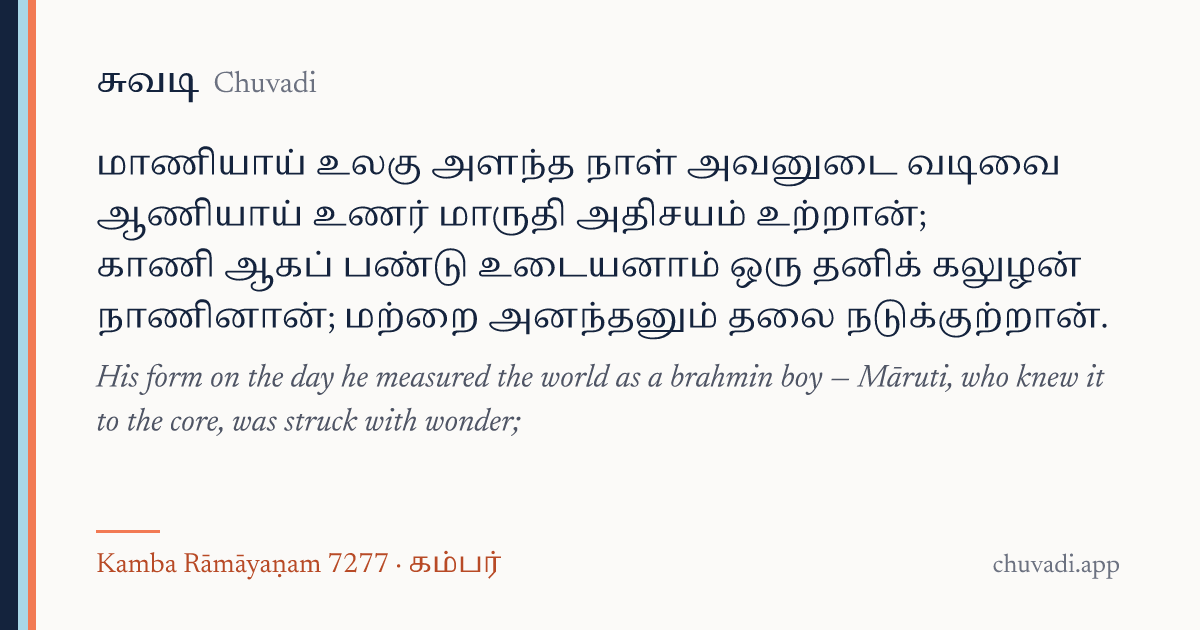
- His form on the day he measured the world as a brahmin boy —
- Māruti, who knew it to the core, was struck with wonder;
- the matchless Kaluḻaṉ, who of old held this as his own birthright,
- was abashed; and Anantaṉ too shook his heads.
What the poem says
Aṉumaṉ marvels that he now carries on his shoulders the very Lord who, as the dwarf Vāmaṉa, grew to measure all the worlds in two strides. Then the whole world fitted under one of his feet; now his whole form rests on Aṉumaṉ.
Two others had this honour before: Garuḍa (Kaluḻaṉ), the Lord's eagle mount, and Anantaṉ (Ādiśēṣa), the serpent he rests on. Garuḍa is abashed and the serpent trembles to see their privilege shared. Vaiṣṇavas call Garuḍa the 'great Tiruvaṭi' and Aṉumaṉ simply 'Tiruvaṭi', for both bear the Lord.