



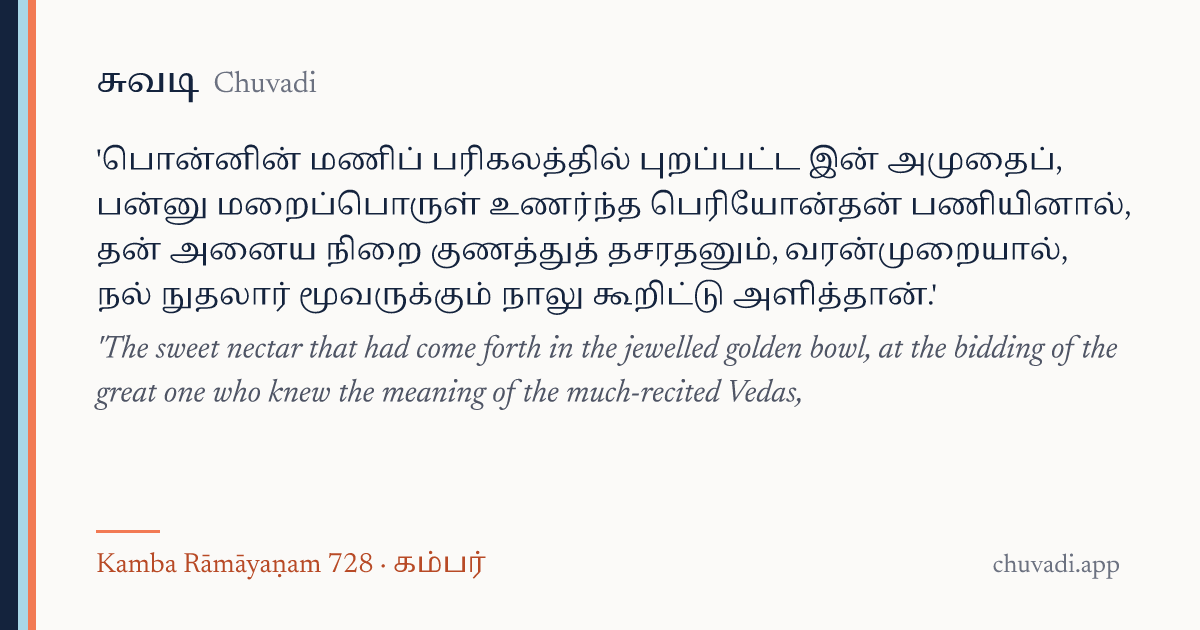
கம்பராமாயணம் 728 · பால 11.19
பாடல் · The poem
Tap a word to see its gloss in the commentary and where else it occurs.
பாட வேறுபாடு · Project Madurai reads
பொருள் · Meaning in Tamil
பொன்னின் மணி - பொன்னாலாகிய அழகிய; பரி கலத்தில் - பாத்திரத்துடன்; புறப்பட்ட இன் அமுதை - வெளிப்பட்ட அந்த இனிய உணவை; பன்னு மறைப் பொருள் - சிறப்பாகச் சொல்லப்படுகின்ற வேதங்களின் பொருள்களை; உணர்ந்த பெரியோன்தன் - அறிந்த (அறிவொழுக்கங்களில் மேம்பட்ட) அக் கலைக்கோட்டு முனிவனது; பணியினால் - கட்டளையால், தன் அனைய - தனக்குத் தானே நிகரான; நிறைகுணத்து - நிறைந்த நற்பண்புகளைக் கொண்ட; தசரதனும் - தசரத மன்னனும்; வரன்முறையால் - வரிசை முறைப்படி; நல் நுதலார் மூவருக்கும் - அழகான நெற்றியுடைய (கோசலை முதலான) பட்டத்தரசிகள் மூவருக்கும்; நாலு கூறு இட்டு - நான்கு பங்காக்கி; அளித்தான் - கொடுத்தான்.
மூன்று பங்குகளை முறையே கோசலை, கைகேயி, சுமித்திரை ஆகியோர்க்குக் கொடுத்து எஞ்சிய நான்காம் பங்கினை மீண்டும் சுமித்திரைக்கு அளித்தான் என்ப.
ஆங்கிலம் · English translationAI
Translation
- 'The sweet nectar that had come forth in the jewelled golden bowl,
- at the bidding of the great one who knew the meaning of the much-recited Vedas,
- Tacarataṉ, full of virtue and equalled only by himself, in due order
- divided into four portions and gave to his three queens of the lovely brow.'
What the poem says
At the sage's instruction, Tacarataṉ divides the divine pudding into four portions and gives them to his three queens in order of rank. Tradition says Kōcalai, Kaikēyi and Cumittirai each received one share, and the fourth went again to Cumittirai, which is why she bore twins.