



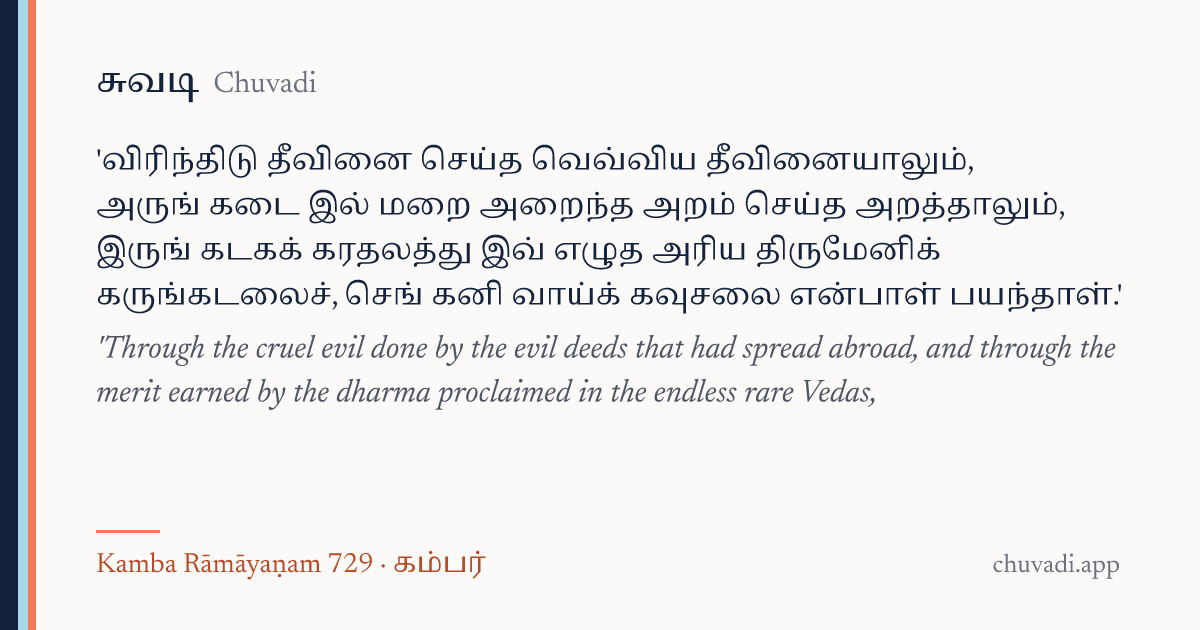
கம்பராமாயணம் 729 · பால 11.20
பாடல் · The poem
Tap a word to see its gloss in the commentary and where else it occurs.
பாட வேறுபாடு · Project Madurai reads
பொருள் · Meaning in Tamil
விரிந்திடு தீவினை - (உலகில்) பரவிய பாவங்கள்; செய்த வெவ்விய - பண்ணின கொடிய; தீவினையாலும் - பாவச் செயலாலும்; அருங் கடை இல் - (அறிவதற்கு) அரிய எல்லையில்லாத; மறை அறைந்த - வேதங்களில் சொல்லப்பட்டுள்ள; அறம் செய்த - கருமங்கள் செய்த; அறத்தாலும் - தருமத்தாலும்; செங்கனிவாய் - சிவந்த கொவ்வைக் கனி போன்ற வாயையுடைய; கவுசலை என்பாள் - (மூத்தவளான) கவுசலை எனப்படுபவள்; இருங் கடகக் கரதலத்து - பெரிய கடகம் என்னும் அணி அணிந்த கைகளையும்; எழுத அரிய திருமேனி - சித்திரத்தில் எழுத முடியாத அழகிய உடலையுமுடைய; இக் கருங்கடலை - கடல் போன்ற கரிய நிறமுடைய இந்த இராமனை; பயந்தாள் - பெற்றாள்.
பாவம் அழியவும், புண்ணியம் வளரவும் இராமன் இவ்வுலகில் அவதாரம் எடுத்தான் என்பதை 'தீவினை செய்த தீவினையாலும் அறம் செய்த அறத்தாலும் பயந்தாள்' எனக் குறிப்பிட்டார். கடல் - உவமையாகு பெயர்.
ஆங்கிலம் · English translationAI
Translation
- 'Through the cruel evil done by the evil deeds that had spread abroad,
- and through the merit earned by the dharma proclaimed in the endless rare Vedas,
- she called Kavucalai, of the red fruit lips, bore this dark sea
- with great bracelets on his hands and a sacred body beyond any painter's skill.'
What the poem says
Kōcalai, the senior queen, gives birth to Irāmaṉ, dark as the ocean, with heavy bracelets on his arms and a body too beautiful to paint. The poet plays on words: it was the "evil done by evil" and the "merit done by merit" that brought him forth — that is, he was born both to destroy the sin spreading through the world and to reward and increase righteousness.