



கம்பராமாயணம் 7285 · யுத்த 14.227
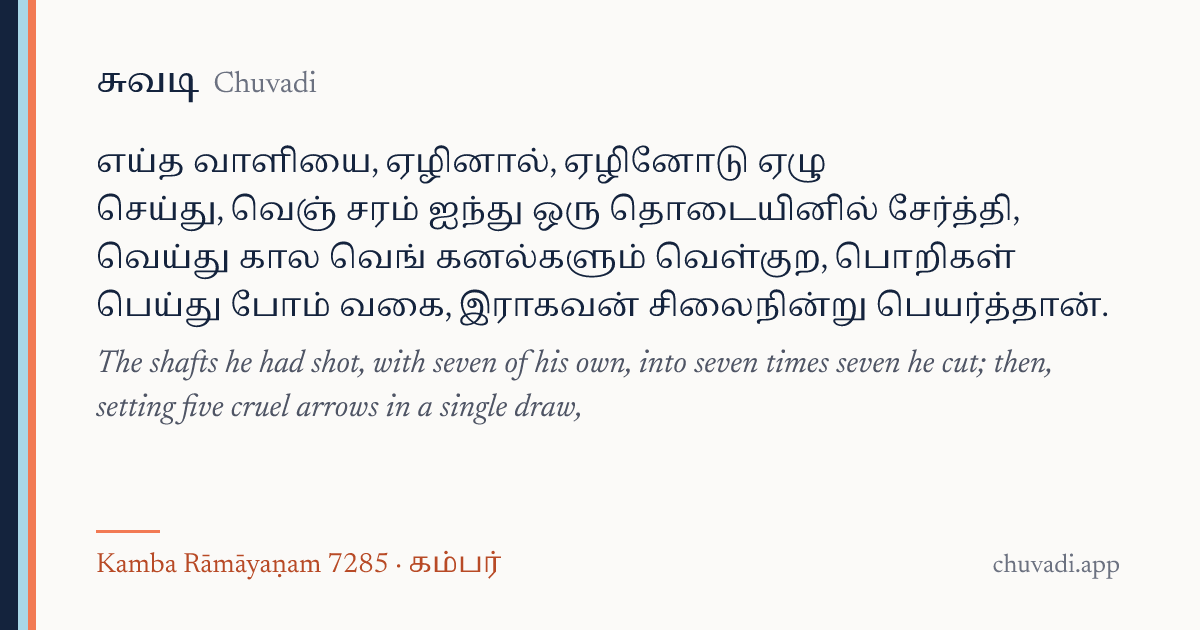
பாடல் · The poem
Tap a word to see its gloss in the commentary and where else it occurs.
பாட வேறுபாடு · Project Madurai reads
பொருள் · Meaning in Tamil
எய்த வாளியை - (இராவணன்) விடுத்த அம்புகளை; ஏழினால் - தன்னுடைய ஏழு அம்புகளால்; ஏழினோடு ஏழு எய்து - (ஒவ்வொன்றும்) ஏழேழு நாற்பத்தொன்பது துண்டுகள் ஆகுமாறு துண்டித்து; ஒரு தொடையினில் - ஒருமுறை தொடுக்கையில்; வெம்சரம் ஐந்து சேர்த்தி - கொடுங்கணைகள் ஐந்தினையும் ஒருசேரப் பொருத்தி; வெய்து கால வெங்கனல்களும் - வெய்யது ஆகிய ஊழிக்கால நெருப்புகளும்; வெள்குற - நாணுமாறு; பொறிகள் பெய்து - தீப்பொறிகள் கக்கியவாறு; போம்வகை - செல்லும் வண்ணம்; இராகவன் சிலை நின்று பெய்தான் - இராமபிரான் தன் வில்லினின்று எய்தான்.
ஆங்கிலம் · English translationAI
Translation
- The shafts he had shot, with seven of his own, into seven times seven
- he cut; then, setting five cruel arrows in a single draw,
- so that, shaming even the hot fires of doomsday, they sped
- pouring out sparks, Irākavaṉ sent them from his bow.
What the poem says
Irāmaṉ answers with seven arrows of his own, which split each of Irāvaṇaṉ's arrows into forty-nine pieces. Then he fits five arrows to his bow at once and shoots them, blazing with sparks that put the fires of the world's end to shame. Irākavaṉ (Rāghava) means descendant of Raghu, a name of Irāmaṉ.