



கம்பராமாயணம் 7308 · யுத்த 14.250
பாடல் · The poem
Tap a word to see its gloss in the commentary and where else it occurs.
பாட வேறுபாடு · Project Madurai reads
பொருள் · Meaning in Tamil
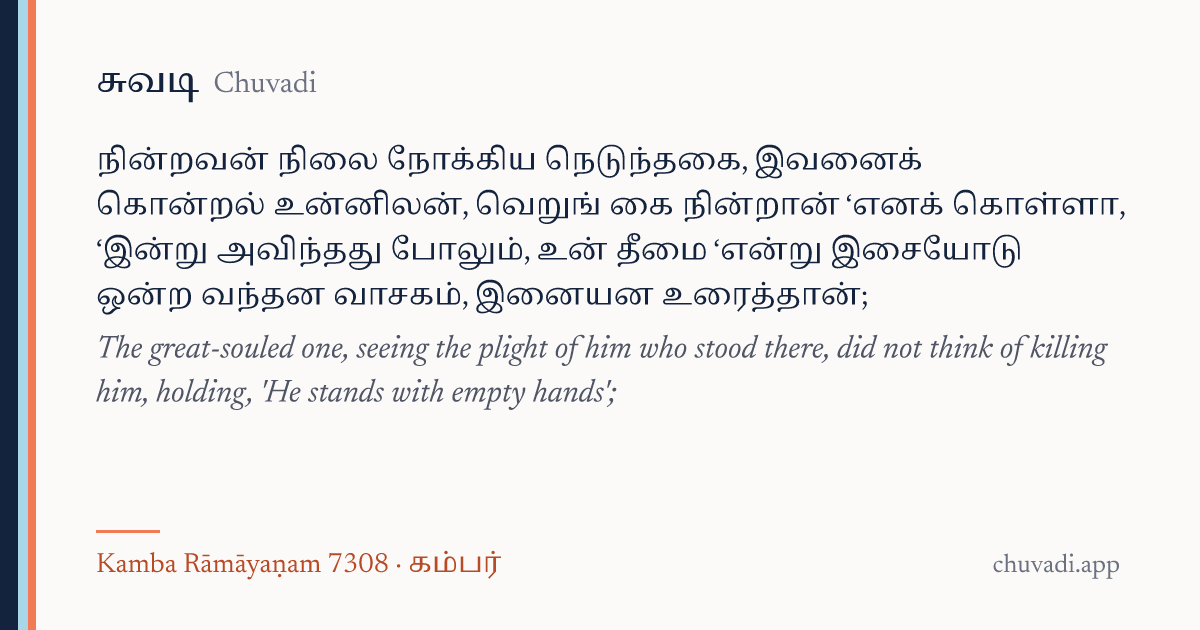
நின்றவன் நிலை நோக்கிய நெடுந்தகை - (நிலம் கிளைத்து நின்றவனாகிய) இராவணனது (அவல) நிலையினைக் கண்ணுற்ற பெரும்பண்பினனாகிய இராமபிரான்; வெறுங்கை நின்றான் - (கருவி ஏதுமின்றி) வெறுங்கையோடு நிற்கின்றான்; எனக் கொள்ளா - என்று மனத்துட்கொண்டு; இவனைக் கொன்றல் உன்னிலன் - இவனைக் கொல்ல நினையாதவனாய்; இன்று உன் தீமை அவிந்தது போலும் - இன்றோடு உன் தீய செயல்கள் அழிந்துவிட்டன போலும்; என்று இசையோடு - என்று (உலகு உள்ளளவும் நிற்கும்) புகழோடு; ஒன்ற வந்தன வாசகம் இனையன உரைத்தான் - பொருந்த வந்தவையான இவ்வாசகங்களை உரைப்பான் ஆயினான்.
கொல்லல் என்பது செய்யுள் ஆதலின் எதுகை நோக்கிக் கொன்றல் என வந்தது. நிராயுதனாய் நிற்பவன் பகைவனே யாயினும் இரக்கத்திற்குரியவன் என நினைந்ததால் இராமனை "நெடுந்தகை" என்றழைத்து மகிழ்கிறார். தாடகை பெண் எனக் கண்டு, கொல்லத் தயங்கிய போது, "பெண் என மனத்திடைப் பெருந்தகை நினைத்தான்' (கம்ப. 374) என்றதும் காண்க. இராவணன் உள்ளத்தில் பாவத்தீயாகிய காமத்தீ ஆணவத்தீ முதலிய தீக்கள் எரிந்து கொண்டிருந்தனவாதலின், "இன்று அவிந்தது போலும் உன் தீமை?” என்று பெருமான் அழகுறக் கேட்டான்.
ஆங்கிலம் · English translationAI
Translation
- The great-souled one, seeing the plight of him who stood there, did not think of killing him,
- holding, 'He stands with empty hands';
- 'It seems your evil is quenched today' — this, and words like it,
- that came in keeping with his fame, he spoke.
What the poem says
Irāmaṉ sees his enemy standing weaponless and will not kill a defenceless man. Instead he speaks to him. The poet calls him 'the great-souled one' for this mercy, as he did when Irāmaṉ hesitated to kill Tāṭakai because she was a woman.
His first words are pointed: the fires burning in Irāvaṇaṉ, lust and pride, seem to have been put out today.