



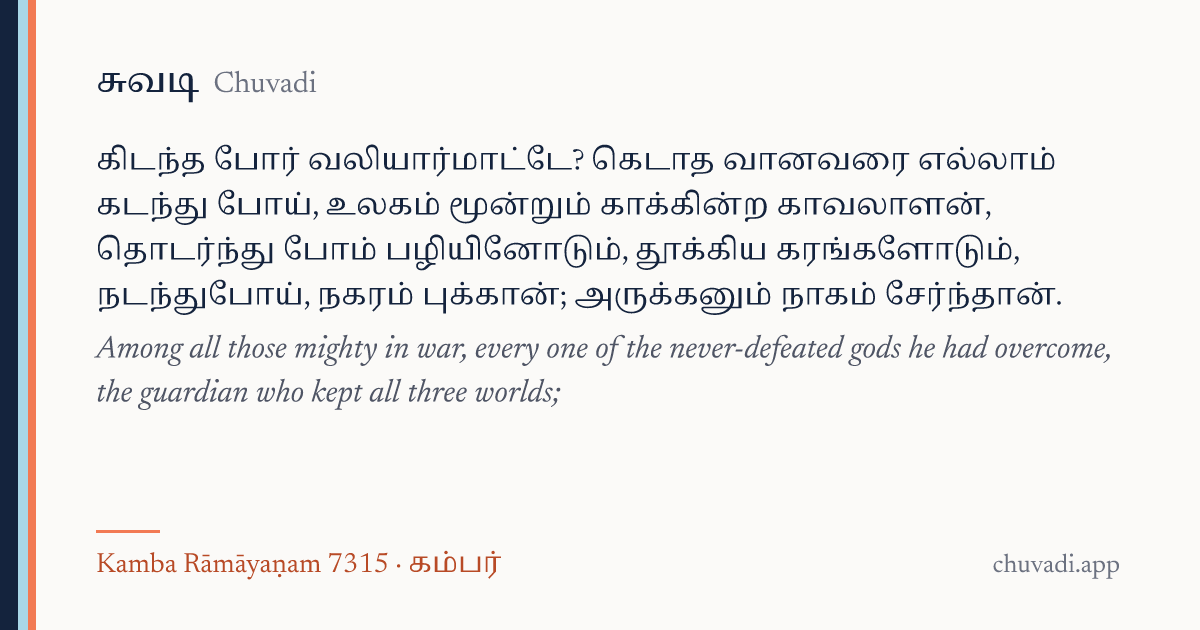
கம்பராமாயணம் 7315 · யுத்த 15.2
பாடல் · The poem
Tap a word to see its gloss in the commentary and where else it occurs.
பொருள் · Meaning in Tamil
கிடந்தபோர் வலியார் மாட்டே - போர் செய்யும் வலிமை பொருந்திய பெருவலியுடையவர்களிடம்; கெடாத வானவரை யெல்லாம் - தோல்வியடையாத தேவர்களை எல்லாம்; கடந்து போம் - வென்று மேல் சிறந்து; உலக மூன்றும் காக்கின்ற காவலாளன் - மூவுலகங்களையும் காக்கும் காவல் தொழிலுடைய மால்போல் விளங்கும் இராவணன்; தொடர்ந்து போம் பழியினோடும் - என்றும் அழியாது பின்பற்றி வருகின்ற பழியுடனும்; தூக்கிய கரங்களோடும் - எதிரியை வெல்ல முடியாது வீணாகத்தொங்கும் இருபது கரங்களோடும்; நடந்து போய் நகரம் புக்கான் - நாணத்தோடு நடந்து போய் இலங்கை நகர் புக்கான்; அருக்கனும் நாகம் சேர்ந்தான் - சூரியன் அத்தகிரியை அடைந்தான்.
இங்கு சூரியன் மறைதல் என்ற காலம் சார் நிகழ்ச்சியின் மூலம் கவிஞர் இராவணனின் வீரமும் புகழும் மறைதல் என்ற கருத்தை வெளிப்படுத்தி உள்ளார்.
ஆங்கிலம் · English translationAI
Translation
- Among all those mighty in war, every one of the never-defeated gods
- he had overcome, the guardian who kept all three worlds;
- now, with the shame that would follow him always, and with his hanging arms,
- he walked on and entered the city; and the sun too went down behind the mountain.
What the poem says
Irāvaṇaṉ, who had beaten the gods and lorded it over the three worlds, now walks into his city on foot, his twenty arms hanging uselessly, carrying a disgrace that will never leave him. At that moment the sun sets: the poet uses the end of the day to mirror the setting of Irāvaṇaṉ's glory.