



கம்பராமாயணம் 7316 · யுத்த 15.3
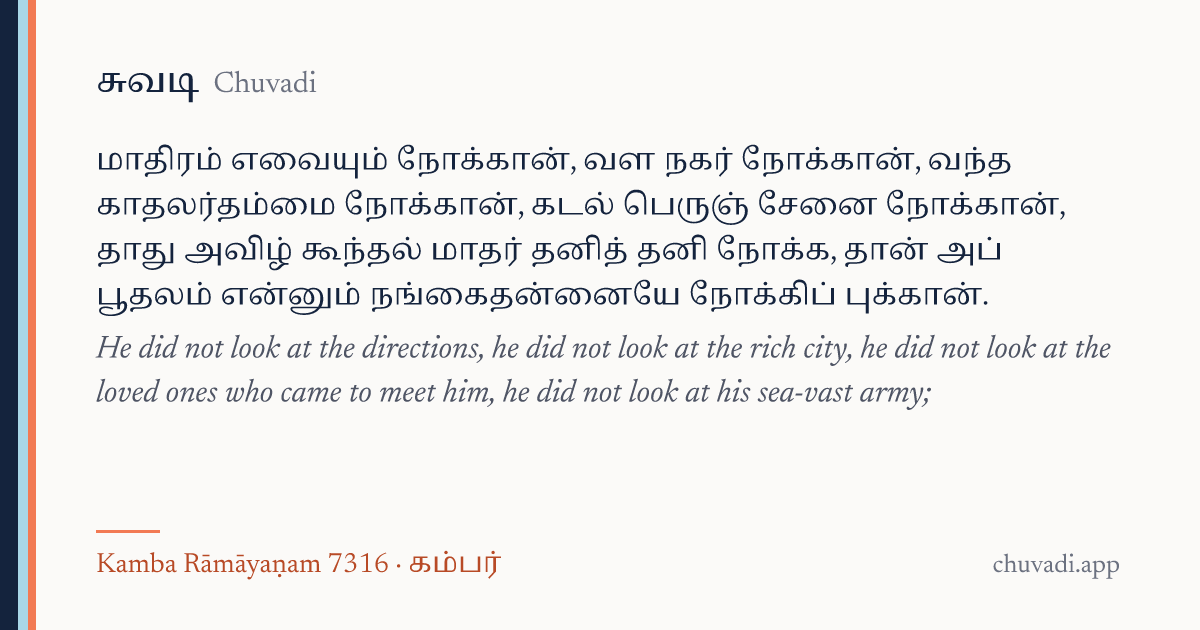
பாடல் · The poem
Tap a word to see its gloss in the commentary and where else it occurs.
பொருள் · Meaning in Tamil
மாதிரம் எவையும் நோக்கான் - தோற்று நாணி நகர் திரும்பும் இராவணன் தான் வென்ற திசைகளை நோக்கானாய்; வளநகர் நோக்கான் - களிக்கின்றார் அலால் கவல்கின்றார் ஒருவருமில்லாத வளநகரை நோக்கானாய்; வந்த காதலர் தம்மை நோக்கான் - வெற்றி பெற்று வந்தபோது வரவேற்றது போல் இப்போதும் வரவேற்க வந்த மக்களையும், மனைவியரையும் நோக்கானாய்; கடல் பெருஞ்சேனை நோக்கான் - புக்க போர் எல்லாம் வெல்ல உதவிய கடல் போல் பரந்த பெருஞ்சேனையை நோக்கானாய், தாது அவிழ் கூந்தல் மாதர்- விரிந்த மலரணிந்த கூந்தலையுடைய மண்டோதரி முதலிய மனைவியர்; தனித்தனி நோக்க - இராவணனின் நிலை கண்டு தனித்தனியாகப் பார்க்க; தான் - இராவணன்; அப்பூதலம் என்னும் நங்கை தன்னையே - பூமி தேவி என்ற பெண்ணையே; நோக்கிப் புக்கான் - பார்த்த வண்ணம் நகரிலுள்ள அரண்மனை முற்றத்தில் புகுந்தான்.
தோல்வியால் ஏற்பட்ட நாணத்தால் தலை குனிந்து புக்க இராவணன் பூமிதேவி என்ற பெண்ணையே நோக்கி முகங்கவிழ்த்து வந்தான். உழுகின்ற கொழு முகத்தில் உதிக்கின்ற கதிரொளி போல் தொழுந்தகைய நன்னலத்துப் பெண்ணரசியாம் சீதை மீது கொண்ட காதல் நோயால் தோற்ற இராவணன் சீதை தோன்றிய பூதலம் என்னும் நங்கை தன்னையே நோக்கிய நயம் காண்க. பிறவற்றை நோக்காது ஒன்றையே நோக்கினான் இராவணன் என்ற கருத்து அவன் மனக்குழப்பத்தையும் தோல்வியால் அடைந்த நாணத்தையும் விளக்கி நிற்கிறது. யாரையும் நோக்காது குனிந்து செல்லும் இராவணன் அங்கும் பூமகள் என்ற பெண்ணைப் பார்க்க நேர்ந்தது என்பது ஓர் நயம்.
ஆங்கிலம் · English translationAI
Translation
- He did not look at the directions, he did not look at the rich city, he did not look at
- the loved ones who came to meet him, he did not look at his sea-vast army;
- while the women with blossom-loosened hair looked at him, each on her own, he
- went in with his eyes fixed only on that lady called Earth.
What the poem says
Irāvaṇaṉ enters his palace with his head bowed in shame. He does not look at the lands he once conquered, at his prosperous city, at the family who come to greet him as after his victories, or at his vast army. His wives, Maṇṭōtari among them, watch him, but he looks only at the ground.
The poet calls the ground 'the lady Earth', and the commentary notes the irony: Cītai, for whose sake he has been humbled, was born from the earth, found in a ploughed furrow. Even with his eyes down, he cannot escape looking at a woman.