



கம்பராமாயணம் 7319 · யுத்த 15.6
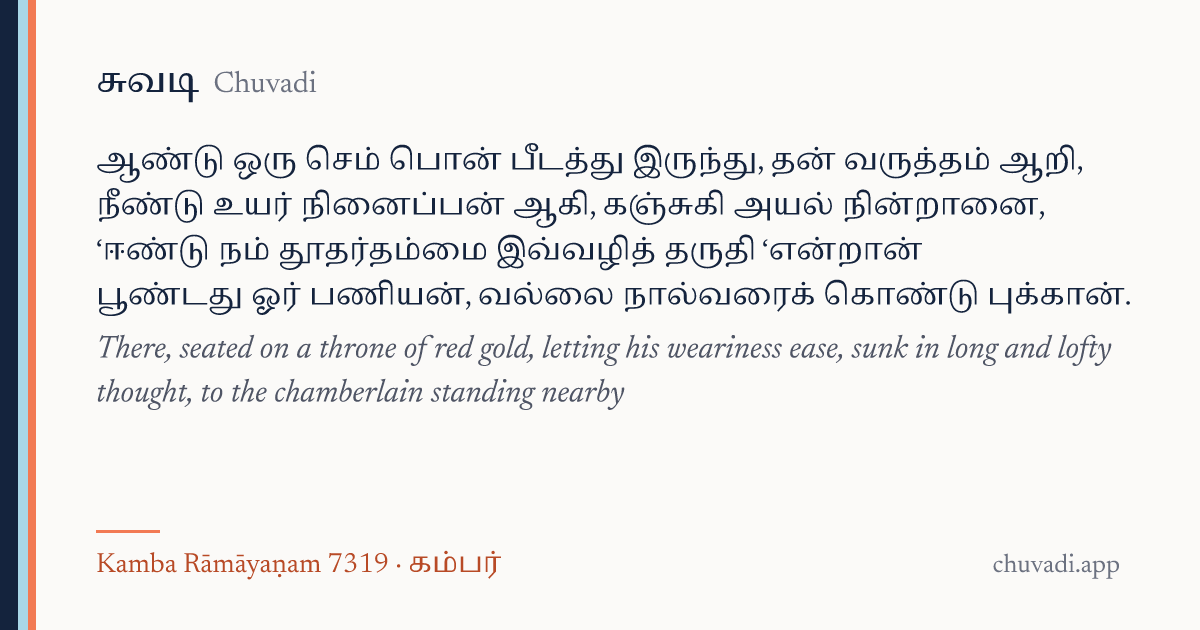
பாடல் · The poem
Tap a word to see its gloss in the commentary and where else it occurs.
பொருள் · Meaning in Tamil
ஆண்டு - அவ்வரண்மனையிடத்தில்; ஒரு செம்பொன் பீடத்து இருந்து - செம்பொன்னால் செய்யப்பட்ட ஒப்பற்ற பீடத்தில் அமர்ந்து; தன் வருத்தம் ஆறி - போரில் ஏற்பட்ட உடல் வருத்தமும் தோல்வியால் ஏற்பட்ட மனவருத்தமும் ஓரளவு தணிந்தவுடனே; நீண்டு உயர் நினைப்பன் ஆகி - இனிமேல் செய்ய வேண்டியதைப் பற்றி மிகப்பெருஞ் சிந்தனையுடையவன் ஆகி; கஞ்சுகி அயல் நின்றானை - அருகில் நின்றவனாகிய மெய்ப்பை புக்கவனாகிய மெய்க்காப்பாளனைப் பார்த்து; ஈண்டு - இப்போதே, நம் தூதர் தம்மை - நம் தூதுவர்களை; இவ்வழித் தருதி என்றான் - இந்த இடத்திற்கு அழைத்து வா என்று கட்டளையிட்டான்; பூண்டதோர் பணியன் வல்லை - அப்பணி தலை மேற்கொண்ட கஞ்சுகி மேற்கொண்ட பணியினை முடித்து விரைவில்; நால்வரைக் கொண்டு புக்கான் - நான்கு தூதரை அழைத்து வந்தான்.
இப்பாடலில் உள்ள "நீண்டு உயர் நினைப்பன் ஆகி” என்ற தொடர் கவனத்தைக் கவருவது; இங்குப் பிறரிடம் கலந்து பேசுதல் இராவணனைப் பொறுத்த அளவு தன் முடிவைப் பிறர் ஏற்கச் செய்தல் என்பதற்கான சடங்காகவே அமைவதை யுணர்த்தவே கவிஞர் மேற்கண்ட தொடரைக் கையாண்டுள்ளார் போலும்.
ஆங்கிலம் · English translationAI
Translation
- There, seated on a throne of red gold, letting his weariness ease,
- sunk in long and lofty thought, to the chamberlain standing nearby
- he said, 'Bring our messengers here at once';
- and the servant, taking up the task, quickly came in with four of them.
What the poem says
Seated on a golden throne, Irāvaṇaṉ rests a little and then falls into deep thought about what to do next. He orders his chamberlain to fetch his messengers, and four are quickly brought.
The commentary remarks that the phrase 'long and lofty thought' shows that Irāvaṇaṉ makes his decisions alone; consulting others is for him only a formality to have them accept what he has already decided.