



கம்பராமாயணம் 7326 · யுத்த 15.13
பாடல் · The poem
Tap a word to see its gloss in the commentary and where else it occurs.
பொருள் · Meaning in Tamil
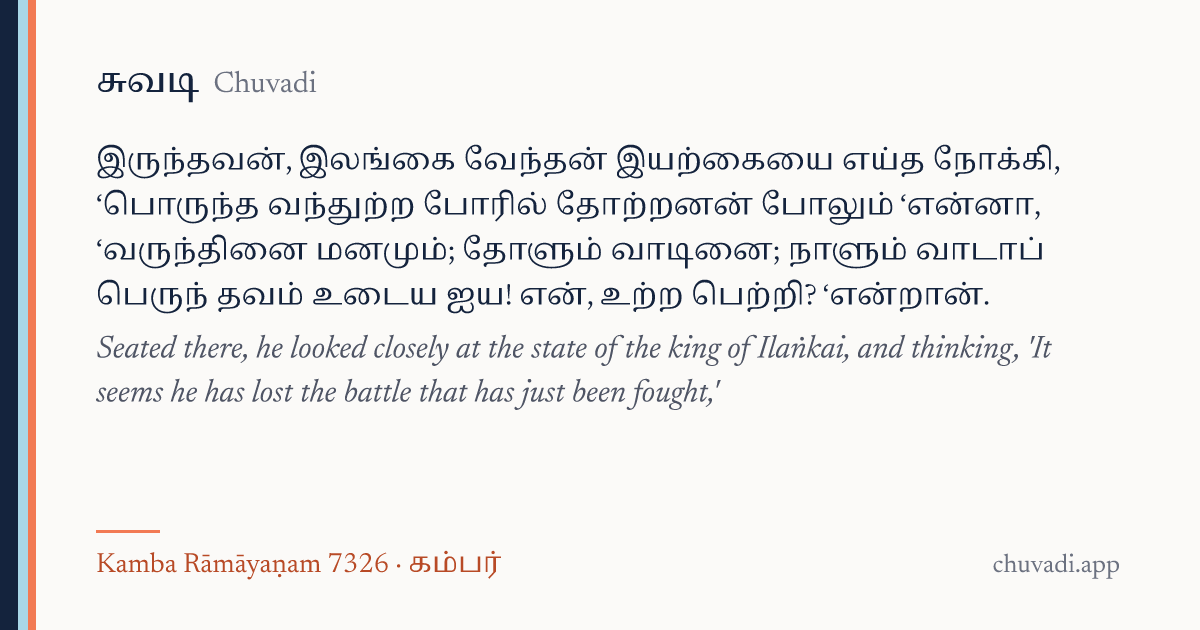
இருந்தவன் - தவிசுடைப் பீடத்தில் இருந்தவன் ஆகிய மாலியவான்; இலங்கை வேந்தன் - இராவணனுடைய, இயற்கையை எய்த நோக்கி - நிலைமையை உற்றுப் பார்த்து; பொருந்த வந்துற்ற போரில் தோற்றனன் போலும் என்னா - அண்மையில் நெருங்கி வந்த போரில் இவன் தோற்றுவிட்டான் போலும் என்று மனத்தில் எண்ணி; நாளும் வாடாப் பெருந்தவம் உடைய ஐயா - எந்நாளும் கெடாத பெருந்தவ ஆற்றல் பெற்ற ஐயனே; மனமும் வருந்தினை - மனம் வருத்தமுற்றுள்ளாய்; தோளும் வாடினை - யார்க்கும் தோலாத தோள்களும் வாடியுள்ளன; என் உற்ற பெற்றி என்றான் - உற்ற செயல் யாது என வாய்விட்டு வினவினான்.
ஆங்கிலம் · English translationAI
Translation
- Seated there, he looked closely at the state of the king of Ilaṅkai,
- and thinking, 'It seems he has lost the battle that has just been fought,'
- he said, 'Your mind is troubled; your shoulders have drooped; you whose great penance
- never wanes, my lord, what is it that has befallen you?'
What the poem says
Māliyavāṉ studies his grandson's face and guesses that he has been beaten. He gently asks what has happened, addressing him respectfully as one whose great penance never fails: Irāvaṇaṉ's power came from the boons he won by austerities.