



கம்பராமாயணம் 733 · பால 11.24
பாடல் · The poem
Tap a word to see its gloss in the commentary and where else it occurs.
பாட வேறுபாடு · Project Madurai reads
பொருள் · Meaning in Tamil
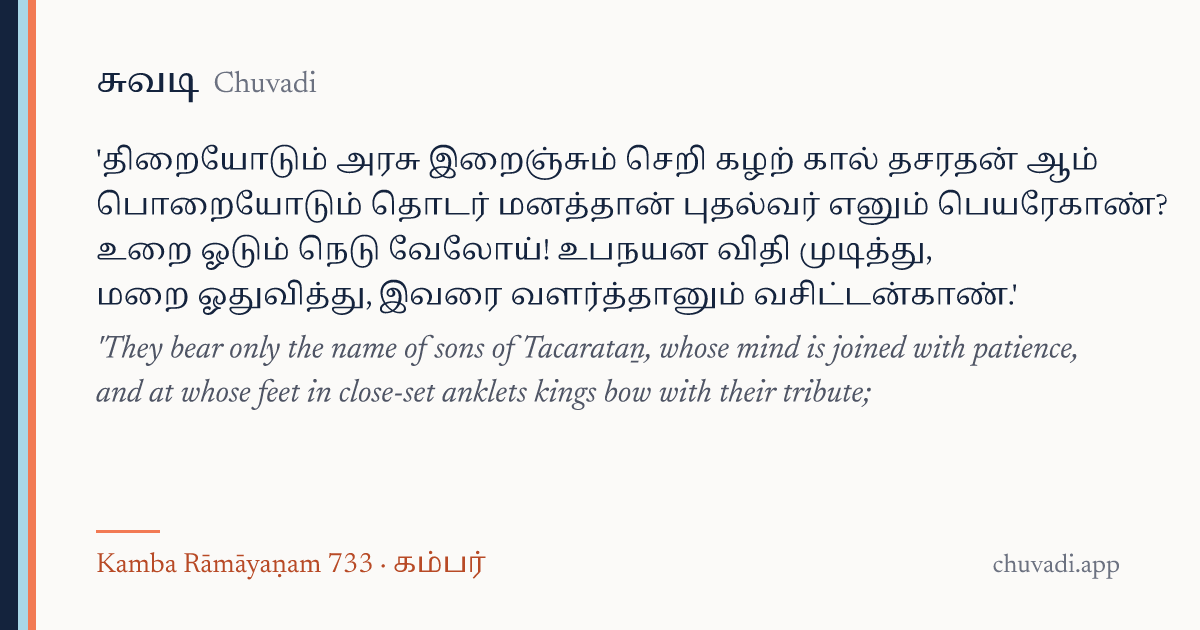
உறை ஓடும் - (பகைவரை வென்று) உறையில் அடங்கும்; நெடு வேலோய் - நீண்ட வேலினை உடையவனே!; திறையோடும் - (இம் மைந்தர்களுக்கு) திறைப் பொருள்கள் கொண்டு வந்து; அரசு இறைஞ்சும் - எல்லா அரசர்களும் வணங்கக் கூடிய; செறி கழல் கால் - நெருங்கிய வீரக்கழல் பூண்ட அடிகளையுடைய தசரதன் ஆம் - தசரத மன்னனாகிய; பொறையோடும் தொடர் - பொறுமைப் பண்புடனே பொருந்திய; மனத்தான் - மனத்தையுடையவனுக்கு; புதல்வர் - மைந்தர்கள்; எனும் பெயரே காண் - என்று சொல்லுகின்ற பெயர் ஒன்று மாத்திரமே; உப நயனம் விதி முடித்து - (ஆனால்) வேத விதிப்படி செய்யத்தக்க உபநயனச் சடங்குகளைச் செய்வித்து; மறை ஓதுவித்து - வேதங்களைப் பயிலுமாறு செய்து; இவரை வளர்த்தானும் - இவர்களை வளர்த்தவன்; வசிட்டன் காண் - வசிட்ட முனிவனே ஆவான்.
தசரதன் நால்வர்க்கும் தந்தை ஆயினும் இக் குமாரர்களின் நன்மையை நாடிச் சகல கலைகளிலும் வல்லவராகுமாறு வளர்த்தமையால் வசிட்டனே உண்மைத் தந்தையெனத் தக்கான் என்றார்.
ஆங்கிலம் · English translationAI
Translation
- 'They bear only the name of sons of Tacarataṉ, whose mind is joined with patience,
- and at whose feet in close-set anklets kings bow with their tribute;
- O you of the long spear that returns to its sheath! He who performed their sacred-thread rites,
- taught them the Vedas and raised them — know that he was Vaciṭṭaṉ.'
What the poem says
Vicuvāmittiraṉ says the princes are Tacarataṉ's sons only in name. It was the sage Vaciṭṭaṉ who invested them with the sacred thread, taught them the Vedas and brought them up in every branch of learning, so he deserves to be called their true father.