



கம்பராமாயணம் 7331 · யுத்த 15.18
பாடல் · The poem
Tap a word to see its gloss in the commentary and where else it occurs.
பொருள் · Meaning in Tamil
மலை உறப் பெரியர் ஆய - மலையை மாறுபட்டுப் பெரிய உடலினை உடைய; வாள் எயிற்று அரக்கர் தானை - கூர்மையான பற்களை உடைய அரக்கரது சேனை; நிலை உறச் செறிந்த வெள்ளம் நூற்று இரண்டு எனினும் - இராமனை நிலையாக நெருங்கி நின்றவை நூற்று இரண்டு வெள்ளம் எனினும்; நேரே குலை உறக்குளித்த வாளி - அவனால் நேராகக் குறி தவறாமல் செலுத்தப்பட்ட அம்புகளின் தொகுதி; குதிரையைக் களிற்றை ஆளை - குதிரைப் படையினையும், யானைப்படையினையும், காலாட்படையினையும்; தலை உறப்பட்டது அல்லால் - தலைகீழ் உறச் செய்ததன்றி; உடல்களில் தங்கிற்று உண்டோ - எந்த உடலிலும் தடைப்பட்டு நின்றதுண்டோ, இல்லை.
இராமன் அம்பை முன்னும் (3880, 3881, 4000) வியந்து பேசுவர்.
ஆங்கிலம் · English translationAI
Translation
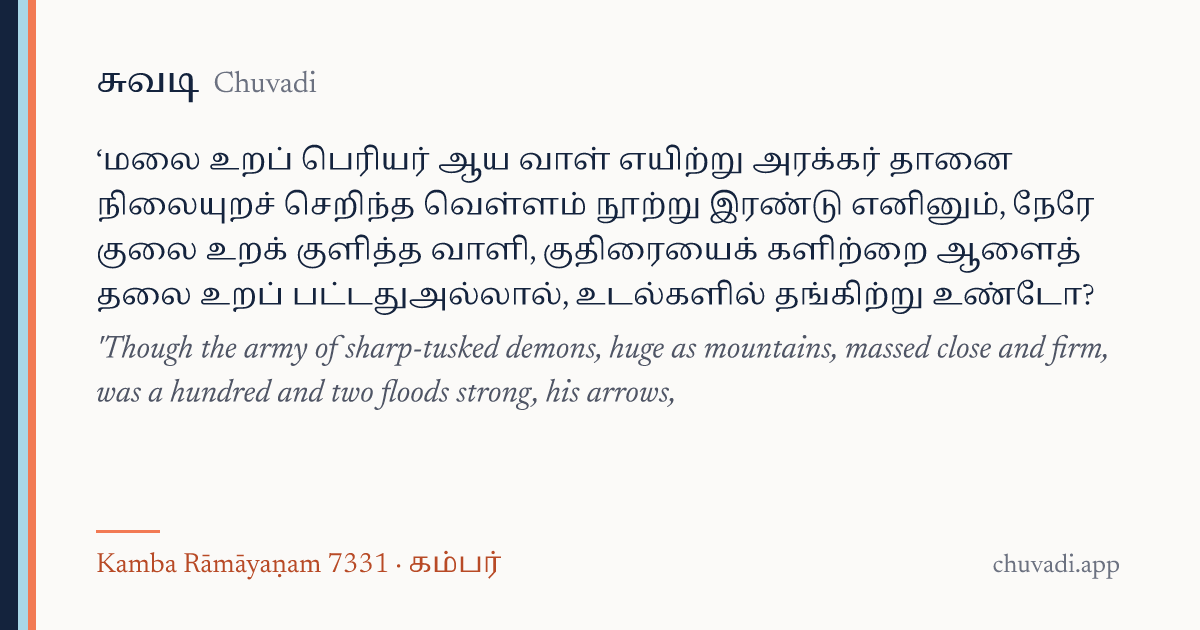
- 'Though the army of sharp-tusked demons, huge as mountains,
- massed close and firm, was a hundred and two floods strong, his arrows,
- plunging straight into their ranks, struck horse and elephant and man
- and laid them headlong; did they ever stop, lodged in a body?'
What the poem says
A 'flood' (veḷḷam) is a vast unit for counting armies. Irāvaṇaṉ says that though his mountain-sized demons stood a hundred and two floods strong, Irāmaṉ's arrows went through cavalry, elephants and foot soldiers alike, never stopping in any body they struck.