



கம்பராமாயணம் 7340 · யுத்த 15.27
பாடல் · The poem
Tap a word to see its gloss in the commentary and where else it occurs.
பொருள் · Meaning in Tamil
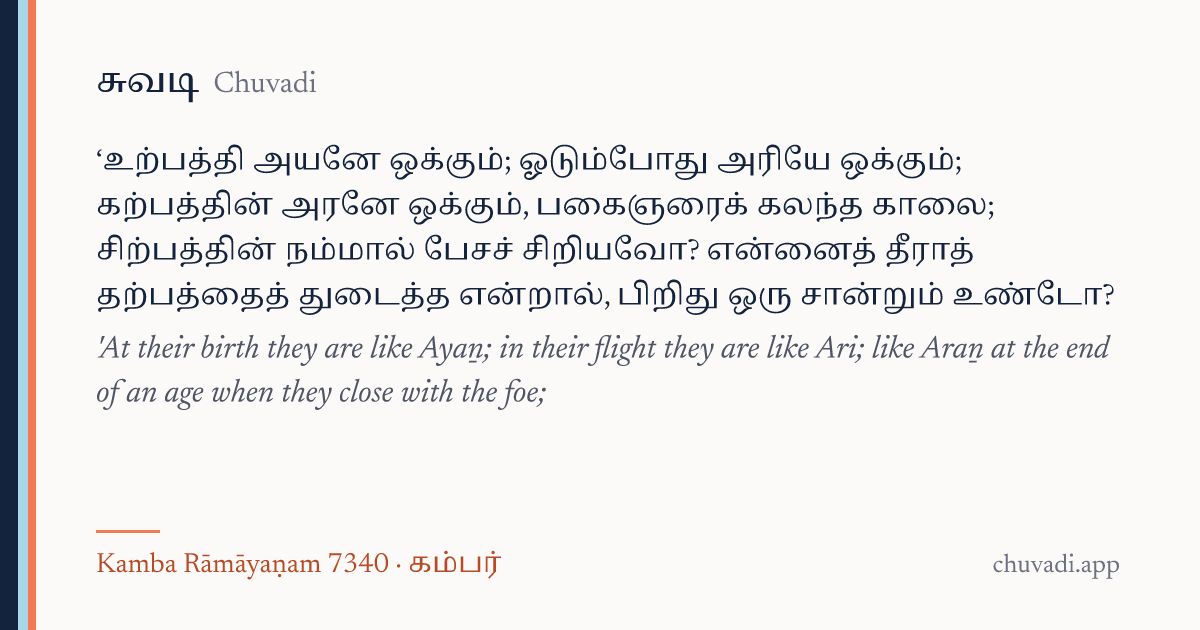
உற்பத்தி அயனே ஒக்கும்- இராமனது அம்புகள் தோன்றும் போது பிரம தேவனை ஒக்கும்; ஓடும் போது அரியே ஒக்கும் - பகைவர் மேல் செல்லும் போது ஆயிரமுகம் உடைய திருமாலை ஒக்கும்; பகைஞரைக் கலந்த காலை - பகைவரை அழிக்கச் சேரும்போது; கற்பத்தின் அரனே ஒக்கும் - யுக முடிவுக் காலத்துச் சங்கார மூர்த்தியை ஒக்கும்; சிற்பத்தின் நம்மால் பேசச் சிறியவோ - அவ்வம்புகளின் தொழில் திறமை நம் போன்றோரால் பேசப்படும் சிறுமையுடையதன்று; என்னை - என் இடமிருந்து; தீராத் தற்பத்தைத் துடைத்த - என்றும் நீங்காத செருக்கையே முழுதும் நீக்கியது என்றால்; பிறிது ஒரு சான்றும் உண்டோ - அதன் ஆற்றற்கு வேறு கரி வேண்டுமோ? வேண்டா என்றவாறு.
காத்தற் கடவுளாகிய அரியைப் போல அம்புகள் தம்மைப் பாதுகாத்து இலக்கை நோக்கிச் செல்லும் என்பது ஓர் பொருள். சிற்பம் - பேச்சாற்றல் எனினும் ஆம். தற்பம் - செருக்கு.
ஆங்கிலம் · English translationAI
Translation
- 'At their birth they are like Ayaṉ; in their flight they are like Ari;
- like Araṉ at the end of an age when they close with the foe;
- is their craft so small that we could describe it? When they have wiped out
- my pride, which had never left me, is any other witness needed?'
What the poem says
Irāvaṇaṉ sees all three gods of the Hindu trinity in Irāmaṉ's arrows. As they come into being they are like Brahmā (Ayaṉ) the creator; in flight, guarding their course to the target, like Viṣṇu (Ari) the preserver; when they strike, like Śiva (Araṉ) the destroyer at the end of an age. The best proof of their power is that they have destroyed his own lifelong pride.