



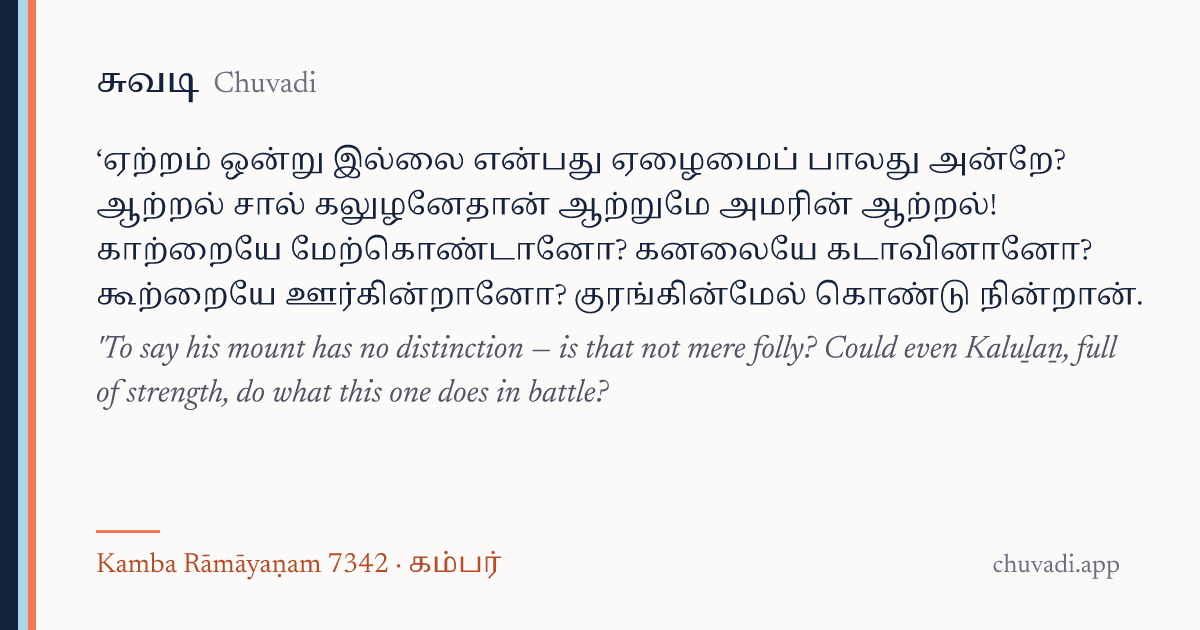
கம்பராமாயணம் 7342 · யுத்த 15.29
பாடல் · The poem
Tap a word to see its gloss in the commentary and where else it occurs.
பொருள் · Meaning in Tamil
குரங்கின் மேல் கொண்டு நின்றான் - அனுமனை வாகனமாகக் கொண்டு போரில் எதிர் நின்ற இராமன்; காற்றையே மேற்கொண்டானோ - காற்றை வாகனமாகக் கொண்டுள்ளானோ?; கனலையே கடாவினானோ - தீயை வாகனமாகக் கொண்டுள்ளானோ; கூற்றையே ஊர்கின்றானோ - இயமனை வாகனமாகக் கொண்டுள்ளானோ?; ஏற்றம் ஒன்று இல்லை என்பது - (எனவே) அவனது வாகனத்துக்குப் பெருமை ஒன்றும் இல்லை என்பது; ஏழைமைப் பாலது அன்றே - அறியாமையின் பாற்பட்டது அல்லவா? அமரின் ஆற்றல் - வாகனமாகிய அனுமன் போரில் செய்யும் செயலை; ஆற்றல் சால் கலுழனே தான் ஆற்றுமே - வலிமை பொருந்திய திருமாலின் வாகனமாகிய கருடன்தான் செய்யுமோ என்றவாறு.
இதில் இராமனின் வாகனமாகிய அனுமனின் வேகம், சினம், அழிக்கும் தொழில் ஆகியவை விளக்கிக் கூறப்பட்டுள்ளன. திருவடியின் சிறப்பை இதனால் உணர்க.
ஆங்கிலம் · English translationAI
Translation
- 'To say his mount has no distinction — is that not mere folly?
- Could even Kaluḻaṉ, full of strength, do what this one does in battle?
- Has he mounted the wind? Is he driving fire?
- Is he riding Death? He stood mounted upon a monkey.'
What the poem says
Irāvaṇaṉ admits that it was foolish to scorn Irāmaṉ's mount. Irāmaṉ rode on a monkey, Aṉumaṉ, yet it was as if he rode the wind, or fire, or Death itself, so swift, fierce and deadly was Aṉumaṉ. Not even Garuḍa (Kaluḻaṉ), Viṣṇu's mighty eagle, could match what Aṉumaṉ did in battle.