



கம்பராமாயணம் 7348 · யுத்த 15.35
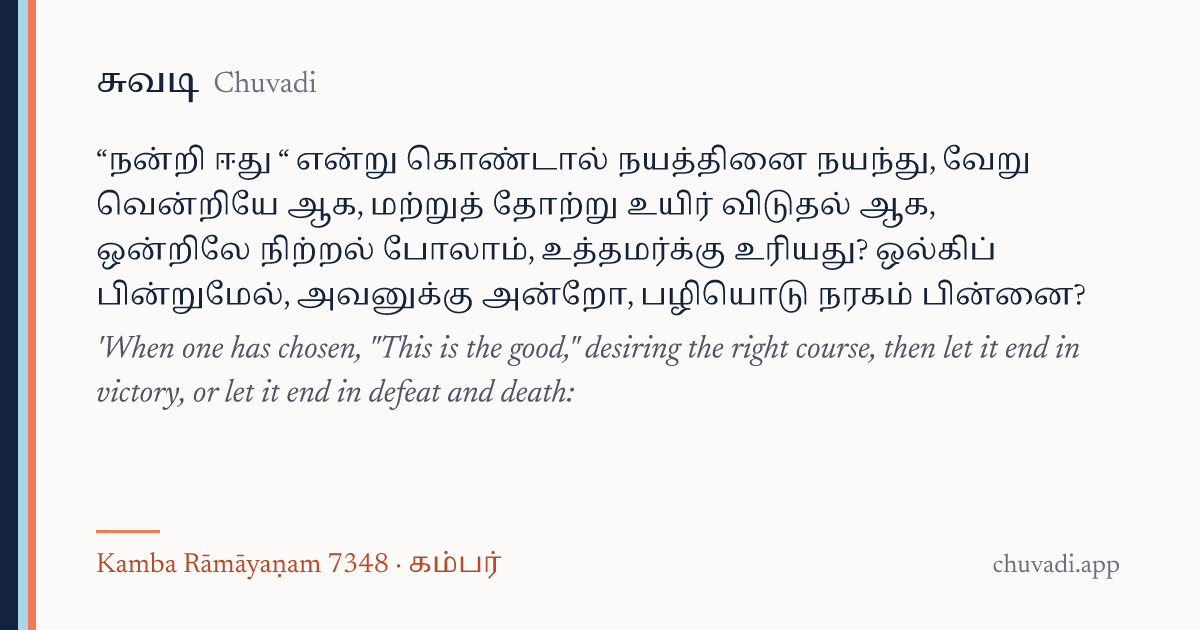
பாடல் · The poem
Tap a word to see its gloss in the commentary and where else it occurs.
பாட வேறுபாடு · Project Madurai reads
பொருள் · Meaning in Tamil
நயத்தினை நயந்து - இனியதைப் பெற விரும்பி; நன்றி ஈது என்று கொண்டால் - இது நல்லது என்று ஒரு செயலை மேற்கொண்டால்; வேறு வென்றியே ஆக - தோல்விக்கு வேறுபட்ட வெற்றியே விளையட்டும்; மற்று தோற்று உயிர் விடுதல் ஆக - அல்லது தோற்று உயிர் விடும் நிலையே விளையட்டும்; உத்தமர்க்கு உரியது - சிறப்பானவர்களுக்கு உரிய செயல்; ஒன்றிலே நிற்றல் போலாம் - மேற்கொண்ட அந்தச் செயல் ஒன்றில் மட்டும் ஊன்றி நிற்றலாம்; ஒல்கிப் பின்று மேல் - மனந்தளர்ந்து பின் வாங்குமேல்; அவனுக்கு அன்றோ - அவ்வாறு பின்வாங்குபவனுக்கல்லவா; பழியொடு நரகம் பின்னை - பிறகு இம்மைப் பழியும் மறுமை நரகமும் ஏற்படும்.
இங்குச் செயலின் தராதரத்தைக் கொண்டு வெற்றி தோல்வி பழி பாவம் நரகம் ஆகியவற்றை நோக்காது தன்மனக் கருத்துக்கு ஏற்பக்கூறும் மகோதரனின் மனநிலை இப்பாடலில் வெளிப்படுகிறது.
ஆங்கிலம் · English translationAI
Translation
- 'When one has chosen, "This is the good," desiring the right course, then
- let it end in victory, or let it end in defeat and death:
- to stand firm in that one course — is that not what befits the noble? If he falters
- and turns back, is it not for him that disgrace and hell come after?'
What the poem says
Makōtaraṉ argues that a great man, once he has chosen his course, must hold to it whether it brings victory or death; to waver and turn back brings disgrace in this world and hell in the next. The commentary points out that he ignores whether the course itself is right or wrong, and simply tells Irāvaṇaṉ what he wants to hear.