



கம்பராமாயணம் 7350 · யுத்த 15.37
பாடல் · The poem
Tap a word to see its gloss in the commentary and where else it occurs.
பொருள் · Meaning in Tamil
புகழ்க்கு மேலோய் - உரைப்பார் உரையாம் புகழ் கடந்து நின்ற மேம்பட்டவனே; வென்றவர் தோற்பர் - வெற்றி பெற்றவர்கள் தோல்வியடைவர் தோற்றோர் வெல்வர் - தோல்வி அடைந்தவர் வெற்றி பெறுவர்; எவர்க்கும் மேலாய் நின்றவர் தாழ்வர் - பிறருக்கு மேலாக உயர்ந்து நின்றவர் தாழ்ச்சியடைவார்கள்; தாழ்ந்தோர் உயர்குவர் - தாழ்ந்து நின்றவர்கள் உயர்ச்சியடைவர்; நெறியும் அஃதே - உலகத்து முறை அதுதான்; என்றனர் அறிஞர் அன்றே - என்று உலகியல் அறிந்த அறிஞர்கள் கூறியுள்ளனர்; ஆற்றலுக்கு எல்லை உண்டோ - வல்லமைக்கு எல்லை இது எனக் கூற முடியுமா? புன்தவர் இருவர் போரைப் புகழ்தியோ - அதனால் புல்லிய தவவேடத்தை உடைய இருவர் செய்த போரை நீ புகழ்வது என்? என்றவாறு.
வெற்றி தோல்வி உயர்வு தாழ்வு வாழ்வில் ஏற்படுதல் இயற்கை நெறி, எனவே தோல்வியால் துவளற்க என இராவணனுக்குக் கூறியவாறு. அரசறிய வீற்றிருந்த வாழ்வு விழும் 'குடைநிழல் இருந்து குஞ்சரம் ஊர்ந்தோர் நடைமெலிந்து ஓரூர் நண்ணல் இயல்பு. அவற்றை இயல்பாக ஏற்றுச் செயல்பட வேண்டும் எனக் கூறியவாறு காண்க. புன்தவர்- என்ற சொல்லாட்சி எதிரியின் வலிமையைச் சரியாக மதிப்பிட முடியாதவன் மகோதரன் என்பதை விளக்க வந்தது.
ஆங்கிலம் · English translationAI
Translation
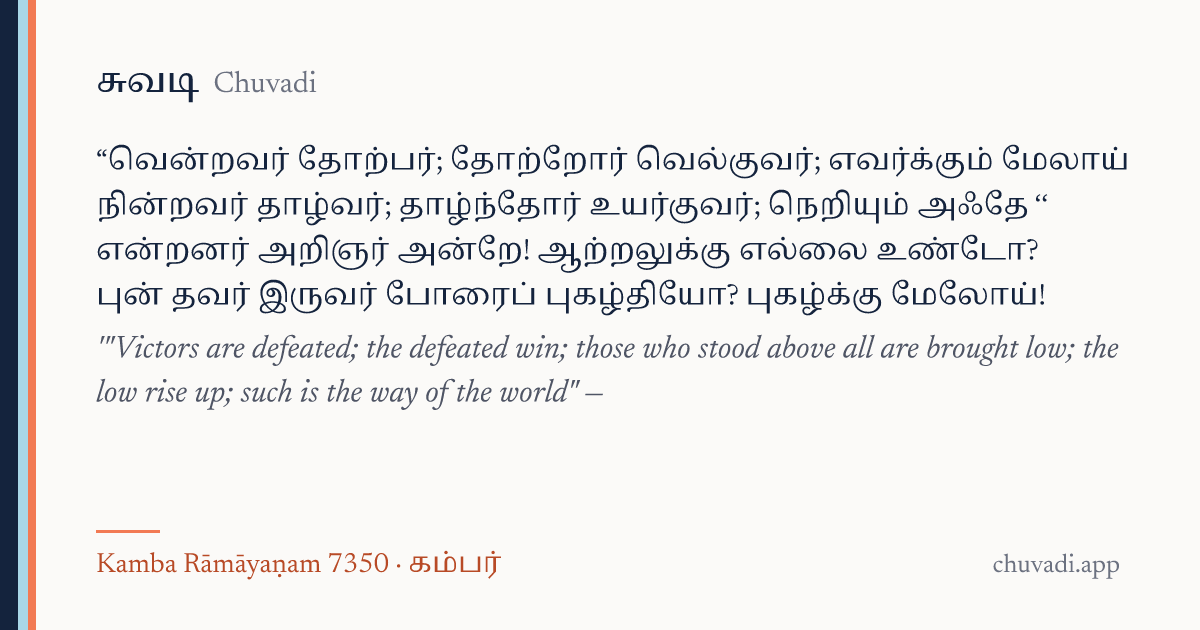
- '"Victors are defeated; the defeated win; those who stood
- above all are brought low; the low rise up; such is the way of the world" —
- so the wise have said, have they not? Is there any limit to strength?
- Will you praise the fighting of two paltry ascetics, you who are beyond all praise?'
What the poem says
Makōtaraṉ offers the commonplace wisdom that victory and defeat, rise and fall, come and go in turn; one loss should not crush him. Then he belittles Irāmaṉ and Ilakkuvaṉ as two paltry ascetics. The commentary notes that this contempt shows Makōtaraṉ cannot judge the enemy's strength.