



கம்பராமாயணம் 7353 · யுத்த 15.40
பாடல் · The poem
Tap a word to see its gloss in the commentary and where else it occurs.
பாட வேறுபாடு · Project Madurai reads
பொருள் · Meaning in Tamil
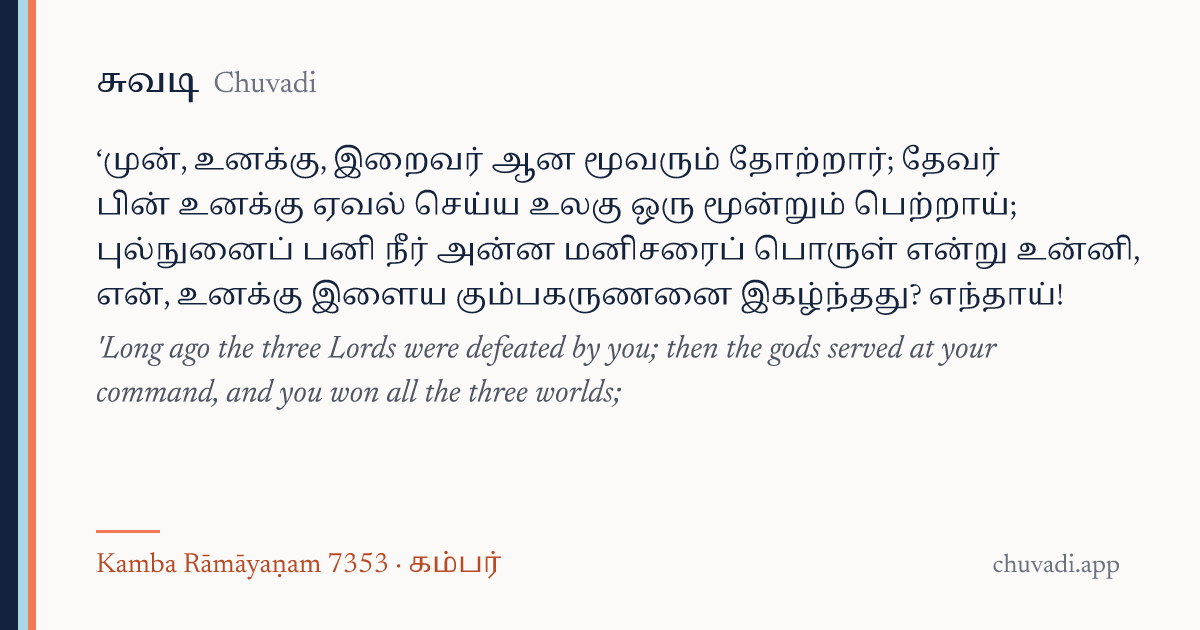
எந்தாய் - என் தந்தையே!, முன் உனக்கு - முன்பு உனக்கு; இறைவர் ஆன மூவரும் தோற்றார்- தலைமையுடைய அரி அரன் அயன் ஆகிய மூவரும் தோற்றனர்; தேவர்பின் - அதற்குப் பிறகு தேவர்கள் தோற்றார்கள்; உலகு ஒரு மூன்றும் - உலகு மூன்றையும்; உனக்கு ஏவல் செய்யப் பெற்றாய் - உனக்கு ஏவல் செய்யும்படி வென்று பெற்றுள்ளாய்; அப்படிப்பட்ட வரமும் வலிமையும் உடைய நீ; புல் நுனைப் பனிநீர் அன்ன - புல்லின் நுனியில் ஒட்டியுள்ள பனிநீரைப் போன்று உள்ள; மனிசரைப் பொருள் என்று உன்னி - மனிதர்களை ஒரு பொருளாக மதித்து எண்ணி; என் உனக்கு இளைய கும்பகருணனை இகழ்ந்தது - உனக்கு இளைய கும்பகருணனின் ஆற்றலை மதியாது இகழ்ந்தது என்ன காரணமோ? என்றவாறு.
மனிசரை- இழிவு குறித்து வந்த சொல் புல்நுனைப் பனிநீர் அன்ன மனிசர்- சில் வாழ்நாள், பல்பிணிச் சிற்றறிவுடைய வரவலிவில்லாத மானிடர் கும்பகருணனின் வலியை நினைப்பூட்டி, அவனைப் போருக்கு அனுப்புக என இராவணனை மகோதரன் தூண்டுகிறான்.
ஆங்கிலம் · English translationAI
Translation
- 'Long ago the three Lords were defeated by you; then the gods
- served at your command, and you won all the three worlds;
- why, thinking men who are like dew on the tip of a blade of grass to be a thing of weight,
- have you slighted your younger brother Kumpakaruṇaṉ, my father?'
What the poem says
Makōtaraṉ continues. Irāvaṇaṉ once conquered the three great gods, made the other gods his servants and ruled the three worlds. Humans are as short-lived and feeble as dew on a blade of grass, yet he has taken them seriously and overlooked his own mighty brother Kumpakaruṇaṉ. Makōtaraṉ is steering Irāvaṇaṉ towards sending Kumpakaruṇaṉ into battle.