



கம்பராமாயணம் 7367 · யுத்த 15.54
பாடல் · The poem
Tap a word to see its gloss in the commentary and where else it occurs.
பாட வேறுபாடு · Project Madurai reads
பொருள் · Meaning in Tamil
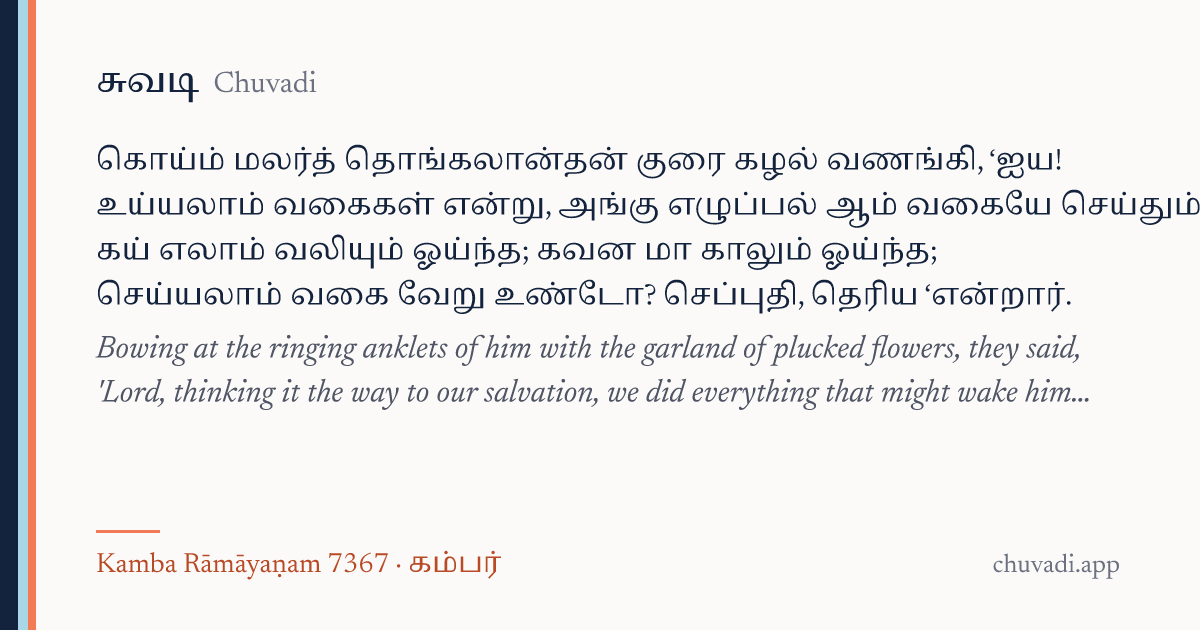
கொய்ம்மலர்த் தொங்கலான் தன் - (குதிரைகளை விட்டு உழக்கி எழுப்ப முடியாத வீரர்கள்) கொய்த மலர்களால் தொடுக்கப் பெற்ற இராவணனது; குரைகழல் வணங்கி - ஒலிக்கின்ற வீரக்கழல் அணிந்த பாதங்களை வணங்க; ஐய - ஐயனே; உய்யலாம் வகைகள் என்று - அக்கும்பகருணனை எழுப்பினால் போரில் வென்று உய்யலாம் என எண்ணி; அங்கு எழுப்பல் ஆம் வகையே செய்தும் - அவனை எழுப்பக்கூடிய எல்லா வழிகளையும் செய்தோம் அவ்வாறு செய்ததால்; கய் எலாம் வலியும் ஓய்ந்த - எங்கள் கை வலிமை எல்லாம் போய்விட்டது; கவனமா காலும் ஓய்ந்த - விரைந்து செல்லும் குதிரைகளின் காலும் அவன் மார்பை மிதித்து ஓய்ந்தன; செய்யலாம் வகை வேறு உண்டோ? - இனி அக்கும்பகருணனைத் துயிலெழுப்பச் செய்யக்கூடிய வழி வேறு ஏதாவது உண்டே; செப்புதி தெரிய என்றார் - உண்டெனின் யாங்கள் அறியும்படி சொல்லுவாயாக என்றார்கள்.
ஆங்கிலம் · English translationAI
Translation
- Bowing at the ringing anklets of him with the garland of plucked flowers, they said, 'Lord,
- thinking it the way to our salvation, we did everything that might wake him there;
- all the strength of our arms is spent; the legs of the swift horses are spent;
- is there any other way to do it? Tell us, so that we may know.'
What the poem says
The warriors return to Irāvaṇaṉ and bow at his feet. Hoping that waking Kumpakaruṇaṉ would save them all, they have tried everything; their arms are exhausted and so are the legs of the horses that trampled him. They ask if there is any other way left.