



கம்பராமாயணம் 7368 · யுத்த 15.55
பாடல் · The poem
Tap a word to see its gloss in the commentary and where else it occurs.
பாட வேறுபாடு · Project Madurai reads
பொருள் · Meaning in Tamil
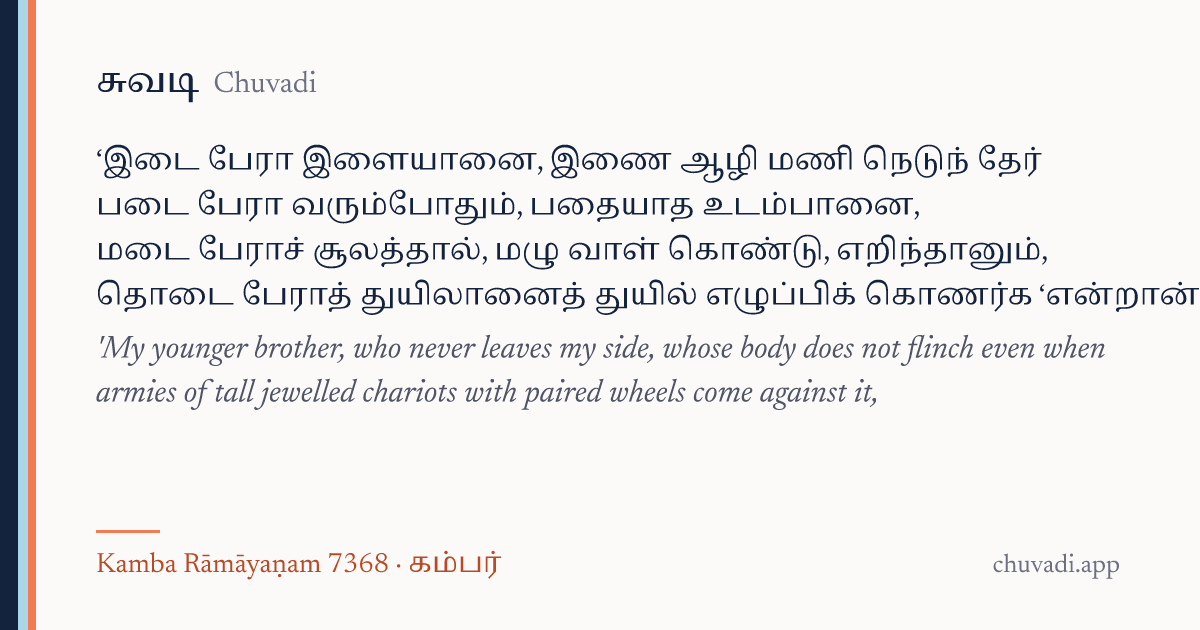
இடை பேரா இளையானை - எக்காலத்திலும் என்னை விட்டு நீங்காத தம்பியும்; இணை ஆழி மணி நெடுந்தேர் - இரண்டாக இணைந்த சக்கரங்களையுடைய மணிகளால் அழகுபடுத்தப்பட்ட பெரிய தேர்ப்; படை பேரா வரும் போதும் - படை முதலிய படைகள் தன் மீது எதிர்த்து வந்தாலும்; பதையாத உடம்பானை - சிறிதும் மனம் மற்றும் உடல் வருத்தப்படுதலில்லாதவனும்; தொடை பேராத்துயிலானை - இடைவிடாது உறங்குகின்றவனும் ஆகிய கும்பகருணனை; மடை பேராச்சூலத்தால் - மூட்டுவாய் நீங்காத சூலப்படையாலும்; மழுவாள் கொண்டு - மற்றும் நீங்காத சூலப்படையாலும்; மழுவாய் கொண்டு - மற்றும் மழுப்படை வாட்படையாலும்; எறிந்தானும் - தாக்கியாயினும், துயில் எழுப்பிக் கொணர்க என்றான் - துயில் எழுப்பி அழைத்து வருக என்று இராவணன் கூறினான்.
தொடை-மாலை போல் இடைவிடாது இருத்தல். மடை-மூட்டு. இடை பேரா இளையானை-என்ற தொடர் தன்னைவிட்டு நீங்கிய வீடணன் போல் இக்கும்பகருணன் தன் வாழ்விலும் தாழ்விலும் உடன்நிற்பவன் என்று இராவணன் கொண்டுள்ள நம்பிக்கையைச் சுட்டி நிற்கிறது. "தம்பியர் இன்றி மாண்டு கிடப்பனோ தமையன் மண்மேல்" என்று பின்னால் கும்பகருணன் கூறுவதும், "ஒருத்தரின் முன்னம் சாதல் உண்டவர்க்குரிய தம்ம” (7429, 7428) என அவன் கூறுவதும் சேர்த்து எண்ணத் தக்கன.
ஆங்கிலம் · English translationAI
Translation
- 'My younger brother, who never leaves my side, whose body
- does not flinch even when armies of tall jewelled chariots with paired wheels come against it,
- even if you must strike him with the trident whose socket never loosens, with axe and sword —
- rouse from his sleep the one whose sleep is never broken, and bring him,' he said.
What the poem says
Irāvaṇaṉ orders them to wake Kumpakaruṇaṉ by any means, even with tridents, axes and swords; his body is so tough that whole armies of chariots cannot hurt it.
He calls him 'the brother who never leaves my side', in pointed contrast to Vīṭaṇaṉ, who has deserted him. The commentary notes that Kumpakaruṇaṉ will later prove this trust right, saying he will not let his elder brother die without a younger brother beside him.