



கம்பராமாயணம் 7369 · யுத்த 15.56
பாடல் · The poem
Tap a word to see its gloss in the commentary and where else it occurs.
பாட வேறுபாடு · Project Madurai reads
பொருள் · Meaning in Tamil
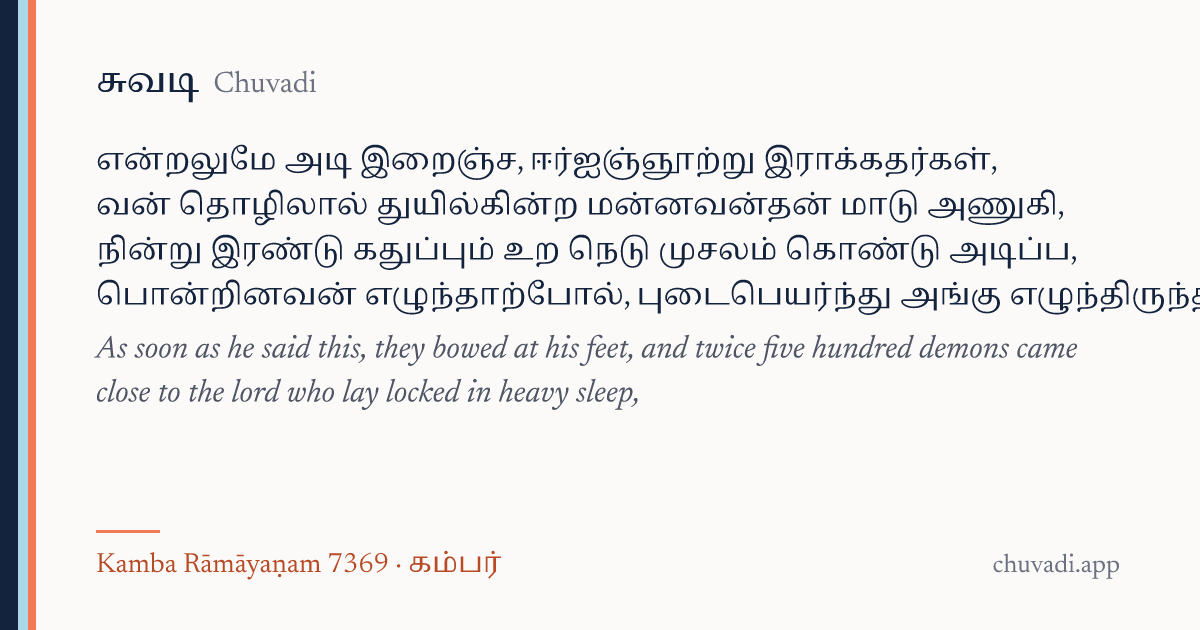
என்றலுமே - என்று இராவணன் கூறியவுடனே; அடி இறைஞ்சி - அவனது அடியை வணங்கிவிட்டு; ஈர் ஐஞ்ஞூற்று - ஆயிரம், இராக்கதர்கள் - அரக்கர்கள்; துயில்கின்ற மன்னவன் தன் மாடு அணுகி நின்று - உறங்குகின்ற கும்பகருணனது பக்கத்தில் நெருங்கி நின்று; வன்தொழிலால் - தங்களது வலிய தொழில் திறத்தால்; இரண்டு கதுப்பும் உற - இரண்டு கன்னத்திலும் பொருந்துமாறு; நெடு முசலம் கொண்டு அடிப்ப - நீண்ட உலக்கைகளைக் கொண்டு அடிக்கப்; பொன்றினவன் எழுந்தாற்போல் - இறந்தவன் எழுந்தது போல; புடை பெயர்ந்து - படுத்த இடத்தை விட்டு அசைந்து; அங்கு எழுந்திருந்தான் - அப்போது எழுந்தான்.
பொன்றினவன் எழுந்தாற்போல் - என்ற பாடல் வரி துயிலெழுப்பல் நிகழ்ச்சியோடும் தீமையின் அழிவு என்ற பாவிக நோக்கத்தோடும் கவிஞனால் அமைக்கப்பட்டுள்ள வரியாகும். மேலும் இது கவிக்கூற்று பின் வருவது காட்டும் முன்னோடியாக விளங்குவதையும் உணர்த்துகிறது.
ஆங்கிலம் · English translationAI
Translation
- As soon as he said this, they bowed at his feet, and twice five hundred demons
- came close to the lord who lay locked in heavy sleep,
- and standing there struck both his cheeks with long pestles;
- and like a dead man rising, he stirred from where he lay and got up.
What the poem says
A thousand demons go back and pound both of Kumpakaruṇaṉ's cheeks with long pestles, and at last he stirs and rises 'like a dead man getting up'. The commentary notes that the simile does double work: it describes his slow waking and also foreshadows his death in the coming battle.