



கம்பராமாயணம் 7382 · யுத்த 15.69
பாடல் · The poem
Tap a word to see its gloss in the commentary and where else it occurs.
பாட வேறுபாடு · Project Madurai reads
பொருள் · Meaning in Tamil
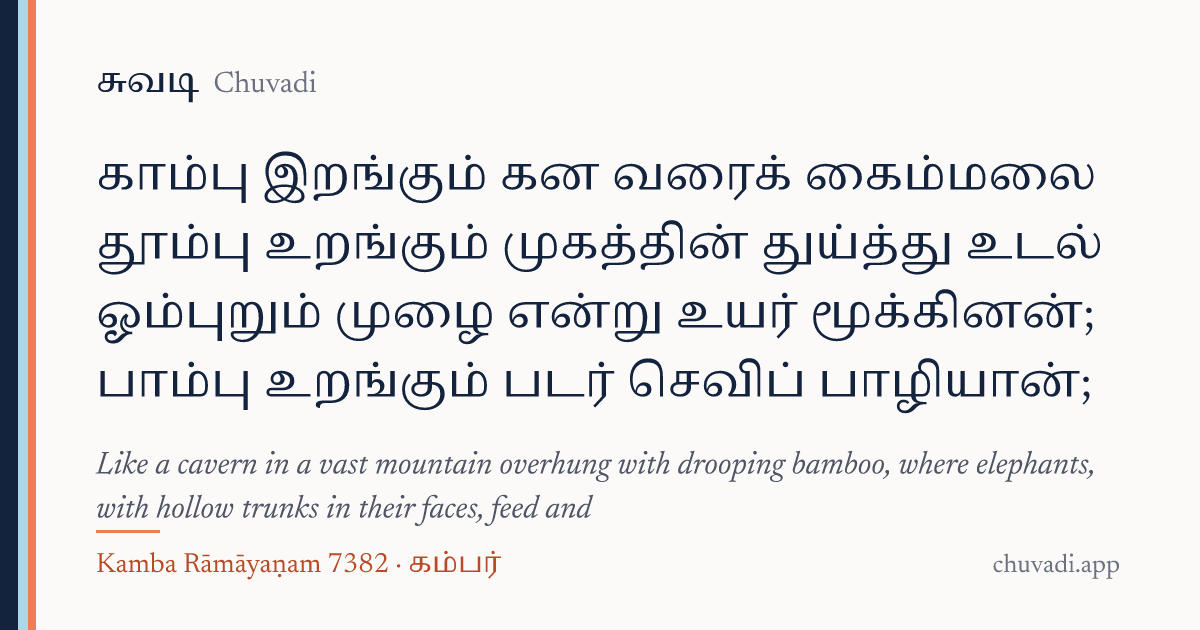
தூம்பு உறங்கும் முகத்தின் கைம்மலை - துளை உடைய துதிக்கை பொருந்திய முகத்தினையுடைய யானைகள்; துய்த்து உடல் ஓம்புறும் - உண்டு உடலைப் பேணுவதற்குரிய; காம்பு இறங்கும் கனவரை முழை என்று - மூங்கில் தாழ வளர்ந்த பெரிய மலையில் உள்ள குகை எனுமாறு; உயர் மூக்கினான் - பெரிய மூக்கினையுடையவனும்; பாம்பு உறங்கும் - பாம்பு உறங்குமாறு அமைந்த, படர் செவிப் பாழியான் - பரந்து நீண்ட காதாகிப் படுக்கையிடத்தை உடையவன்.
கும்பகருணன் என்ற பெயரே அவனது படர் செவிப்பாழியால் வந்தது.
ஆங்கிலம் · English translationAI
Translation
- Like a cavern in a vast mountain overhung with drooping bamboo,
- where elephants, with hollow trunks in their faces, feed and
- tend their bodies, was his towering nose;
- his broad, spreading ears were a den where snakes might sleep.
What the poem says
Kumpakaruṇaṉ's nostrils are like the caves of a bamboo-covered mountain, where whole herds of elephants could shelter and feed; his ears are so wide that snakes could curl up and sleep in them. The commentary notes that his very name, Kumpakaruṇaṉ, 'pot-eared', comes from these huge ears.