



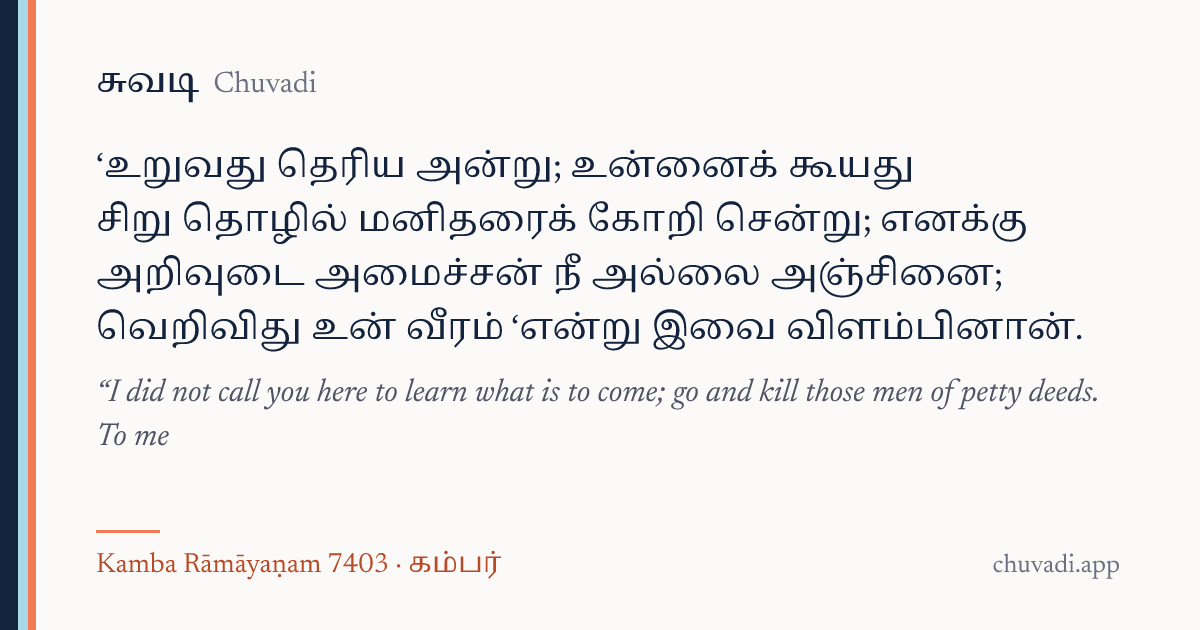
கம்பராமாயணம் 7403 · யுத்த 15.90
பாடல் · The poem
Tap a word to see its gloss in the commentary and where else it occurs.
பொருள் · Meaning in Tamil
உன்னைக் கூயது - உன்னை இங்கு அழைத்தது; உறுவது தெரிய அன்று - இனிமேல் நடக்கப் போவதைத் தெரிந்து கொள்வதற்கல்ல; சென்று - போருக்குச் சென்று; சிறுதொழில் மனிதரைக் கோறி - சிறுதொழிலுடைய மானிடரைக் கொல்வாய், எனக்கு அறிவுடை அமைச்சன் நீ அல்லை - எனக்கு அறிவுரை கூறுவதற்கு நீ அறிவு படைத்த அமைச்சன் அன்று; அஞ்சினை - நீ போருக்கு அஞ்சுகிறாய்; உன் வீரம் வெறுவிது - உன் வீரம் வீணானது; என்று இவை விளம்பினான் - என்று கூறி மேலும் இவைகளைக் கூறினான்.
பகைவர் வலியறியாமை, தன் வலிவியத்தல், அறிவுரை கூறுவதை ஏற்காமை ஆகிய இராவணனது மனப்பண்புகள் அவன் அழிவுக்குரிய காரணங்களாகக் காணப்படுகின்றன.
ஆங்கிலம் · English translationAI
Translation
- “I did not call you here to learn what is to come;
- go and kill those men of petty deeds. To me
- you are no wise minister; you are afraid;
- your valour is empty,” he said, and spoke these words too.
What the poem says
Irāvaṇaṉ angrily rejects his brother's advice. He woke Kumpakaruṇaṉ to kill the two humans, not to hear forecasts or receive counsel. He calls him a coward whose famous valour turns out to be hollow.
Irāvaṇaṉ underrates his enemies, admires his own strength and refuses good advice. These are the very traits that lead to his downfall.