



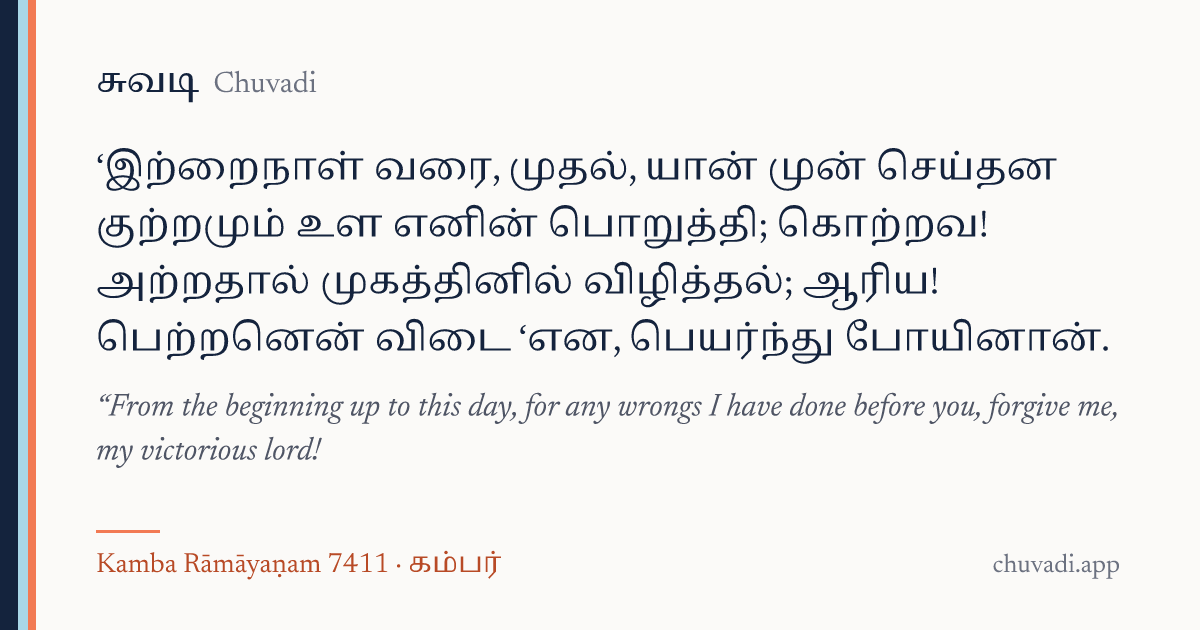
கம்பராமாயணம் 7411 · யுத்த 15.98
பாடல் · The poem
Tap a word to see its gloss in the commentary and where else it occurs.
பொருள் · Meaning in Tamil
கொற்றவ - வெற்றித் தலைவனே; முன் முதல் இற்றை நாள் வரை- முன்னாள் முதல் இன்றைய நாள் வரை; யான் செய்தன - நான் செய்தனவாகிய; குற்றமும் உள எனின் பொறுத்தி - குற்றங்கள் ஏதாவது இருக்குமானால் அவற்றை நீ பொறுத்தருள்க; ஆரிய - ஆரியனே: முகத்தினில் விழித்தல் அற்றதால் - இனி உன் முகத்தில் நான் விழித்தல் இல்லாமல் போய்விட்டது; விடை பெற்றனன் - விடை பெற்றுக் கொண்டேன்; என பெயர்ந்து போயினான் - என்று கூறிப் புறப்பட்டுச் சென்றான்.
இற்றை-இன்று +ஐ ௪ இற்றை வலித்தல். ஆல்-அசை. கொற்றவ, ஆரிய-என வந்துள்ள இரு விளிகள் கும்பகருணனது பாசத்தைச் சுட்டி நின்றது. பெற்றனென் விடை-விரைவுக் குறிப்பை நோக்குக. இப்பாடலைப் பாசத்தின் கொடுமுடியில் நின்று இறக்க இருப்பவனின் இறுதி விடைப்பாடலாகக் கருதிக் கொள்க. உருக்க உணர்ச்சி ததும்பும் பாடல்.
ஆங்கிலம் · English translationAI
Translation
- “From the beginning up to this day, for any wrongs
- I have done before you, forgive me, my victorious lord!
- I shall not look upon your face again. Noble one,
- I have taken my leave,” he said, and turned and went.
What the poem says
This is Kumpakaruṇaṉ's final parting from his brother. He asks forgiveness for every fault since childhood and says plainly that he will never see Irāvaṇaṉ's face again.
The two loving forms of address, "victorious lord" and "noble one", show the depth of his attachment. "I have taken my leave" is said quickly, before his feelings can get the better of him. The verse is the farewell of a man going knowingly to his death, and it is one of the most moving moments in the episode.