



கம்பராமாயணம் 7441 · யுத்த 15.128
பாடல் · The poem
Tap a word to see its gloss in the commentary and where else it occurs.
பாட வேறுபாடு · Project Madurai reads
பொருள் · Meaning in Tamil
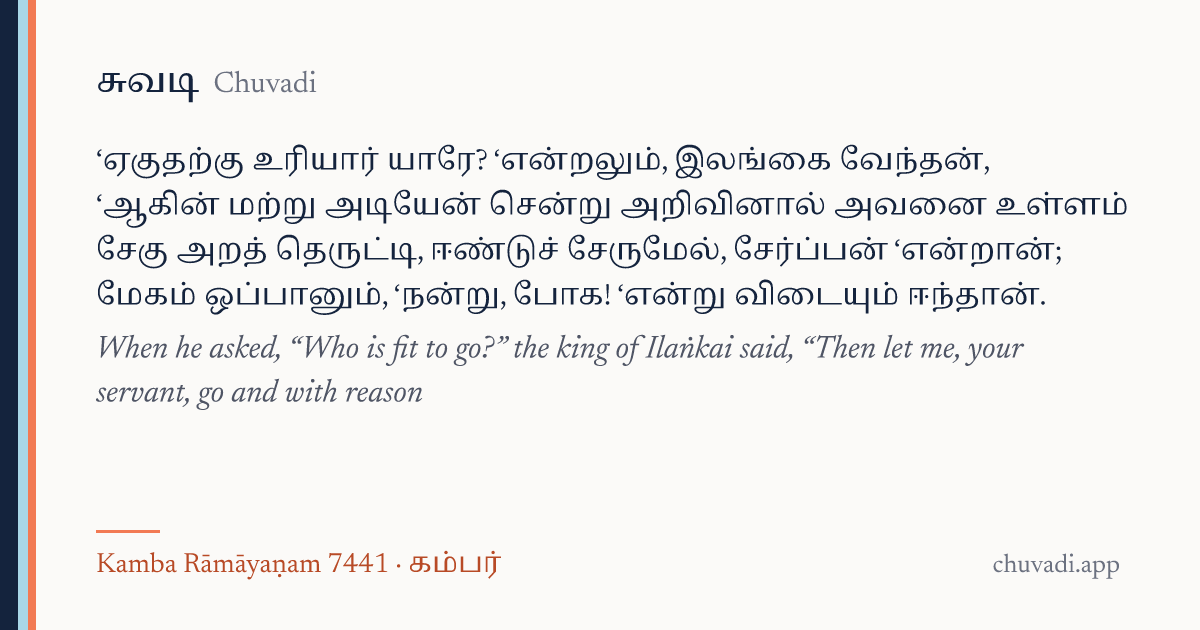
ஏகுதற்கு உரியார் யாரே? - கும்பகருணனிடத்தில் செல்லுவதற்கு உரியவர் யாவர்; என்றலும் - என்று இராமன் வினவுதலும்; இலங்கை வேந்தன் - இலங்கைக்கு அரசனாகிய வீடணன்; ஆகின்- அப்படியானால்; அடியேன் சென்று - அடியனாகிய யானே போய்; அறிவினால் - அறிவின் வல்லமையால்; அவனை உள்ளம் - அவனது உள்ளத்தில் உள்ள; சேகு அறத்தெருட்டி - ஐயம் நீங்கத் தெளிவித்து; ஈண்டுச் சேருமேல்- இங்கு வந்து சேர்வானேயானால்; சேர்ப்பென் என்றான் -சேரச் செய்வேன் என்று கூறினான்; மேகம் ஒப்பானும் - மேகத்தை ஒத்த நிறமும் பயனும் உடைய இராமனும்; நன்று போக - நல்லது போய் வருக; என்று விடையும் ஈந்தான் - என்று அவனுக்கு விடை தந்தான்.
மற்று-அசை அவனை உள்ளம்-உருபு மயக்கம். சேகு-ஐயம். கும்பகருணனுக்குப் பாசம் அறம் இரண்டுக்கும் இடையில் ஏற்பட்ட இரண்டாட்டம்.
ஆங்கிலம் · English translationAI
Translation
- When he asked, “Who is fit to go?” the king of Ilaṅkai said,
- “Then let me, your servant, go and with reason
- clear his heart of doubt, and if he will join us here, I will bring him.”
- And he who is like the rain cloud said, “Good, go,” and gave him leave.
What the poem says
Irāmaṉ asks who should go as envoy. Vīṭaṇaṉ, already crowned king of Ilaṅkai by Irāmaṉ, volunteers. He will reason with his brother, clear his doubts and bring him over if he is willing. Irāmaṉ, dark and generous as a rain cloud, gives his consent.
Kumpakaruṇaṉ is torn between love for his brother and the call of righteousness.