



கம்பராமாயணம் 7444 · யுத்த 15.131
பாடல் · The poem
Tap a word to see its gloss in the commentary and where else it occurs.
பொருள் · Meaning in Tamil
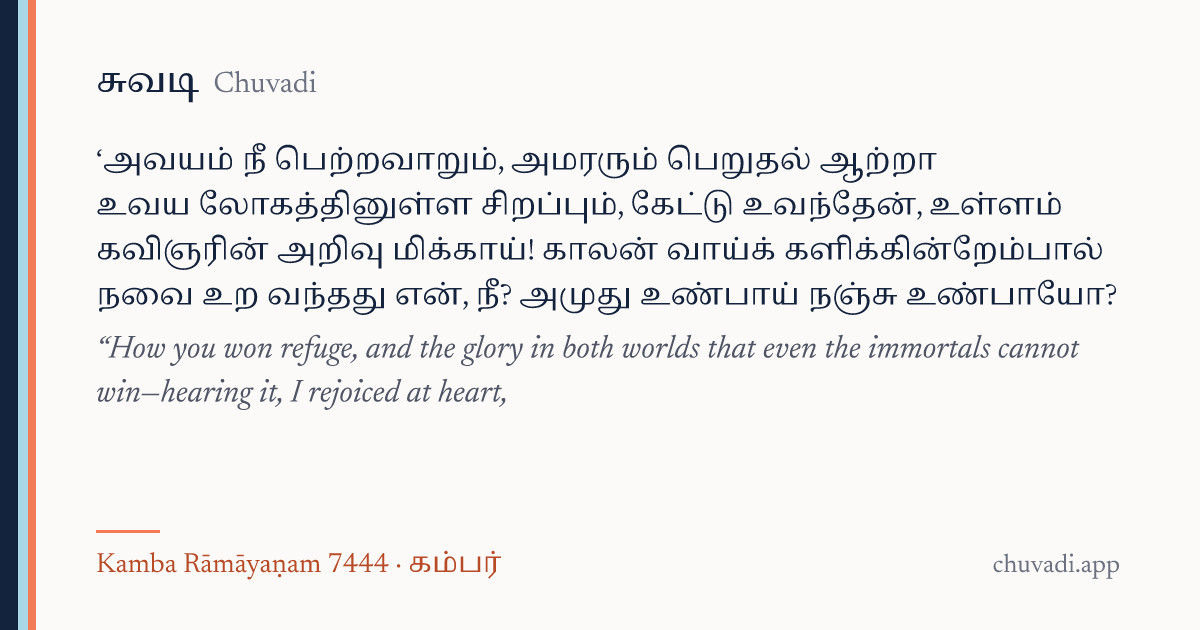
கவிஞரின் அறிவு மிக்காய் - கவிஞர்களைக் காட்டிலும் அறிவு மிகுந்தவனே! நீ அவயம் பெற்றவாறும் - நீ இராமனிடம் அடைக்கலம் பெற்ற தன்மையையும்; அமரரும் பெறுதல் ஆற்றா - அதனால் தேவர்களும் பெறுதற்கு இயலாத; உவய லோகத்திலுள்ள சிறப்பும் கேட்டு - இம்மை மறுமை ஆகிய இருவேறு உலகங்களில் உள்ள சிறப்புக்கள் பெற்றதையும் ஒற்றர் சொல்லக் கேட்டு; உள்ளம் உவந்தேன் - யான் மனம் மகிழ்ந்தேன்; நீ காலன் வாய்க் களிக்கின்றேம் பால் - (அப்படிப்பட்ட) நீ காலன் வாயில் இருந்துகொண்டு எங்களிடம்; நவை உற வந்தது என் - குற்றம் உண்டாகுமாறு வந்த காரணம் என்னையோ? அமுது உண்பாய் நஞ்சு உண்பாயோ? - வாழ வைக்கும் அமுதத்தை உண்டு கொண்டு இருக்கிற நீ அழிவுதரும் நஞ்சை உண்ண எண்ணுவையோ?
அமுது-இராமனையடைந்து பெறும் அறவழிப்பட்ட அழியா வாழ்வு. நஞ்சு இராவணனையடைந்து பாவத்திற்குத் துணை போகும் அழிவு வாழ்வு. தம்பியின் அற உள்ளத்தை உணர்ந்த தமையனின் பாச உணர்வுச் சுழிகளின் களி பொங்கிய கும்மாளியை இப்பாடலில் காண்க.
ஆங்கிலம் · English translationAI
Translation
- “How you won refuge, and the glory in both worlds
- that even the immortals cannot win—hearing it, I rejoiced at heart,
- you who are wiser than the poets! To us who revel in the mouth of Death,
- why have you come, to your harm? Will you who eat nectar now eat poison?”
What the poem says
Kumpakaruṇaṉ has heard through spies that Vīṭaṇaṉ was given refuge by Irāmaṉ. He has won a glory in this world and the next that even the gods cannot attain, and Kumpakaruṇaṉ was delighted by the news. So why come back to those who are already in Death's jaws?
The nectar is the deathless, righteous life won by joining Irāmaṉ. The poison is the doomed life of siding with Irāvaṇaṉ's sin.