



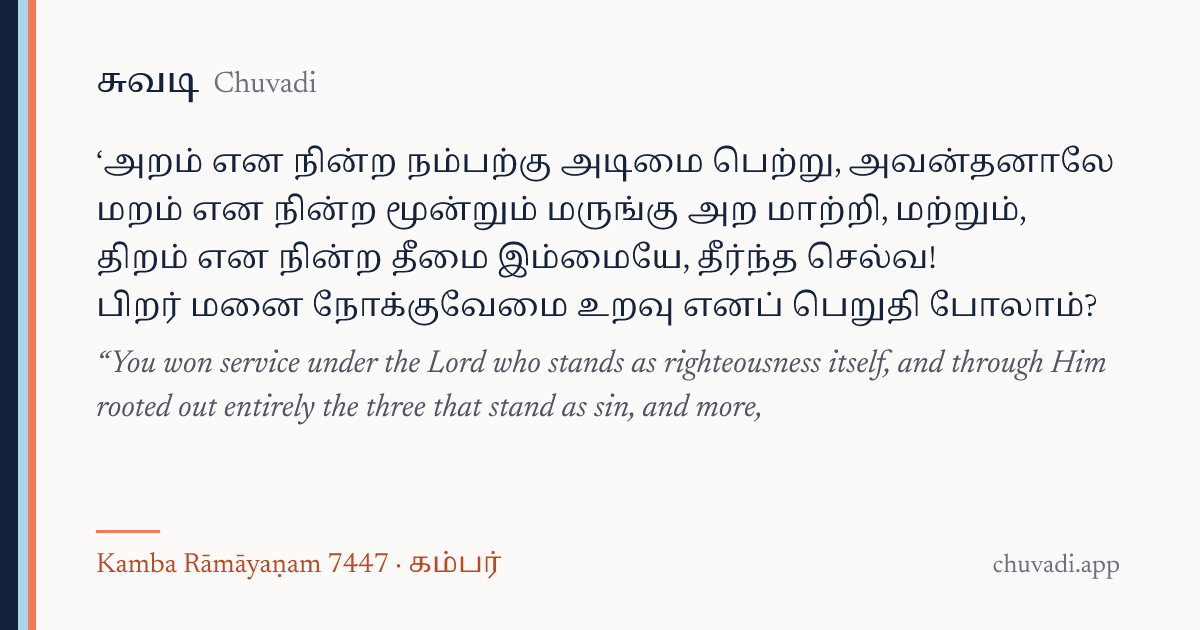
கம்பராமாயணம் 7447 · யுத்த 15.134
பாடல் · The poem
Tap a word to see its gloss in the commentary and where else it occurs.
பொருள் · Meaning in Tamil
அறம் என நின்ற நம்பற்கு - அறத்தின் மூர்த்தி எனச் சொல்லுமாறு நின்ற தலைவனுக்கு; அடிமை பெற்று - அடிமையாகப் பெற்று; அவன் தனாலே - அவனது கருணை வள்ளல் தன்மையாலே; மறம் என நின்ற மூன்றும் - பாவத்துக்குக் காரணம் என்னுமாறு நின்ற காமம், வெகுளி, மயக்கம் ஆகிய மூன்றினையும்; மருங்கு அற மாற்றி - முழுதும் இல்லாமல் போக்கி; மற்றும் - மேலும்; திறம் என நின்ற தீமை - வலிமையுடையதாக இருந்த பிற தீய பண்புகளையும்; இம்மையே தீர்ந்த செல்வ - இப்பிறவியிலேயே போக்கிய செல்வனே; பிறர் மனை நோக்கு வேமை - அயலவரது மனைவியை அறந்துறந்து நோக்கும் எங்களை; உறவு எனப் பெறுதி போலாம் - உறவு என இனிமேலும் கொள்வாய் போலும் என்றவாறு.
மறம் என நின்ற மூன்றும்-அறியாமை, திரிபு உணர்ச்சி, ஐய உணர்வு எனினும் ஆம். இப்பிறவியில் பெறவரும் பதம் பெற்ற நீ அதை விட்டு இங்கு மீண்டு வந்தது என்னையோ என்றவாறு. பிறர் மனை நோக்குவேமை-என்றது இராவணனுக்குத் துணையாய் நின்று போருக்கு வந்தமையால் உளப்படுத்திக் கூறியதாம்.
ஆங்கிலம் · English translationAI
Translation
- “You won service under the Lord who stands as righteousness itself, and through Him
- rooted out entirely the three that stand as sin, and more,
- the evil that stood so strong—you who are rid of it in this very life, my fortunate one,
- will you now claim as kin us who covet other men's wives?”
What the poem says
By serving Irāmaṉ, righteousness in person, Vīṭaṇaṉ has rid himself in this very life of the three roots of sin, desire, anger and delusion, and of every other evil. Will he now count as family those who covet other men's wives?
Kumpakaruṇaṉ includes himself among the guilty. Although he condemned the abduction, he has come out to fight for Irāvaṇaṉ.