



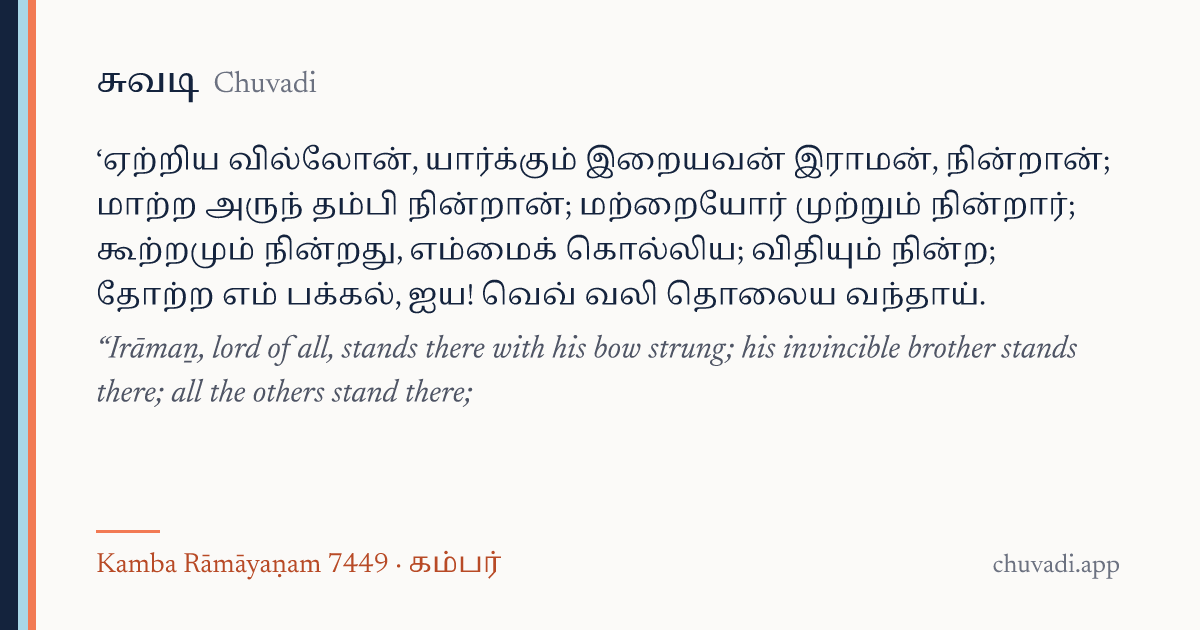
கம்பராமாயணம் 7449 · யுத்த 15.136
பாடல் · The poem
Tap a word to see its gloss in the commentary and where else it occurs.
பொருள் · Meaning in Tamil
ஐய- ஐயனே; யார்க்கும் இறையவன் இராமன் - யாவருக்கும் தலைவனாகிய இராமன்; ஏற்றிய வில்லோன் நின்றான் - நாண் ஏற்றிய வில்லையுடையவனாய்க் காத்து நின்று கொண்டிருக்கிறான்; மாற்ற அருந்தம்பி நின்றான் - விலக்குதற்கு அரிய பெருவலி படைத்த தம்பியும் நின்று கொண்டிருக்கிறான்; மற்றையோர் முற்றும் நின்றார் - பிற படை வீரர்களாகிய வானரரும் மிகுதியும் இருக்கின்றார்கள்; எம்மைக் கொல்லிய கூற்றமும் நின்ற - எங்களைக் கொல்லுவதற்காக யமனும் காத்திருக்கிறான்; விதியும் நின்ற - அதற்கு ஏற்பவே விதியும் அமைந்துள்ளது; வெவ்வலி தொலைய - உனது தவவலியும் அறவலியும் கெட; தோற்ற எம் பக்கல் வந்தாய் - தோற்க இருக்கெ எங்கள் பக்கம் ஏன் வந்தாய்.
தோற்ற- தோற்கப்போகிறோம் என்ற தோற்றத்தால் எதிர்காலம் இறந்த காலமாகக் கூறப்பட்ட கால வழுவமைதி.
ஆங்கிலம் · English translationAI
Translation
- “Irāmaṉ, lord of all, stands there with his bow strung;
- his invincible brother stands there; all the others stand there;
- Death too stands ready to kill us; Fate stands there as well;
- and you, sir, have come to us, the defeated, to lose your fierce strength.”
What the poem says
Kumpakaruṇaṉ lays out the hopeless position of the demons. Irāmaṉ stands ready with his bow strung, beside his unbeatable brother and the whole monkey army. Death and Fate are waiting too. Why has Vīṭaṇaṉ come over to the losing side and thrown away the strength his virtue gave him?
Kumpakaruṇaṉ calls the demons "the defeated", in the past tense, because he is so sure of the outcome.