



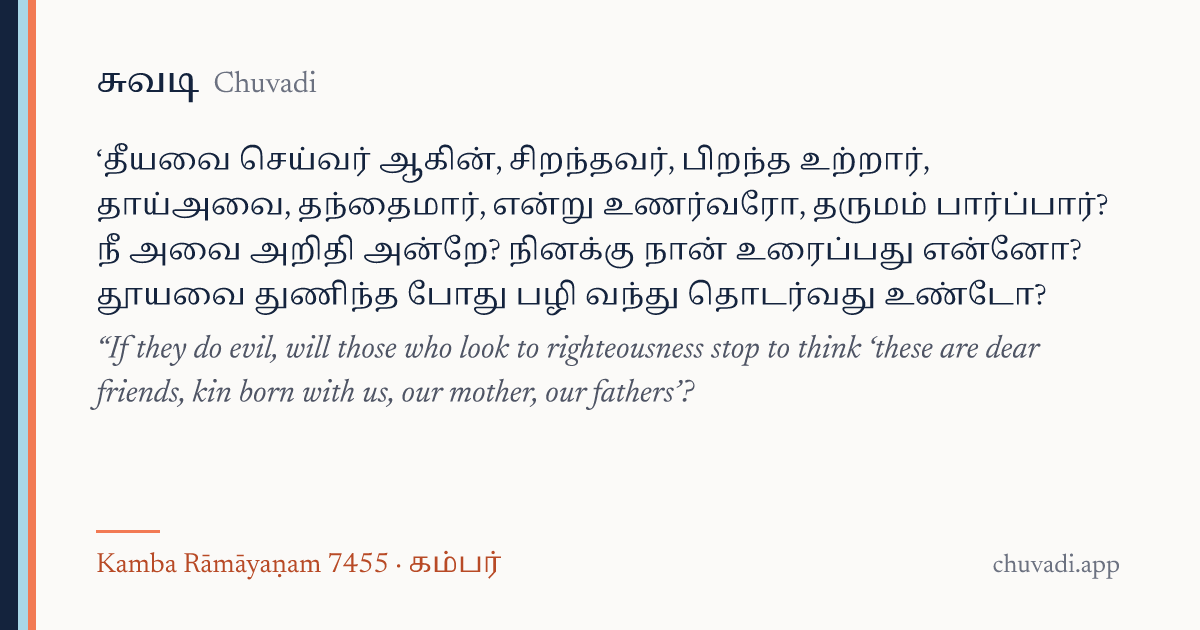
கம்பராமாயணம் 7455 · யுத்த 15.142
பாடல் · The poem
Tap a word to see its gloss in the commentary and where else it occurs.
பொருள் · Meaning in Tamil
தருமம் பார்ப்பார் - தருமத்தையே சிறப்பாகப் பார்ப்பவர்கள்; தீயவை செய்வர் ஆகின் - தீய செயல்களைச் செய்வார்களாயின்; சிறந்தவர் - அன்பிற் சிறந்தவர்; பிறந்த உற்றார் - உடன் பிறந்த உறவு முறையினர்; தாய் அவை - தாயாகிய அவ்வை; தந்தைமார் - தந்தைமார்; என்று உணர்வரோ - என்று எண்ணிப் பார்ப்பார்களா?; நீ அவை அறிதி அன்றே - நீ அவற்றை அறிவாய் அல்லவா?; நினக்கு நான் உரைப்பது என்னோ - உனக்கு நான் சொல்ல வேண்டுவது என்ன உள்ளது; தூயவை துணிந்த போது - தூய்மையான செயல்களைச் செய்யத் துணியும் போது; பழி வந்து தொடர்வது உண்டோ? - பழிச் செயல் வந்து தொடர்வது உண்டாகுமா?
அறம் நோக்குவார் நண்பர் உறவினர் தாய் தந்தை என்ற அன்பு நோக்கிலும் பாச நோக்கிலும் நோக்காது அவர்கள் தவறு செய்யின் அறநோக்கம் கருதி அவர்களைக் கை விடுவர் என்றும் அவ்வாறு செய்யும் போது பழி வந்து தொடராது என்றும் கூறியவாறு. இப்பாடல் வீடணனின் வாழ்க்கை நோக்கு நிலையை விளக்குகிறது. வீடணன் பாசம் என்ற சிறிய வட்டத்தை அறம் என்ற பெரிய வட்டத்தில் அடங்கியவன் என்பதை இதனால் உணர்க. தாய் அவை-இருபெயரொட்டுப் பண்புத்தொகை; அவை - அவ்வை என்பதன் இடைக்குறை.
ஆங்கிலம் · English translationAI
Translation
- “If they do evil, will those who look to righteousness stop to think
- ‘these are dear friends, kin born with us, our mother, our fathers’?
- You know all this, surely; what need is there for me to tell you?
- When one resolves on what is pure, does blame come following after?”
What the poem says
Vīṭaṇaṉ sets out the principle he has lived by. A person committed to righteousness does not excuse wrongdoing because the wrongdoer is a friend, a brother, a mother or a father. Such a person will leave them for righteousness' sake. No blame follows from choosing what is pure.
The verse explains Vīṭaṇaṉ's whole outlook. For him, family attachment is a small circle contained within the larger circle of dharma.