



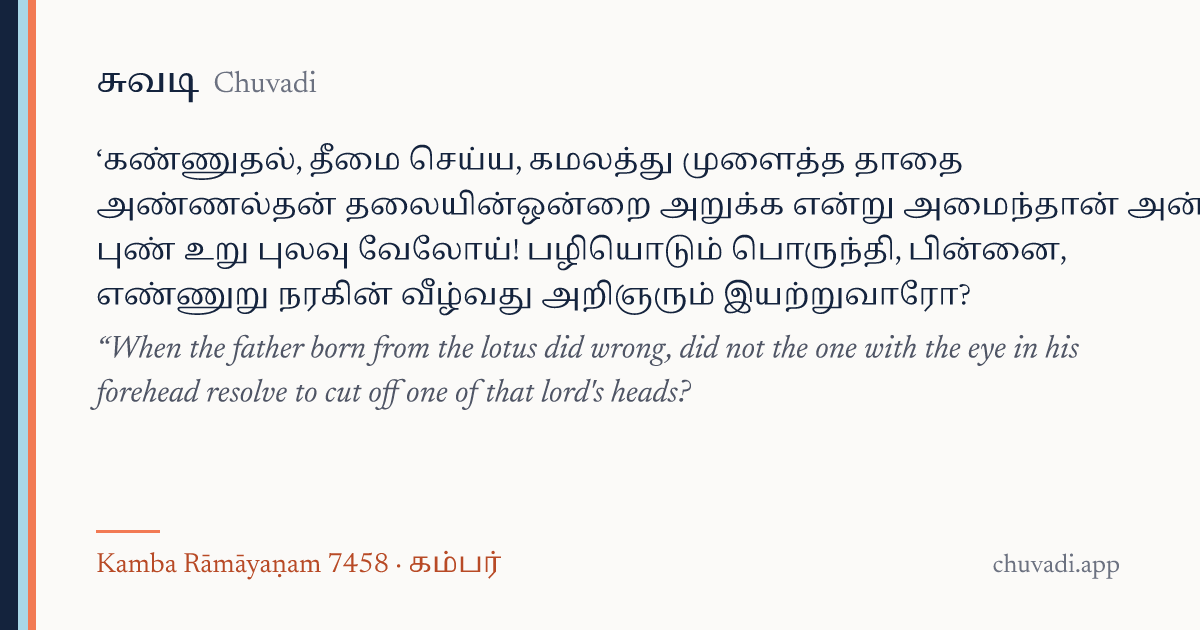
கம்பராமாயணம் 7458 · யுத்த 15.145
பாடல் · The poem
Tap a word to see its gloss in the commentary and where else it occurs.
பொருள் · Meaning in Tamil
புண் உறு புலவு வேலோய் ! - பகைவர் உடல் புண்ணிலிருந்து பொருந்திய ஊன் நாற்றம் படிந்த வேற்படையை உடையவனே; கமலத்து முளைத்த தாதை அண்ணல் - தாமரையில் தோன்றிய பெருமை மிகு பிரமன்; தீமை செய்ய - ஒரு தீய தொழிலைச் செய்தபோது; கண்ணுதல் - நெற்றியில் கண்ணுடைய சிவபிரான்; தன் தலையின் ஒன்றை அறுக்க - அவனது தலையில் ஒரு தலையை அறுத்துவிட; அன்று அமைந்தான் அன்றோ -அப்போது அவன் அதற்கு உடன்பட்டான் அல்லவா?; பழியொடும் பொருந்தி - இம்மையில் பழியைப் பொருந்தி; பின்னை - மறுமையில்; எண்ணுறு நரகின் வீழ்வது - கொடிய நரகத்தில் வீழ்வதற்குக் காரணமான செயலை; அறிஞரும் இயற்றுவாரோ - அறிஞரும் செய்வார்களோ.
தீங்கு செய்தார் உயர்ந்தாராயினும் அழிப்பதே அறம் என்பதை விளக்கச் சிவபிரான் பிரமனது தலையில் ஒன்றை அறுத்த நிகழ்ச்சியைச் சான்று காட்டுகிறான் வீடணன். கமலத் தண்ணல் செய்த தீத்தொழில் பிரமன் தனக்கு உரிய நான்கு தலைகளோடு ஐந்தாவதாக ஒரு தலையினைப் படைத்துக் கொண்டு சிவனோடு ஒப்பத் தன்னையும் எண்ணிச் செருக்கு உற்றான். சிவன் அவன் தலைகளுள் ஒன்றைக் கிள்ளி ஆணவத்தை அடக்கினன் என்பது புராணச் செய்தி. அறம் தவறின் இம்மையில் பழியும் மறுமையில் நரகும் கிடைக்கும் என அறிவு கொளுத்தியவாறு.
ஆங்கிலம் · English translationAI
Translation
- “When the father born from the lotus did wrong, did not
- the one with the eye in his forehead resolve to cut off one of that lord's heads?
- You whose spear reeks of flesh from the wounds it has made! To join with blame and then
- fall into the hell one dreads—would the wise ever do such a thing?”
What the poem says
Vīṭaṇaṉ gives a second example. When Piramaṉ, the lotus-born creator, grew a fifth head and arrogantly claimed equality with Civaṉ, Civaṉ, the god with the forehead eye, nipped off one of his heads. Punishing a wrongdoer is right even when the wrongdoer is great.
Siding with evil brings disgrace in this life and hell in the next. No wise person would choose it.