



கம்பராமாயணம் 7460 · யுத்த 15.147
பாடல் · The poem
Tap a word to see its gloss in the commentary and where else it occurs.
பொருள் · Meaning in Tamil
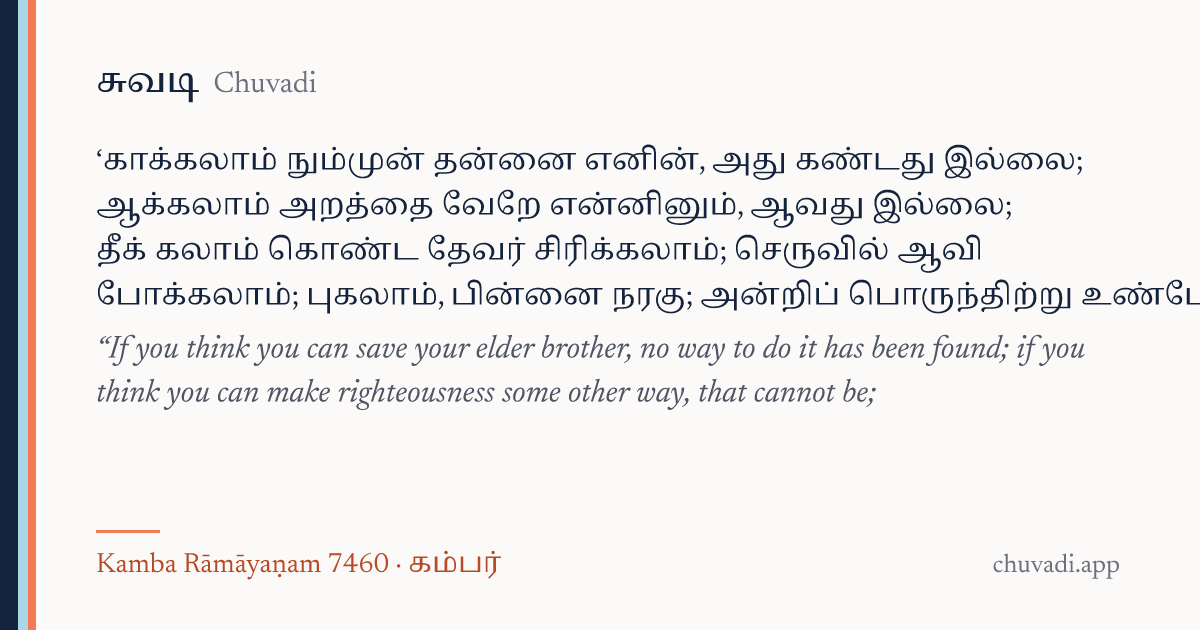
நும்முன் தன்னைக் காக்கலாம் எனின் - உன் தமையனான இராவணனைக் காக்கலாம் என்றாலோ; அது கண்டது இல்லை- அதற்கு உபாயம் ஏதும் ஏற்பட்டிலது; அறத்தை வேறே ஆக்கலாம் என்னினும் -அவனுடன் இருந்து தருமத்தை வேறாகச் செய்யலாம் என்றாலும்; ஆவது இல்லை - அச்செயல் ஆவது அன்று; தீக்கலாம் கொண்ட தேவர் - நம்மோடு கொடிய மாறுபாடு கொண்ட தேவர்கள்; சிரிக்கலாம் செருவில் - சிரிக்கும் படி நடக்க உள்ள போரில்; ஆவி போக்கலாம் -உயிரை விடலாம்; பின்னை நரகு புகலாம் - பின்பு நரகத்திலும் புகலாம்; அன்றிப் பொருந்திற்று உண்டோ - இதுவல்லாது வேறு பொருந்திய செயல் உண்டோ என்றவாறு.
'நம்முன்' என்னாது 'நும்முன்' என்றது வீடணன், தன்னைப் பிரித்துக் கூறிய கூற்று. "பிறந்திலேன் இலங்கை வேந்தன் பின் அவன் பிழைத்த போதே" என்ற (9105) வீடணன் உரையை இங்கு நினைக. கலாம்-கலகம்.
ஆங்கிலம் · English translationAI
Translation
- “If you think you can save your elder brother, no way to do it has been found;
- if you think you can make righteousness some other way, that cannot be;
- the gods who bear us bitter enmity may laugh; you may give up your life in battle;
- you may then enter hell. Apart from that, is anything fitting left?”
What the poem says
Vīṭaṇaṉ shows Kumpakaruṇaṉ that staying gains nothing. He cannot save Irāvaṇaṉ, and he cannot practise righteousness while serving him. All that is left is to die in a battle that will make the hostile gods laugh, and then go to hell.
Vīṭaṇaṉ says "your elder brother", not "our elder brother", separating himself from Irāvaṇaṉ. Elsewhere he says that he ceased to be Irāvaṇaṉ's brother the moment Irāvaṇaṉ did wrong.