



கம்பராமாயணம் 7462 · யுத்த 15.149
பாடல் · The poem
Tap a word to see its gloss in the commentary and where else it occurs.
பாட வேறுபாடு · Project Madurai reads
பொருள் · Meaning in Tamil
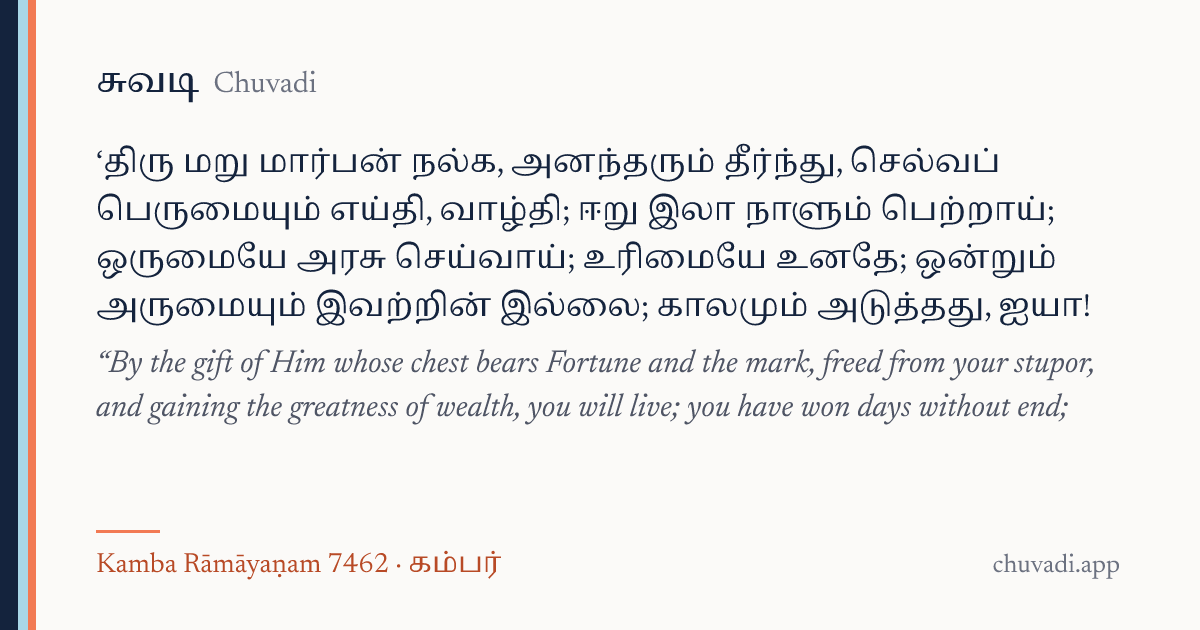
திருமறு மார்பன் நல்க - திருமகளையும், ஸ்ரீவத்சமென்னும் மச்சத்தையும் திருமார்பில் கொண்ட மாலின் திருவவதாரமாகிய இராமபிரான் கருணை செய்தலால்; அனந்தரும் தீர்ந்து -உன் உறக்க சாபம் நீங்கப் பெற்று; செல்வப் பெருமையும் எய்தி- செல்வச் செழிப்பையும் பெற்று; ஈறு இலா நாளும் பெற்றாய் வாழ்தி - அழிவில்லாத வாழ்நாளும் பெற்று வாழ்வாயாக; ஒருமையே அரசு செய்வாய் - நீ இணையின்றி அரசு செய்வாய்; உரிமையே உனதே - அதற்கு உனக்கு உரிமையும் உன்னதே; இவற்றின் ஒன்றும் அருமையும் இல்லை - இவ்வாறு எல்லாம் செய்வதில் சிறிதும் அருமையும் இல்லை; காலமும் அடுத்தது - அதற்குரிய காலமும் வந்துவிட்டது.
இப்பாடலில் இராமனையடைந்தால் கும்பகருணன் பெறப் போகும் இம்மைப் பேறுகள் விளக்கப்பட்டுள்ளன. வீடணனின் வாதம் அறம் பாவம், நன்மை, தீமை பேறு, இழிவு, வாழ்வு சிறப்பு இம்மை மறுமை என்ற இரட்டைகளாக அமைவதை அவனது கூற்றுக்கொண்டு உணரமுடிகிறது. ஒருமையே - இணையின்றியே. அனந்தர்- உறக்கமும் விழிப்பும் அற்ற நிலை. மயக்கநிலை எனலாம். பெற்றாய்- பெறுவாய் என்பது துணிவு காரணமாக எதிர்காலம் இறந்தகாலமாக வந்த கால வழுவமைதி; முற்றெச்சமும் ஆம்.
ஆங்கிலம் · English translationAI
Translation
- “By the gift of Him whose chest bears Fortune and the mark, freed from your stupor,
- and gaining the greatness of wealth, you will live; you have won days without end;
- you will rule alone; the right is yours alone; none of this
- is hard to win; and the time for it has come, sir!”
What the poem says
Vīṭaṇaṉ describes what Kumpakaruṇaṉ would gain in this life by joining Irāmaṉ. Irāmaṉ is Viṣṇu, who bears the goddess Lakṣmī and the Śrīvatsa mark on his chest. Through his grace Kumpakaruṇaṉ would be freed from the curse of sleep. He would gain wealth and endless life and rule Ilaṅkai alone, as is his right. None of this would be hard, and the moment has come.
Vīṭaṇaṉ builds his argument on pairs of opposites: virtue and sin, good and evil, honour and disgrace, this world and the next.