



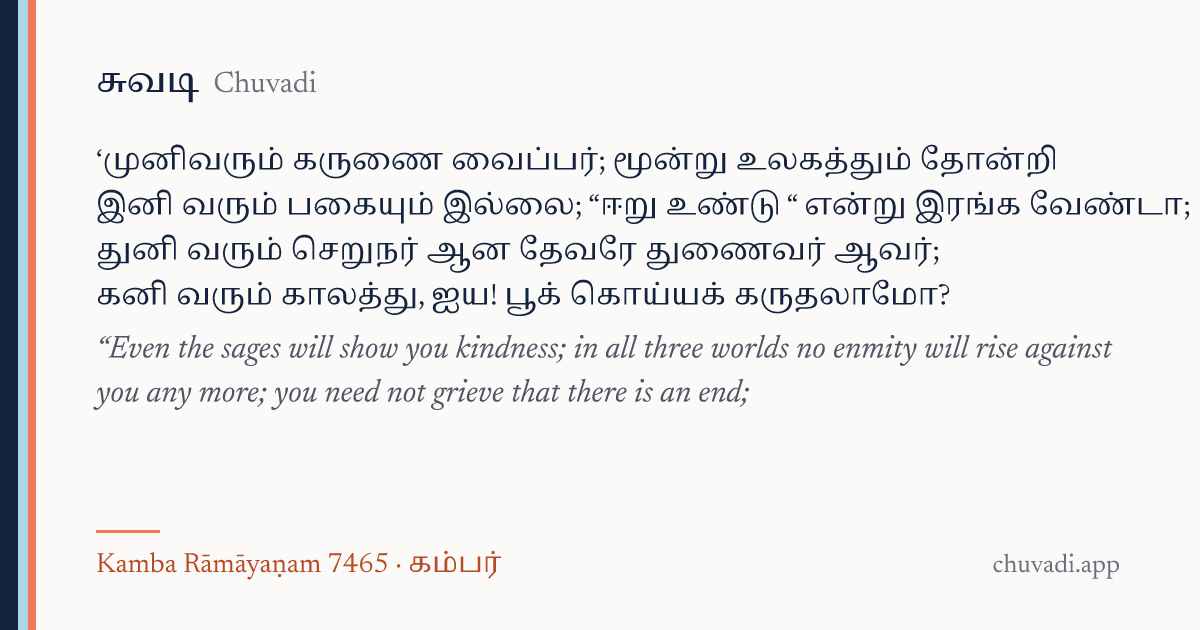
கம்பராமாயணம் 7465 · யுத்த 15.152
பாடல் · The poem
Tap a word to see its gloss in the commentary and where else it occurs.
பொருள் · Meaning in Tamil
ஐய - ஐயனே!; முனிவரும் கருணை வைப்பர் - நீ இராமனைச் சேர்ந்தால் உன் மீது பகைமை வைத்துள்ள முனிவர்களும் கருணை கொள்வார்கள்; மூன்று உலகத்தும் தோன்றி இனி வரும் பகையும் இல்லை - மூன்று உலகங்களிலும் பகையாகத் தோன்றி வருபவரும் எவருமிலர்; ஈறு உண்டு என்று இரங்க வேண்டா - மரணம் உண்டு என்று இரக்கப்படத் தேவையில்லை; துனிவரும் செறுநர் ஆன தேவரே துணைவர் ஆவர் - வெறுப்பால் வரும் மிகு பகை கொண்ட தேவர்களே நமக்குத் துணைவராக மாறுவர்; கனி வரும் காலத்து பூக்கொய்யக் கருதலாமோ - கனி தோன்றும் காலத்தில் பூக்களைக் கொய்துவிட நினைக்கலாமோ?
கனி வருங்காலத்து ஐய பூக்கொய்யக் கருதலாமோ பிறிது மொழிதல் அணி. கனிகள் தோன்றும் காலத்தில் பூக்களைப் பறிக்க நினைத்தல் அறிவுடைமையாகாதது போல இலங்கை அரசாகிய கனி பெற்று இனிது வாழ்வதற்குரிய காலம் கனிந்துள்ள போது, இவ்வினிய வாழ்வுக்குரிய உடலாகிய பூவைக் கொய்தழித்தல் அறிவுடைய செயல் ஆகாது என்று கூறியவாறு காண்க. துனி-வெறுப்பு. செறுநர்-பகைவர். துனிவரும் செறுநர் ஆன தேவர் வானர வடிவில் வந்த தேவர் எனலுமாம்.
ஆங்கிலம் · English translationAI
Translation
- “Even the sages will show you kindness; in all three worlds
- no enmity will rise against you any more; you need not grieve that there is an end;
- the very gods who are our bitter foes will become our friends;
- when the fruit is coming, sir, should one think of plucking the flower?”
What the poem says
If Kumpakaruṇaṉ joins Irāmaṉ, the sages who now hate him will show him kindness. No enemy will rise against him in any of the three worlds, and he need not fear death. Even the hostile gods, perhaps meaning those who have come down as monkeys, will become allies.
The last line is an allegory. Just as no sensible person picks the flower when the fruit is about to form, Kumpakaruṇaṉ should not destroy his body, the flower, just when the fruit, the kingdom and a happy life, is ripening.