



கம்பராமாயணம் 7466 · யுத்த 15.153
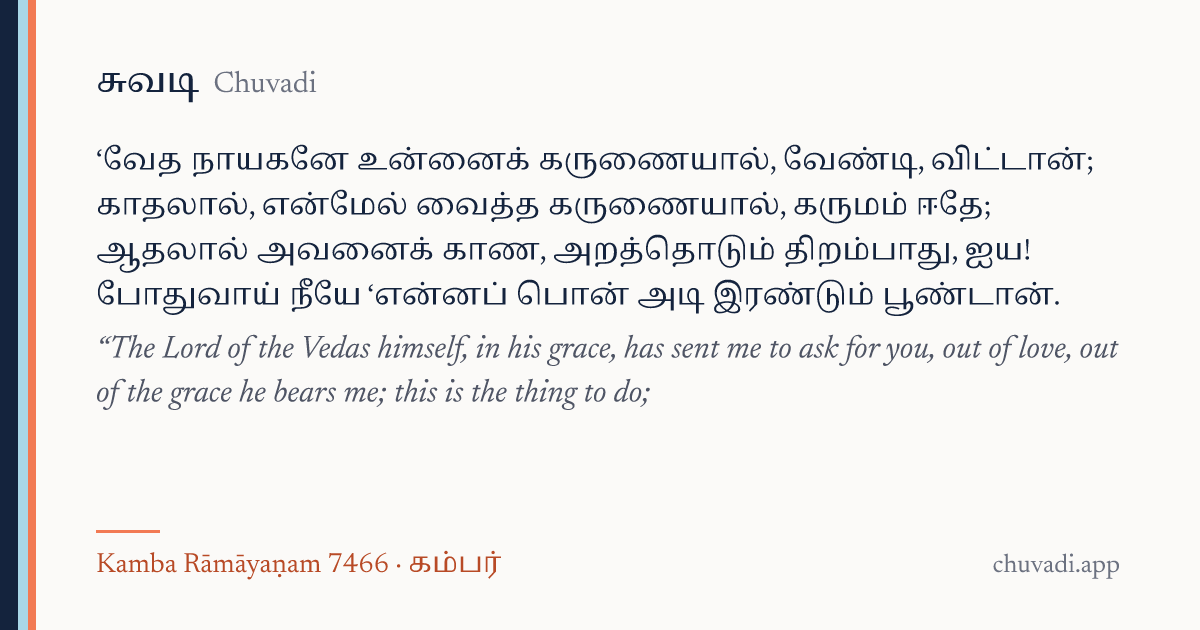
பாடல் · The poem
Tap a word to see its gloss in the commentary and where else it occurs.
பொருள் · Meaning in Tamil
ஐய - ஐயனே; வேதநாயகனே - வேதங்கள் துதிக்கும் தலைவனாகிய இராமனே; கருணையால் - உன்மீது கொண்டுள்ள அருளால்; உன்னைவேண்டி - உன்னை வேண்டி அழைத்து வருமாறு; விட்டான் - என்னை அனுப்பினான்; காதலால் என்மேல் வைத்த கருணையால் - அதற்குக் காரணம் அவன் என் மேல் சிறப்பாகக் கொண்டுள்ள காதலாகிய திருவருளாகும்; கருமம் ஈதே - செய்யத்தக்க காரியமும் அதுவேயாகும்; ஆதலால் - ஆகவே; அறத்தொடும் திறம்பாது - அறத்தில் இருந்து மாறுபடாமல்; நீயே அவனைக் காணப் போதுவாய் - நீயே அவ்விராமனைக் காண்பதற்காக வருவாய்; என்ன - என்று கூறிப்; பொன்அடி இரண்டும் பூண்டான் - அக்கும்பகருணனது அழகிய திருவடி இரண்டும் தலைமேல் பூண்டான்.
கருணை-இயல்பாய் உயிர்கள் எல்லாவற்றின் மேலும் தோன்றும் அருள், காதல்- தொடர்பு உடையார் மாட்டு ஏற்படும் உள்ள நெகிழ்ச்சி. வேதநாயகனே காதலாலும் என்மேல் கொண்ட கருணையாலும் வேண்டி விட்டதால் அவன் ஏற்பானா? மாட்டானா? என்று ஐயங்கொள்ளாது அறத்தொடு திறம்பாது போதுவாய் என்றான்.
ஆங்கிலம் · English translationAI
Translation
- “The Lord of the Vedas himself, in his grace, has sent me to ask for you,
- out of love, out of the grace he bears me; this is the thing to do;
- therefore, not swerving from righteousness, sir,
- come yourself to see him,” he said, and took both golden feet upon his head.
What the poem says
Vīṭaṇaṉ ends his plea. Irāmaṉ, Lord of the Vedas, sent him to invite Kumpakaruṇaṉ, out of grace toward him and out of special love for Vīṭaṇaṉ. Kumpakaruṇaṉ need not doubt that he will be welcomed. He should come and see Irāmaṉ without turning from righteousness.
Then Vīṭaṇaṉ touches his head to his brother's feet. The commentary separates two words for love: grace, a kindness shown to all beings, and affection, the tenderness felt for those close to oneself.