



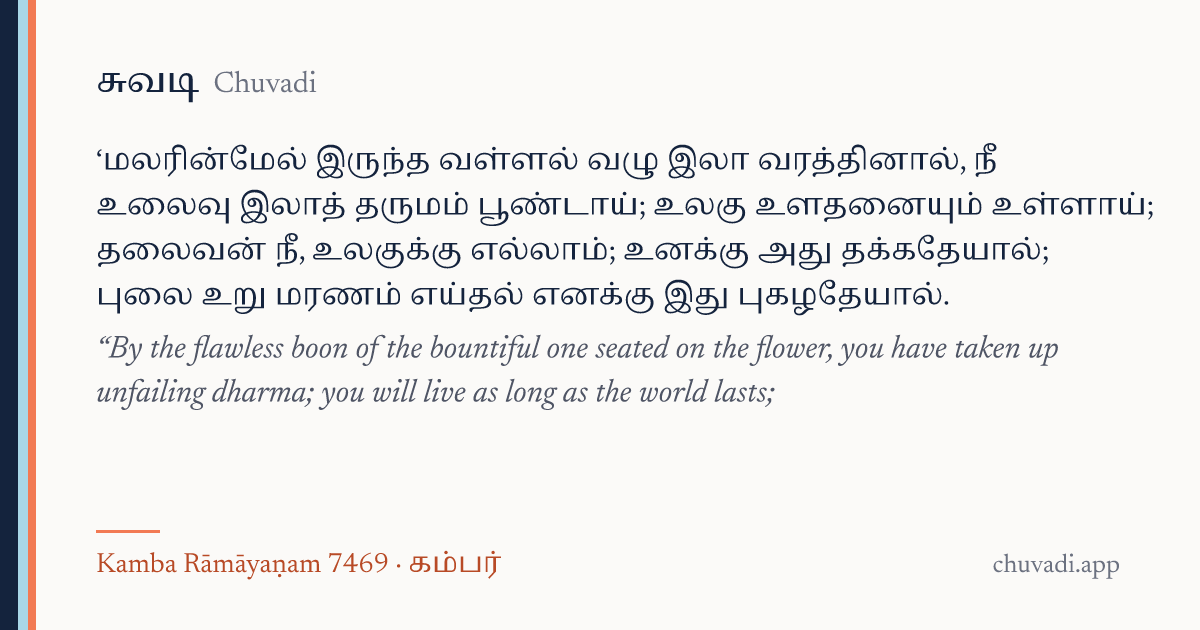
கம்பராமாயணம் 7469 · யுத்த 15.156
பாடல் · The poem
Tap a word to see its gloss in the commentary and where else it occurs.
பொருள் · Meaning in Tamil
நீ மலரின் மேல் இருந்த வள்ளல் - தாமரை மலரின் மேல் இருக்கும் வள்ளலாகிய பிரமதேவனது; வழு இலா வரத்தினால் - குற்றம் இல்லாத வரத்தினால்; உலைவு இலாத் தருமம் பூண்டாய் - என்றும் அழிவு இல்லாத தருமத்தைக் கைக்கொண்டாய்; உலகு உளதனையும் உள்ளாய் - உலகம் உள்ளவரை அழியாமல் வாழ உள்ளாய்; நீ உலகுக்கு எல்லாம் தலைவன் - நீ உலகுக்கெல்லாம் தலைவனாய் உள்ளவன்; உனக்கு அது தக்கதேயால் - அப்படிப்பட்ட உனக்கு இராமனைச் சேர்தல் என்னும் அது தகுதியானது; புலை உறு மரணம் எய்தல் - இழிவு பொருந்திய மரணத்தை அடைதல்; எனக்கு இது புகழதேயால் - எனக்குப் புகழை விளைவிக்கக் கூடியது.
பிறப்புத் தொட்டு தருமத்தை மேற்கொண்டவன் வீடணன். முன்னர்ப் புலையும் கொலையும் தவிராது வாழ்ந்து போர் தொடங்கிய போது அறத்தைக் காதலித்து இராமன்பால் சென்றால் உலகு குறைகூறும் என்றான் கும்பகருணன். விசேடதர்மத்தை மேற்கொள்வார் பண்பு நலம் தொடக்க முதலே இருந்திருத்தல் வேண்டும் என்றது காண்க.
ஆங்கிலம் · English translationAI
Translation
- “By the flawless boon of the bountiful one seated on the flower, you
- have taken up unfailing dharma; you will live as long as the world lasts;
- you are lord of all the world; that course is fitting for you;
- for me, to meet a base death—that is my glory.”
What the poem says
Kumpakaruṇaṉ draws the line between himself and Vīṭaṇaṉ. Through Piramaṉ's boon, Vīṭaṇaṉ has kept to righteousness all his life. He will live as long as the world lasts, and joining Irāmaṉ is right for him.
Kumpakaruṇaṉ has lived a life of meat-eating and killing. If he discovered virtue only when the war began, the world would mock him. For him, the "base" death of a demon on the battlefield is the honourable course.