



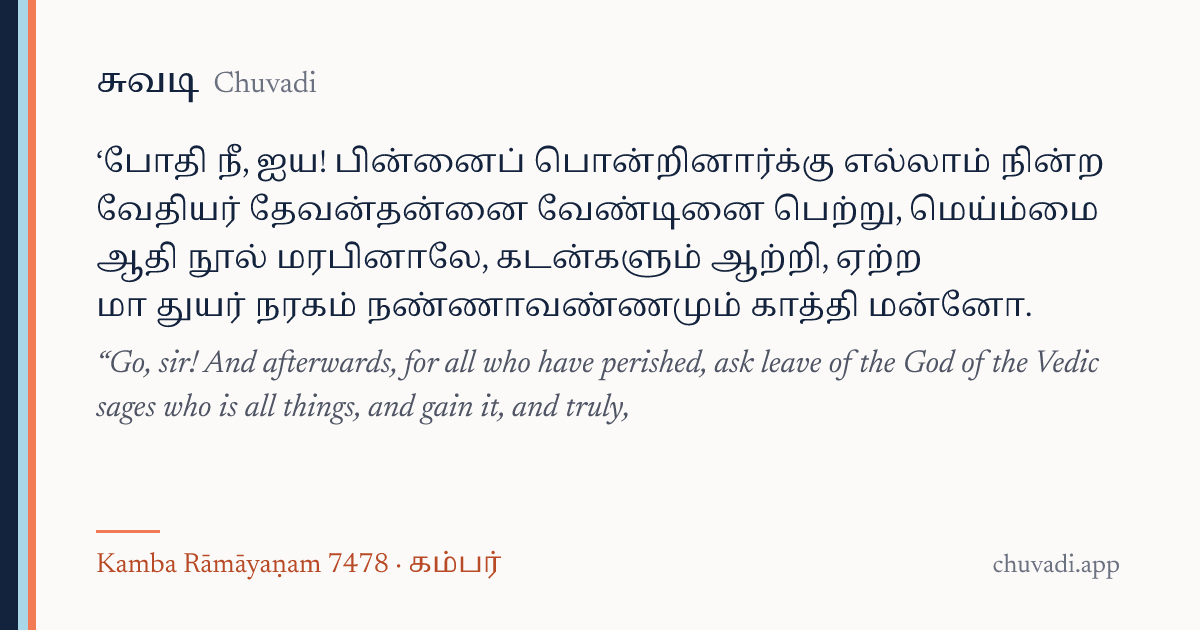
கம்பராமாயணம் 7478 · யுத்த 15.165
பாடல் · The poem
Tap a word to see its gloss in the commentary and where else it occurs.
பொருள் · Meaning in Tamil
ஐய! - ஐயனே; நீ போதி - நீ இராமனிடம் திரும்பிச் செல்; பின்னை - பிறகு; எல்லாம் நின்ற - சரஅசரப் பொருள்கள் எல்லாமுமாய் நின்ற; வேதியர் தேவன் தன்னை - வேதியர் தலைவனான இராமன் தன்னை; வேண்டினை பெற்று - அனுமதி வேண்டிப் பெற்று; மெய்ம்மை ஆதி நூல் மரபினாலே - மெய்ம்மையாகப் பழ நூலில் கூறிய முறைப்படி; பொன்றினார்க்கு - இறந்துபட்டவர்களுக்கு எல்லாம்; கடன்களும் ஆற்றி - அந்திமச் சடங்குகளைச் செய்து; ஏற்றி - உடம்புடன் கிடந்து அல்லல்படும் நிலையில் இருந்து ஏற்றி; மாதுயர் நரகம் நண்ணா வண்ணமும் காத்தி - மிக்க துயரத்தைத் தரும் நரகத்தை அடையாதவாறும் காப்பாய்;
ஈமக்கடன் செய்யப் பெறாதவர் உடம்புடன் கிடந்து அல்லல்படுவர் என்ற நூல் கொள்கை சார்ந்து இவ்வாறு கூறினான் என்க.
ஆங்கிலம் · English translationAI
Translation
- “Go, sir! And afterwards, for all who have perished,
- ask leave of the God of the Vedic sages who is all things, and gain it, and truly,
- by the way of the ancient scriptures, perform their rites, lift them up,
- and guard them from reaching the hell of great torment.”
What the poem says
Kumpakaruṇaṉ gives Vīṭaṇaṉ a last charge. He should go back to Irāmaṉ, the God who is all things. Afterwards he should ask Irāmaṉ's permission to perform the funeral rites for all the demons who have fallen, following the ancient scriptures.
It was believed that the dead who receive no funeral rites suffer, still bound to their bodies. By performing the rites, Vīṭaṇaṉ can raise them from that state and keep them from hell.