



கம்பராமாயணம் 7479 · யுத்த 15.166
பாடல் · The poem
Tap a word to see its gloss in the commentary and where else it occurs.
பாட வேறுபாடு · Project Madurai reads
பொருள் · Meaning in Tamil
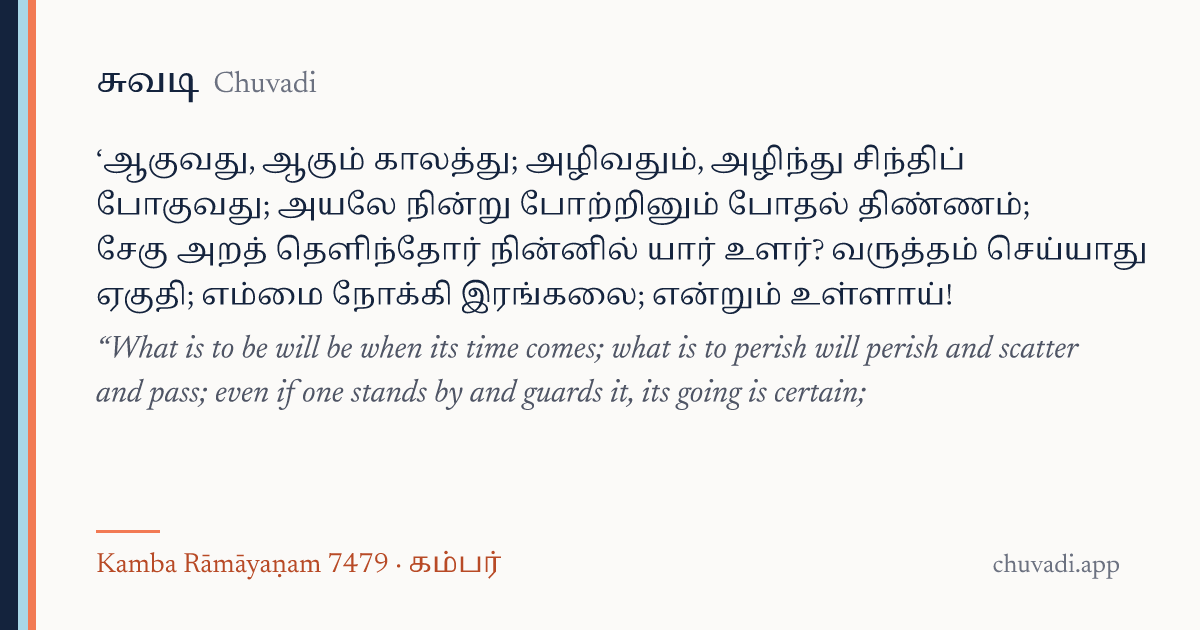
என்றும் உள்ளாய்! - எக்காலத்தும் அழியாது வாழ்பவனே! ஆகுவது ஆகும் காலத்து - உரிய காலத்தில் ஆக வேண்டியது ஆகியே தீரும்; அழிவதும் அழிந்து சிந்திப் போகுவது - அழியவேண்டியது அழிந்து சிதறிப் போகும்; அயலே நின்று போற்றினும் போதல் திண்ணம் - அவ்வாறு அழிந்து போவதைப் பக்கத்தில் நின்று பாதுகாத்தாலும் அது அழிந்து போயே தீரும், சேகு அறத் தெளிந்தோர் - குற்றமற அதை உணர்ந்து தெளிந்தவர்கள்; நின்னின் யார் உளர் - உன்னைக் காட்டிலும் யாவர் உலகில் உளர்; வருத்தம் செய்யாது - துன்பப்படாமல்; எம்மை நோக்கி இரங்கலை - எம்மைக் குறித்து இரங்கலையாய்; ஏகுதி - செல்வாய்.
நடப்பதை ஏற்கும் பக்குவம் பெற்ற மனிதனாக கும்பகருணன் விளங்குகிறான். நடைமுறை உலகில் வாழ்பவர்க்கு இத்தகைய மனநிலை துன்ப நீக்கத்துக்கு உறுதுணையாக அமையும் என்பது குறிக்கத்தக்கது. தான் இறப்பது சரதம் என்ற உண்மை தெரிந்த பின்னர் கூட உயிர் வாழ்வதற்காகப் பாசத்தை விடாத மான வீரனின் வாழ்க்கைக் கண்ணோட்டம் இங்கு விளக்கப்படுகிறது. சேகு-குற்றம்.
ஆங்கிலம் · English translationAI
Translation
- “What is to be will be when its time comes; what is to perish
- will perish and scatter and pass; even if one stands by and guards it, its going is certain;
- who is there who sees this more clearly, without flaw, than you? Do not grieve;
- go; do not pity us, you who will live forever!”
What the poem says
Kumpakaruṇaṉ accepts fate calmly. What must happen will happen in its time. What must perish will perish, however carefully it is guarded. No one understands this better than Vīṭaṇaṉ, who will live for ever. So he should go without grieving or pitying his doomed family.
Kumpakaruṇaṉ knows he will die, yet he will not give up his loyalty to save his life.