



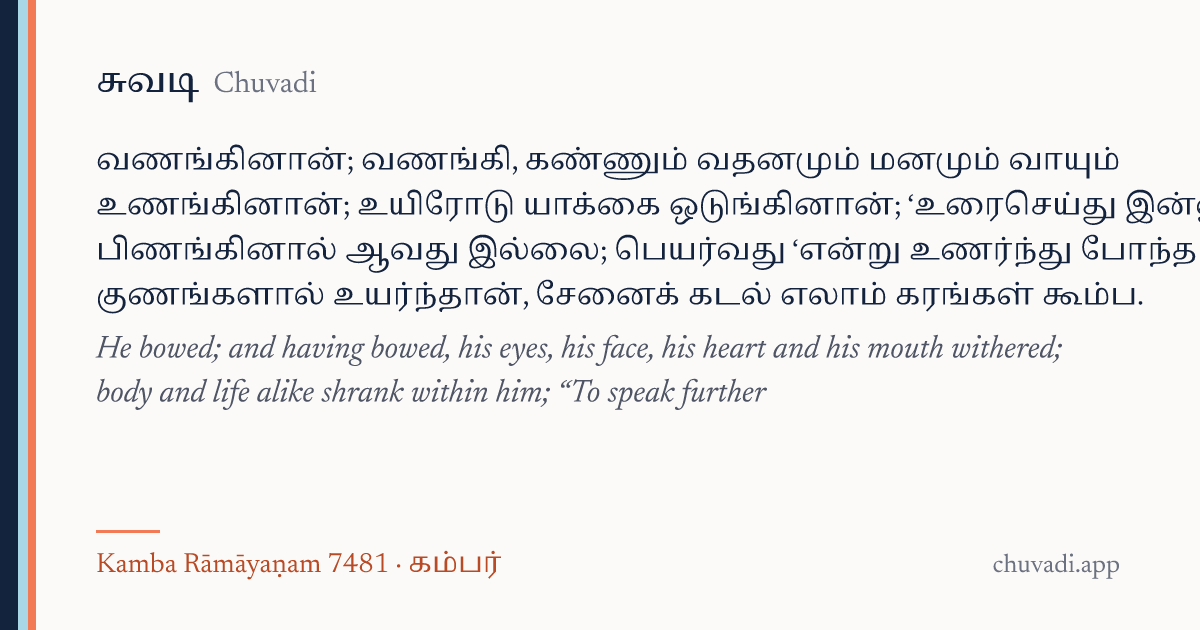
கம்பராமாயணம் 7481 · யுத்த 15.168
பாடல் · The poem
Tap a word to see its gloss in the commentary and where else it occurs.
பாட வேறுபாடு · Project Madurai reads
பொருள் · Meaning in Tamil
வணங்கினான் - வணங்கினனாகிய வீடணன்; வணங்கிக் கண்ணும், வதனமும், மனமும், வாயும் உணங்கினான் - வணங்கிக் கண்ணும், முகமும், மனமும் வாயும் உலர்ந்தான்; உயிரோடு யாக்கை ஒடுங்கினான் - உயிரும் உடம்பும் ஒடுங்கிச் சோர்ந்தான்; இன்னும் உரை செய்து - இக்கும்பகருணனுடன் இன்னும் பேச; பிணங்கினால் ஆவது இல்லை - மனமாறுபாடு கொள்வதால் ஆகக்கூடிய பயன் எதுவும் இல்லை; பெயர்வது என்று உணர்ந்து- திரும்பிச் செல்வதே தக்கது என்று; குணங்களாலுயர்ந்தான் - பண்புகளால் இமயம் என உயர்ந்து நிற்கும் கும்பகருணனது, சேனைக் கடல் எலாம் - அரக்கர் சேனையாகிய கடல் எல்லாம்; கரங்கள் கூப்ப - கைகூப்பித் தொழ; போந்தான் - திரும்பினான்.
குணங்களாலுயர்ந்தான் - கும்பகருணன். வீடணன் எனக் கொள்வாருமுளர். எண்ணரும் குணங்கொடன்றோ இராமன் மேல் நிமிர்ந்த காதல் என்று பாடிய கவிஞர் உயர் பண்பை எப்பாத்திரத்தில் கண்டாலும் அதைப் போற்றுவதைக் கவிதை அறமாகக் கொண்டவர் ஆகவே இருவரும் குணங்களால் உயர்ந்தவர் ஆதலின் யாரைக் கூறினும் பொருந்தும்.
ஆங்கிலம் · English translationAI
Translation
- He bowed; and having bowed, his eyes, his face, his heart and his mouth
- withered; body and life alike shrank within him; “To speak further
- and argue would achieve nothing; I must go,” he understood, and went,
- while the whole sea of the army of him who was lofty in virtue folded their hands.
What the poem says
Vīṭaṇaṉ bows one last time. His eyes, face, heart and mouth seem to dry up, and his whole body sags with grief. He sees that more argument is useless and turns back, and the whole demon army folds its hands in respect as he goes.
"He who was lofty in virtue" probably refers to Kumpakaruṇaṉ, though some take it as Vīṭaṇaṉ. The poet honours noble character wherever he finds it, so it suits either brother.