



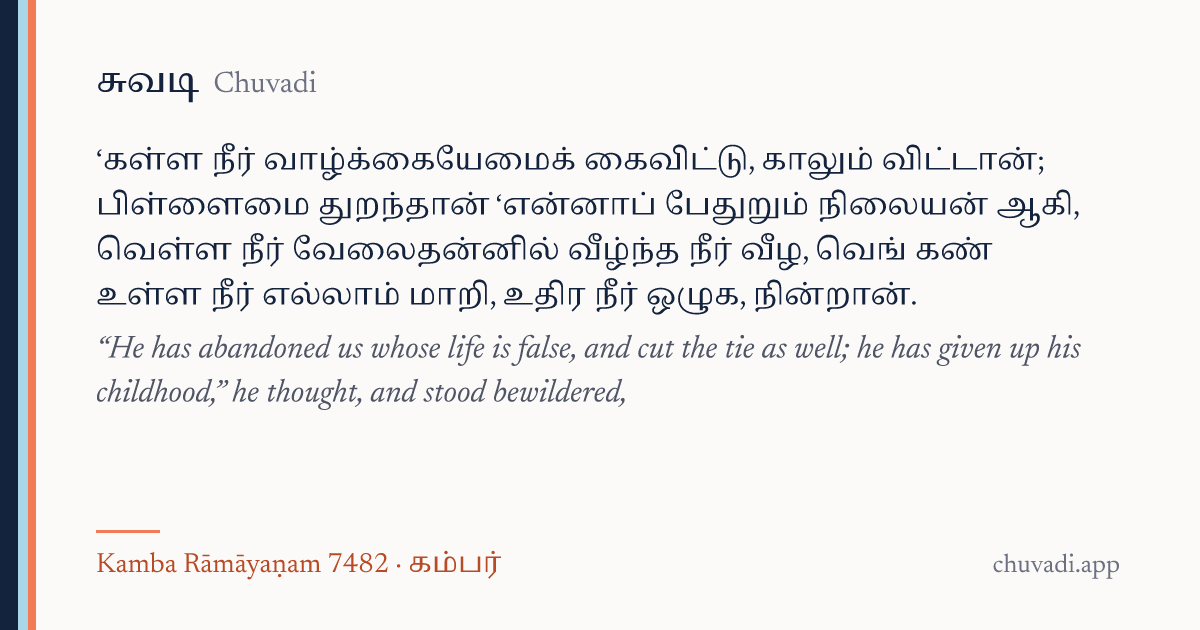
கம்பராமாயணம் 7482 · யுத்த 15.169
பாடல் · The poem
Tap a word to see its gloss in the commentary and where else it occurs.
பொருள் · Meaning in Tamil
கள்ளநீர் வாழ்க்கை யேமை - கள்ளத்தன்மை பொருந்திய வாழ்க்கை உள்ள எங்களைக்; கைவிட்டு - விட்டுவிட்டு; காலும் விட்டான் - தொடர்பையும் அறுத்துக்கொண்டு விட்டான்; பிள்ளைமை துறந்தான் - இளம் பிள்ளைத் தன்மையைத் துறந்துவிட்டான்; என்னா - என்று கருதி; பேதுறும் நிலையன் ஆகி - கலங்கிய மனத்தை உடைய நிலையனாம்; வெள்ள நீர் வேலை தன்னில் - வெள்ள நீர் நிரம்பிய கடல் தன்னில்; வீழ்ந்த நீர் வீழ - விழும் தன்மையுள்ள ஆற்று நீர் பின்னிடுமாறு; வெங்கண் உள்ள நீர் எல்லாம் மாறி - தன் கொடிய கண்களில் உள்ள கண்ணீர் எல்லாம் மாறி; உதிரநீர் ஒழுக நின்றான் - குருதி நீராகப் பெருக நின்றான்.
கும்பகருணனைப் போருக்கு அனுப்பிய இராவணன்,
"அவ்வழி இராவணன் அனைத்து நாட்டமும் செவ்வழி நீரொடும் குருதி தேக்கினான்"
ஆகி நின்றமையையும், வீடணனை இன்றொடும் தவிர்ந்ததன்றே உடன்பிறப்பு என்று விட்ட நிலையில, "வெங்கண் உள்ள நீரெல்லாம் மாறி உதிர நீர் ஒழுக நின்றான். ” ஆகி நின்றமையையும் நோக்கின், தம்பியர் மீது தமையர் கொண்டிருந்த பாசப்பிணைப்பினை உணரலாம்.
ஆங்கிலம் · English translationAI
Translation
- “He has abandoned us whose life is false, and cut the tie as well;
- he has given up his childhood,” he thought, and stood bewildered,
- and as the rivers fall into the flooded ocean, all the water
- in his fierce eyes turned, and blood streamed from them as he stood.
What the poem says
When Vīṭaṇaṉ has gone, Kumpakaruṇaṉ stands stunned. His brother has left those who live by deceit, cut all ties and grown out of the boy he once was. The tears in his fierce eyes turn to blood and pour out like rivers into the sea.
The commentary compares Irāvaṇaṉ's earlier farewell to Kumpakaruṇaṉ, when blood and tears filled his eyes but he held them back. Here Kumpakaruṇaṉ lets them flow. Both scenes show the strong love the elder brothers have for the younger.