



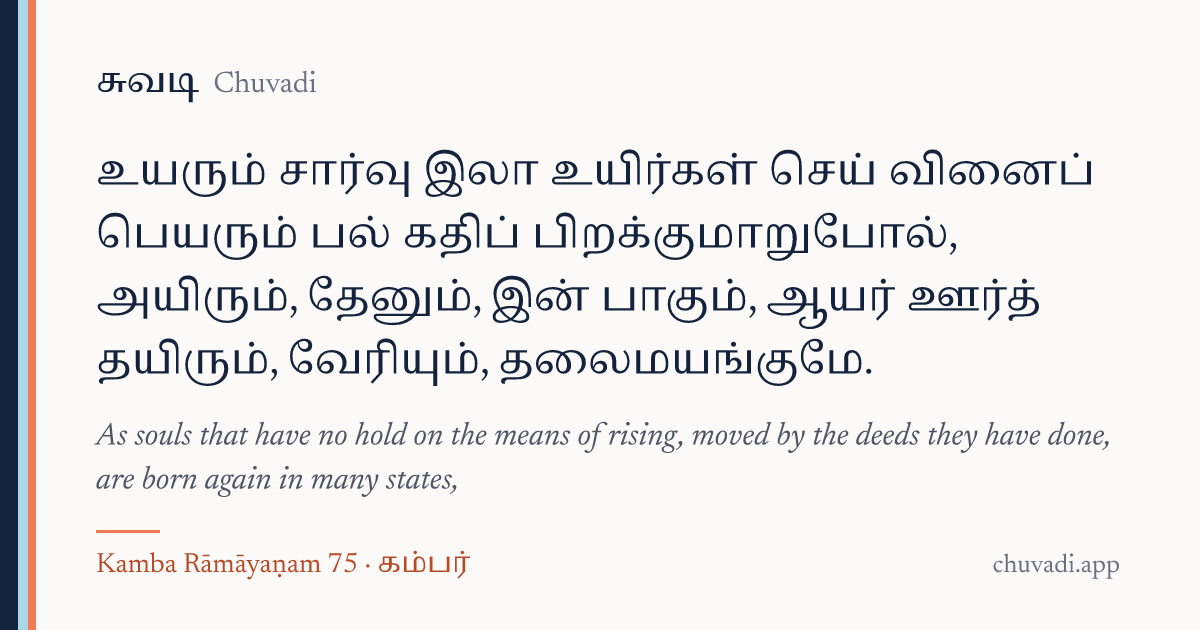
கம்பராமாயணம் 75 · பால 2.55
பாடல் · The poem
Tap a word to see its gloss in the commentary and where else it occurs.
பொருள் · Meaning in Tamil
உயரும் சார்விலா உயிர்கள் - உயர்கதியான வீடு பேறடைவதற்கு உரிய ஞானமில்லாத உயிர்கள்; செய்வினைப் பெயரும்பல்கதி - தாம் செய்த வினைப்பயனைத் துய்க்க மாறி மாறிப் பல பிறவிகளிலும்; பிறக்கும் ஆறு போல் - பிறக்கின்ற விதம் போல, அயிரும் தேனும் இன்பாகும் - சர்க்கரையும், தேனும், இனிய பாகும்; ஆயர் ஊர்த் தயிரும் வேரியும் - இடையர் ஊர்களில் கிடைக்கும் தயிரும் கள்ளும் ஆகியவை; தலைமயங்கும் - இடம் மாறுபடும்.
ஓரிடத்தில் உற்பத்தியாகும் அயிர் முதலிய வேறிடங்களுக்குக் கொண்டு செல்லப்படுவதற்கு, உயர்கதியடையும் வாய்ப்பில்லாத உயிர்கள் வேறு வேறு பிறவிகளில் மாறிப் பிறத்தல் உவமையாகக் கூறப்பட்டது. "உயரும் சார்பாவது அஞ்ஞான வயத்தால் பிறந்து இறந்து தாழ்ந்த கதிகளிற் செல்லுதல் ஒழிந்து, மோட்சத்தை அடைதற்குக் கருவிகளாகிய மெய்ஞ்ஞானம்" - இராமசாமி நாயுடு உரை. இறைவனை அடைவதற்குரிய ஏதேனும் ஒரு நெறியைக் கடைப்பிடித்து - பிறவித் துன்பத்திலிருந்து ஈடேறுவதே உயிர்களின் கடமை என்பதனை இதனால் உணர்த்தினார். பல்கதி: மக்கள், தேவர், நரகர், விலங்கு என்னும் நான்கு கதிகளாம். அயிர்: கண்ட சருக்கரை செய்வினை: தாம் செய்த நல்வினை தீவினைகள் 52-ஆம் பாட்டு முதல் இதுவரை அந்த நாட்டின் வறுமை இன்மையும் வளப்பெருக்கமும் கூறப்பட்டன.
ஆங்கிலம் · English translationAI
Translation
- As souls that have no hold on the means of rising,
- moved by the deeds they have done, are born again in many states,
- so sugar candy, honey, sweet syrup, and from the herdsmen's villages
- curds and toddy pass from place to place and mingle.
What the poem says
Goods of every kind travel about the country: sugar candy, honey and syrup, along with curds and toddy from the cowherds' villages. The poet compares this constant movement to the wandering of souls. Those who lack the true knowledge that leads to liberation are carried by their karma from birth to birth, now as humans, now as gods, now in hell, now as animals.
The simile carries a lesson: every soul should hold to some path to God and escape the round of rebirth. This verse closes the section on Kōcalam's freedom from poverty and its abundance.