



கம்பராமாயணம் 752 · பால 12.14
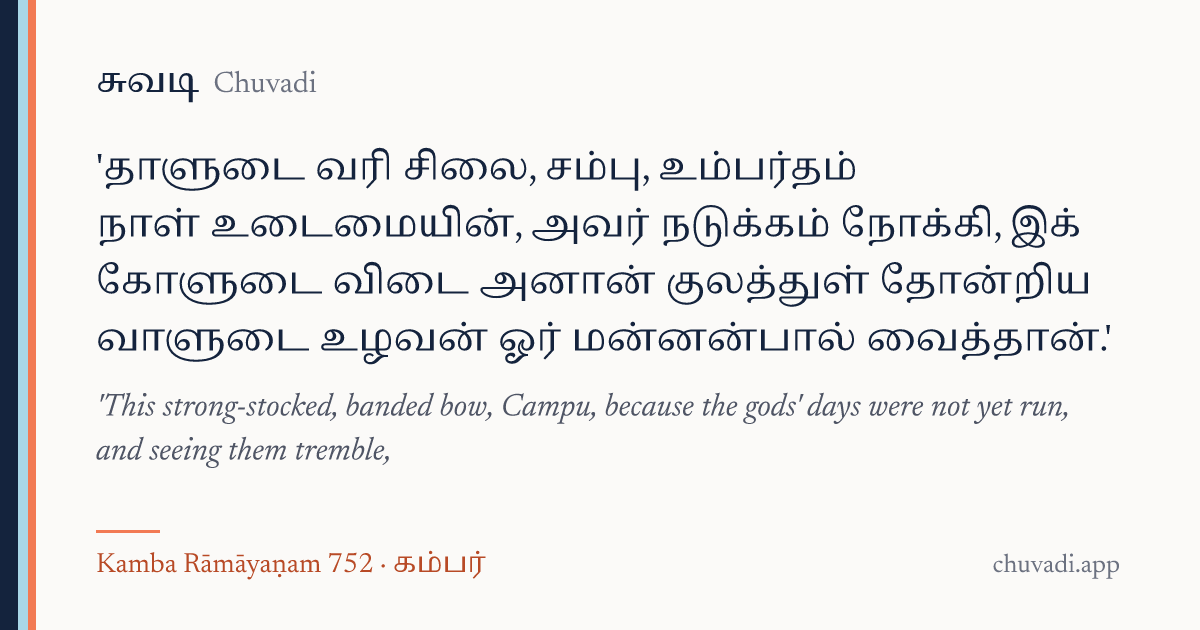
பாடல் · The poem
Tap a word to see its gloss in the commentary and where else it occurs.
பொருள் · Meaning in Tamil
சம்பு - (தன் சினம் மாறிய) சிவன்; அவர் நடுக்கம் நோக்கி - தேவர்கள் அஞ்சி நடுங்குவதைப் பார்த்து; உம்பர்தம் நாள் - அத்தேவர்கள் வாழ்நாட்கள்; உடைமையின் - நீண்டு இருந்தமையால்; தாள்உடை - வலிய அடித்தண்டையுடைய; வரிசிலை - கட்டமைந்த அவ்வில்லை; இக்கோள் உடை - வலிமையுடைய; விடை அனான் - இந்தக் காளை போன்ற சனகனது; குலத்துள் தோன்றிய - குலத்திலே பிறந்த; வாள் உடை உழவன் - வாளாகிய ஏர் கொண்டு உழுபவனான; ஓர் மன்னன்பால் - ஓர் அரசனிடத்தில்; வைத்தான் - கொடுத்தான்.
சிவன் அந்த வில்லைத் தேவராதனிடம் கொடுத்து வைத்தான். 'வில்லேர் உழவர்' என்றாற்போல 'வாளுடை உழவன்' என்றார். 'வாளேருழவன்' - புற. 368. 'வில்லேர் உழவர்' 'சொல்லேர் உழவர்' - இருக். 882
ஆங்கிலம் · English translationAI
Translation
- 'This strong-stocked, banded bow, Campu, because the gods'
- days were not yet run, and seeing them tremble,
- gave to a king born in the line of this mighty, bull-like man,
- a ploughman whose plough was the sword, to keep.'
What the poem says
Seeing the gods shaking with fear, and since their lives were not yet meant to end, Civaṉ put the bow away from himself and gave it into the keeping of a king of Caṉakaṉ's line, an ancestor named Tēvarātaṉ.
The king is called a "ploughman of the sword", a warrior whose field is battle, echoing the classical phrases "ploughman of the bow" and "ploughman of the word" found in Puṟanāṉūṟu and the Kuṟaḷ.