



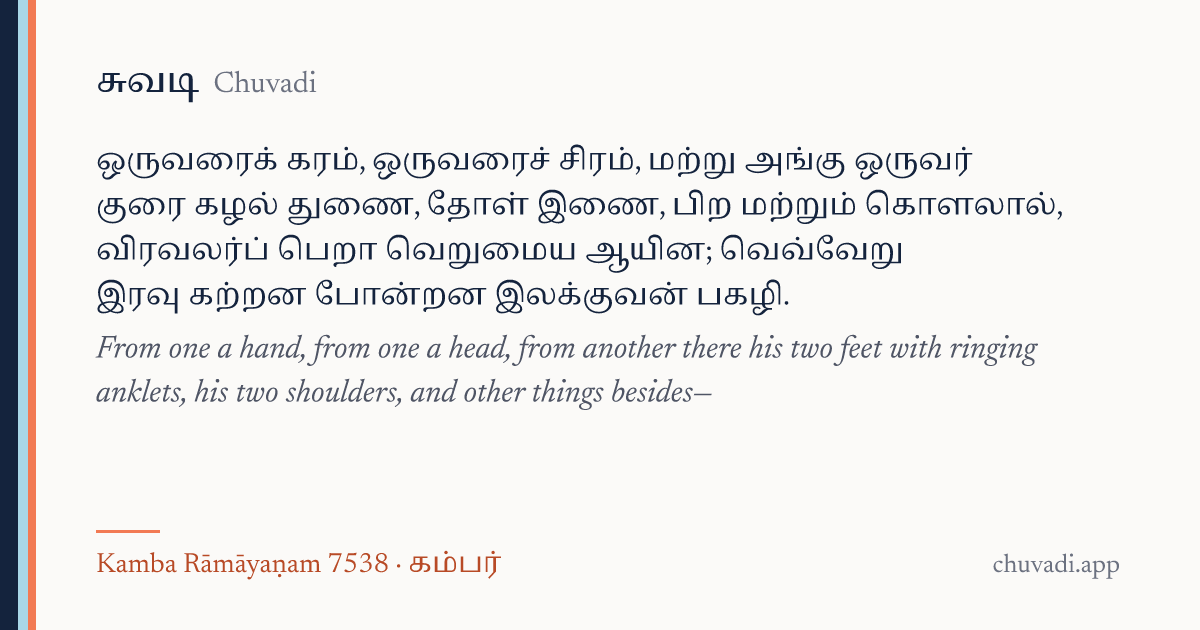
கம்பராமாயணம் 7538 · யுத்த 15.225
பாடல் · The poem
Tap a word to see its gloss in the commentary and where else it occurs.
பொருள் · Meaning in Tamil
வெவ்வேறு இரவு கற்றன போன்றன - வெவ்வேறு வகையாகப் பொருளை இரத்தல் தொழிலைக் கற்றன போன்றவாகிய; இலக்குவன் பகழி - இலக்குவன் அம்புகள்; ஒருவரைக் கரம் - ஒருவரது கையையும், ஒருவரைச் சிரம் - ஒருவரது தலையையும்; மற்று அங்கு ஒருவர் -பின்னும் ஒருவரது; குரை கழல் துணை -வீரக்கழல் அணிந்த இரு பாதங்கள்; தோள் இணை - ஒருவரது இரு தோள்கள்; மற்றும் பிற கொளலால்- மற்றுக் கிடைக்கும் பிறவற்றையும்; கொளலால் - கொண்டு விட்டதால்; விரவலர் பெறா வெறுமைய ஆயின - பகைவர் இல்லாமல் வறுமை அடைந்தனவாயின.
இலக்குவன் அம்புகள் அரக்கர்களின் உறுப்புகளை அறுத்து அழிப்பது பல்வேறு வகையில் இரத்தல் தொழிலைக் கற்பது போன்று இருந்தது. அவை பகைவரை முற்றும் அழித்துத் திரிந்தது. அம்புகளுக்கு அழிந்து பட அரக்கர் இல்லை. இரப்பார்க்கு ஈவார் இல்லாத தன்மையை ஒத்து இருந்தது போர்க்களம்.
ஆங்கிலம் · English translationAI
Translation
- From one a hand, from one a head, from another there
- his two feet with ringing anklets, his two shoulders, and other things besides—
- taking these, they were left empty, finding no more foes to take from:
- Ilakkuvaṉ's arrows were like beggars who had learned many ways of begging.
What the poem says
Ilakkuvaṉ's arrows are compared to beggars who have learned every way of asking for alms. They take a hand from one demon, a head from another, feet or shoulders from a third. Soon no enemies are left to "give", and the arrows go away empty-handed, like beggars with no one left to give them anything.