



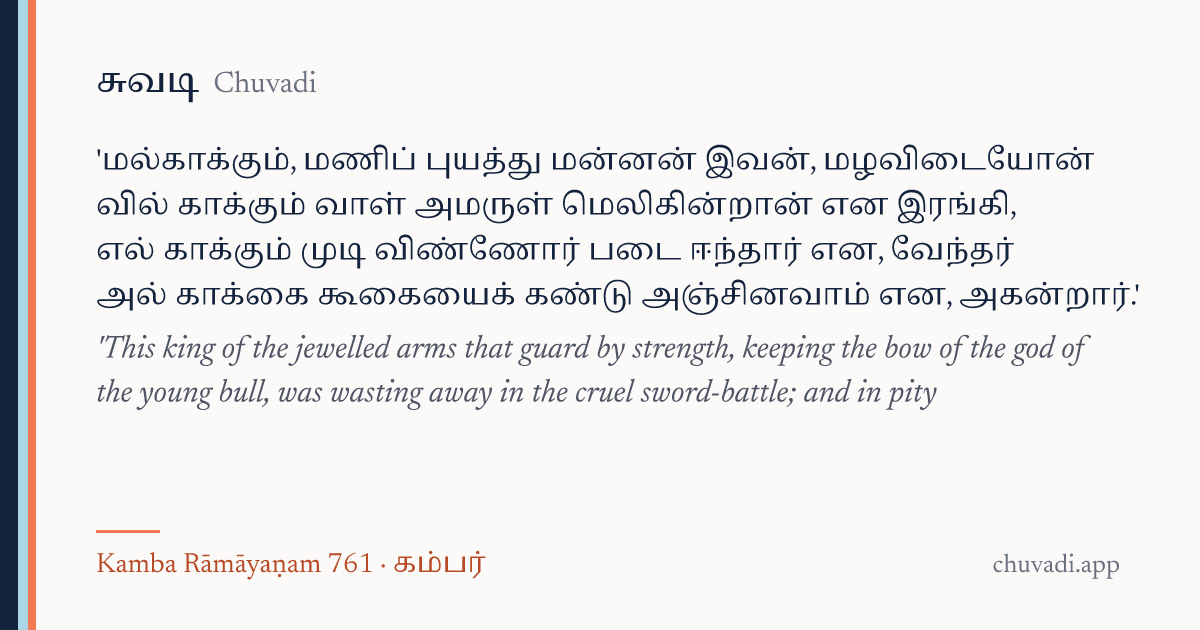
கம்பராமாயணம் 761 · பால 12.23
பாடல் · The poem
Tap a word to see its gloss in the commentary and where else it occurs.
பொருள் · Meaning in Tamil
எல்காக்கும் முடி - ஒளிவிடும் முடியணிந்த; விண்ணோர் - தேவர்கள்; மல் காக்கும் - வலிமை பெற்ற; மணிப் புயத்து - அழகிய தோள்களைக் கொண்ட; மன்னன் இவன் - இந்தச் சனகன்; மழ விடையோன் வில் - காளை ஊர்தியை உடைய சிவனது வில்லை; காக்கும் வாள் அமருள் - காப்பதற்காகச் செய்யப்படும் கொடிய போரில்; மெலிகின்றான் - வரவரத் தளர்ச்சியடைகின்றான்; என - என்ற காரணத்தினால்; இரங்கி - இரக்கம் கொண்டு; படை - நால்வகைப் படைகளை; ஈந்தார் என - அளித்து உதவினார் என்பதால், வேந்தர் - பகையரசர்; அல் - இரவில்; காக்கை - காக்கைகள்; கூகையைக் கண்டு - கோட்டானைப் பார்த்து; அஞ்சின என - அஞ்சியவற்றைப் போல; அகன்றார் - அஞ்சி ஓடினார்கள்.
பகைவர்களோடு சனகன் போர் செய்து தளரும்போது வானவர் படையைத் தந்தனர். அதனால் இனி இவ்வரசனுடன் பொரமுடியாது எனப்பகைவர் அஞ்சியோடினர் என்பது. இனம் பெரியவாயும் வலியவாயும் உள்ள காக்கைக் கூட்டங்கள் கூகைகளைப் பகலில் வெல்லுமாயினும் இரவில் வலியற்ற சில கூகைகளுக்கு அவை அஞ்சிப் பதுங்கும் என்பது. “பகல் வெல்லும் கூகையைக் காக்கை” குறள் - 481
ஆங்கிலம் · English translationAI
Translation
- 'This king of the jewelled arms that guard by strength, keeping the bow of the god of the young bull,
- was wasting away in the cruel sword-battle; and in pity
- the gods, whose crowns guard their light, gave him an army; at which the kings
- fled, as crows by night take fright at the sight of an owl.'
What the poem says
Catāṉantaṉ finishes the account of the war. As Caṉakaṉ's strength failed in defending Civaṉ's bow, the gods took pity and sent him troops, and the besieging kings fled.
The simile turns on a proverb also found in the Kuṟaḷ: crows, many and strong, can beat an owl by day, but at night they cower before it. The kings who had the upper hand were suddenly the weaker side.