



கம்பராமாயணம் 764 · பால 12.26
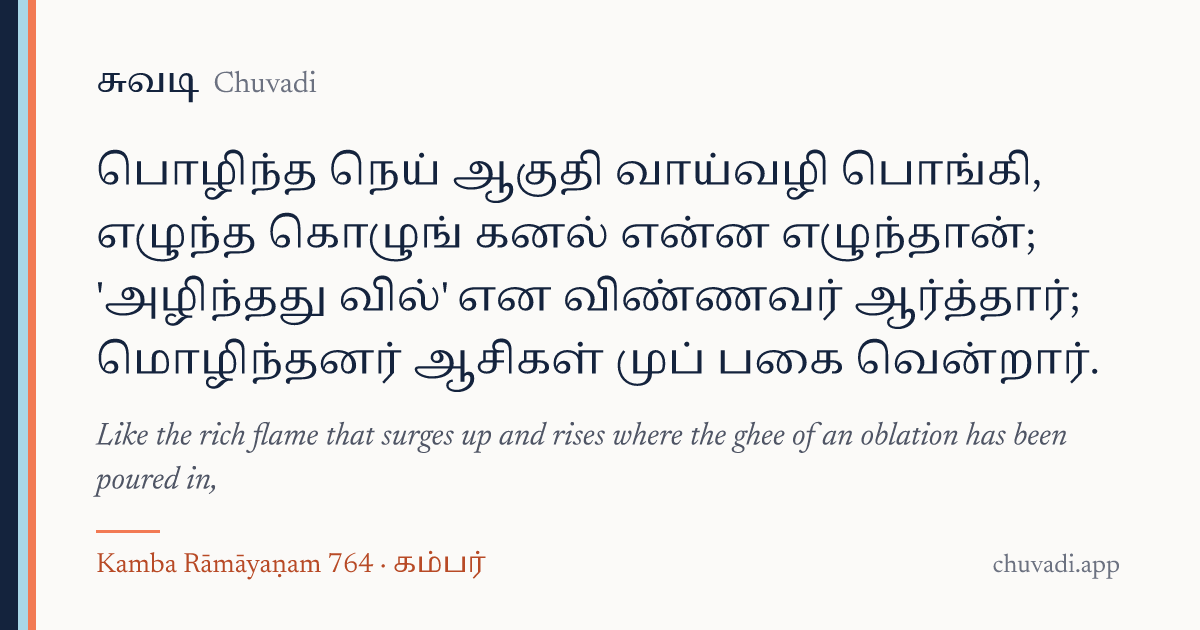
பாடல் · The poem
Tap a word to see its gloss in the commentary and where else it occurs.
பொருள் · Meaning in Tamil
பொழிந்த நெய் - ஒருசேரச் சொரிந்த நெய்யாகிய; ஆகுதி வாய்வழி - ஆகுதி வீழ்ந்த இடத்திலிருந்து; பொங்கி எழுந்த - பொங்கி மேல் எழுந்த; கொழுங்கனல் என்ன - நன்றாக எரிகின்ற நெருப்புப் போல; எழுந்தான் - (இராமன் சிவதனுசு வைத்துள்ள இடம் நோக்கி) செல்லலானான்; விண்ணவர் - (அப்போது) தேவர்கள் (இராமன் வில்லை முறிப்பது உறுதி என்ற துணிவால்); வில் அழிந்தது என - சிவதனுசு முறிந்து விட்டது என்று; ஆர்த்தார் - ஆரவாரம் செய்தார்கள்; முப்பகை வென்றார் - (காமம், வெகுளி, மயக்கம் என்ற) மூன்று உட்பகைகளையும் வென்ற முனிவர்; ஆசிகள் - (இராமனுக்கு) வாழ்த்துக்களை; மொழிந்தனர் - கூறினார்கள்.
முனிவனது குறிப்பு தன் வீரத்தைத் தூண்டியதும் அந்த வில்லை நோக்கிய இராமன் உடனே எழுந்தான் என்பது. வேள்வி நெருப்பில் ஒருசேரப் பொழியப்பெற்ற நெய்யின் ஆகுதி, இராமனது வீரக் கனலைத் தூண்டிய முனிவரது குறிப்பு நோக்கத்திற்கு ஏற்ற உவமையாயிற்று. “நெய்பெய் தீயின் எதிர்கொண்டு” - குறுந். 106. வேள்விக் கனல் உவமையால் தூய்மையும் நன்மையும் தொனிக்கும்.
ஆங்கிலம் · English translationAI
Translation
- Like the rich flame that surges up and rises
- where the ghee of an oblation has been poured in,
- he rose; 'The bow is finished!' the gods cried out;
- and those who had conquered the three inner foes spoke blessings.
What the poem says
At the sage's signal Irāmaṉ rises and walks toward the bow. He goes up like a sacrificial fire leaping when ghee is poured on it: the sage's glance is the oblation that kindles his courage, and the image of the sacred fire also suggests purity.
The gods, sure of the outcome, shout that the bow is already broken, and the sages who have mastered desire, anger and delusion bless him.