



கம்பராமாயணம் 7660 · யுத்த 15.347
பாடல் · The poem
Tap a word to see its gloss in the commentary and where else it occurs.
பொருள் · Meaning in Tamil
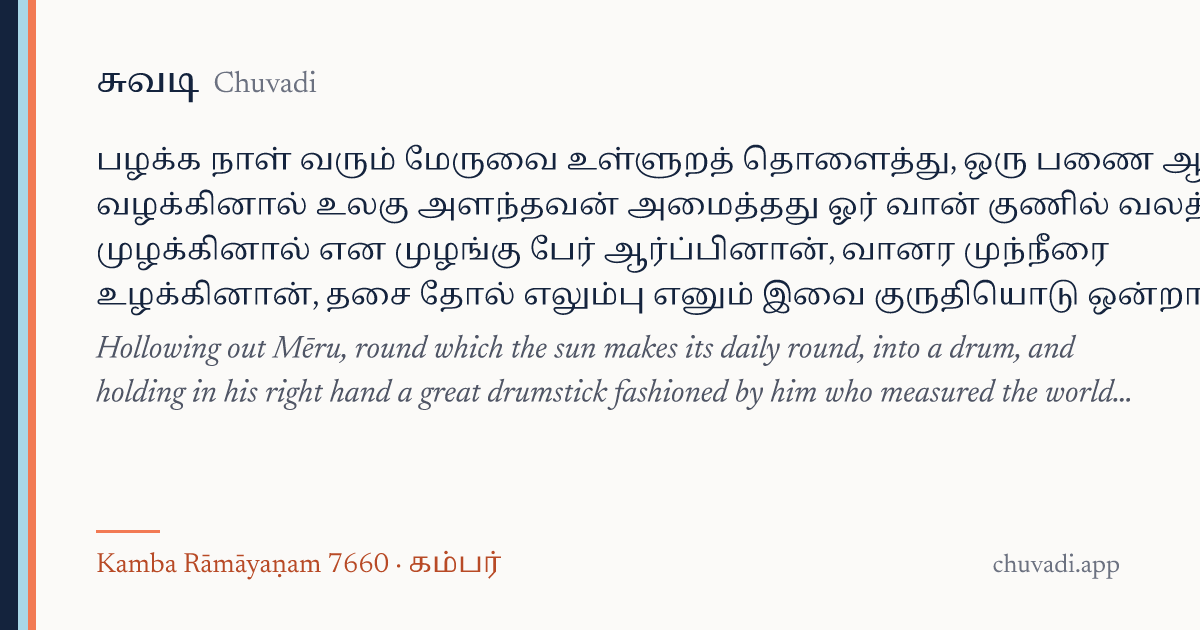
பழக்க நாள் வரும் மேருவை - வழக்கமாகச் சூரியன் வலமாக வரும் மேருமலையை; உள்ளுறத் தொளைத்து ஒரு பணை ஆக்கி - உள்ளே பொருத்தமாக துளைத்து ஒருமுரசம் செய்து; வழக்கினால் உலகு அளந்தவன் - முறைமையினால் உலகை அளந்தவனான திரிவிக்கிரம அவதாரமாகிய கடவுள்; அமைத்தது ஓர் வான் குணில் வலத்து ஏந்தி - அமைத்ததாகிய பெரிய குறுந்தடி ஒன்றை வலக்கையில் ஏந்தி; முழக்கினாலென முழங்கு பேர் ஆர்ப்பினான் - அடித்து முழக்கியதை ஒத்த பேர் ஒலியைச் செய்தவன் ஆகிய கும்பகருணன்; தசை, தோல், எலும்பு எனும் இவை குருதியொடு ஒன்றாக - தசை தோல் எலும்பு என்னும் இவை குருதியோடு சேர்ந்து ஒன்றுபடும்படி; வானர முந்நீரை உழக்கினான் - வானரப் படையாகிய கடலைக் கலக்கினான்.
இப்பாடலில் முதல் மூன்று அடிகளில் கும்பகருணன் செய்த பேரொலியை மேருமலையை உள்துளைத்துச் செய்த முரசத்தைத் திரிவிக்கிரமக் கடவுள் அமைத்த குணிலால் அடித்தால் ஏற்படும் ஒலிக்கு உவமை கூறினார்
ஆங்கிலம் · English translationAI
Translation
- Hollowing out Mēru, round which the sun makes its daily round, into a drum,
- and holding in his right hand a great drumstick fashioned by him who measured the world by right,
- he whose mighty roar was like the boom of that drum churned
- the monkey sea till flesh, skin and bone were one with the blood.
What the poem says
Kumpakaruṇaṉ's roar is compared to the sound that would come if Mount Mēru were hollowed into a war drum and beaten with a stick made by Vishnu, who measured the worlds in three strides as Trivikrama. Roaring so, armless, he churns the monkey army into a mess of flesh, skin, bone and blood.