



கம்பராமாயணம் 7692 · யுத்த 16.16
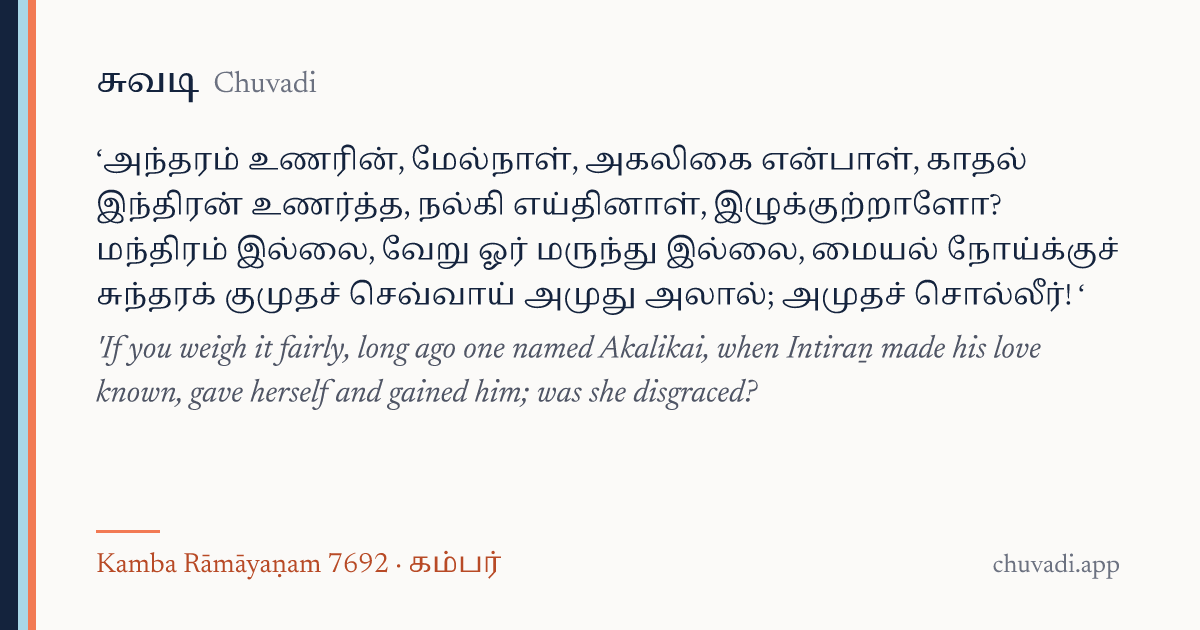
பாடல் · The poem
Tap a word to see its gloss in the commentary and where else it occurs.
பொருள் · Meaning in Tamil
அமுதம் போன்ற இனிய சொல்லை உடையவரே! அந்தரம் உணரின் - நடு நிலைமையோடு எண்ணிப் பார்த்தால்; மேல்நாள் - முன் ஒரு காலத்தில்; அகலிகை என்பாள் - அகலிகை என்ற பெயர் உடையவள்; காதல் இந்திரன் உணர்த்த - தனது காதலை இந்திரன் உணர்த்த; நல்கி எய்தினாள் - அவனுக்குத் தன்னைக் கொடுத்து இன்பம் அடைந்தாள்; இழுக்குற்றாளோ - அதனால் அவள் தாழ்நிலையை அடைந்தாளோ? (இல்லையல்லவா?) மையல் நோய்க்கு - என்னுடைய காமமாகிய நோயைப் போக்குவதற்கு; சுந்தரக் குமுதச் செவ்வாய் அமுது அலால் - அழகிய குமுதமலர் போன்ற உமது சிவந்த வாய் அமுதமல்லது; வேறு மந்திரம் இல்லை ஓர் மருந்து இல்லை - வேறு மந்திரமும் இல்லை ஒப்பற்ற வேறு மருந்தும் இல்லை.
பெண்டிர் பிற ஆடவருடன் கூடல் தவறு இல்லை என்பதை வலியுறுத்த இராவணன் அகலிகை கதையைக் குறிப்பிடுகின்றான். அகலிகை பற்றிய கம்பர் கருத்தோவியம் அகலிகைப் படலத்துள் காண்க. (பாலகாண்டம் ஒன்பதாம் படலம்.) நோயைப் போக்கவல்லன மந்திரம் மருந்து மணி என்பன. இரண்டைக் கூறி மணியை உபலட்சணத்தால் பெற வைத்தார். அந்தரம் - நடுநிலைமை.
ஆங்கிலம் · English translationAI
Translation
- 'If you weigh it fairly, long ago one named Akalikai, when Intiraṉ
- made his love known, gave herself and gained him; was she disgraced?
- There is no spell, no other medicine for the sickness of desire
- but the nectar of your lovely red mouth like a lily; you whose words are nectar!'
What the poem says
Irāvaṇaṉ twists an old story to his purpose. Akalikai (Ahalyā), the sage Kautama's wife, yielded to the god Intiraṉ; he claims she suffered no lasting disgrace, so Cītai need not fear either. Only her kiss, he says, can cure him; no spell or medicine will do. The poet tells Akalikai's true story, with its curse and redemption, in the Pāla Kāṇṭam.