



கம்பராமாயணம் 7696 · யுத்த 16.20
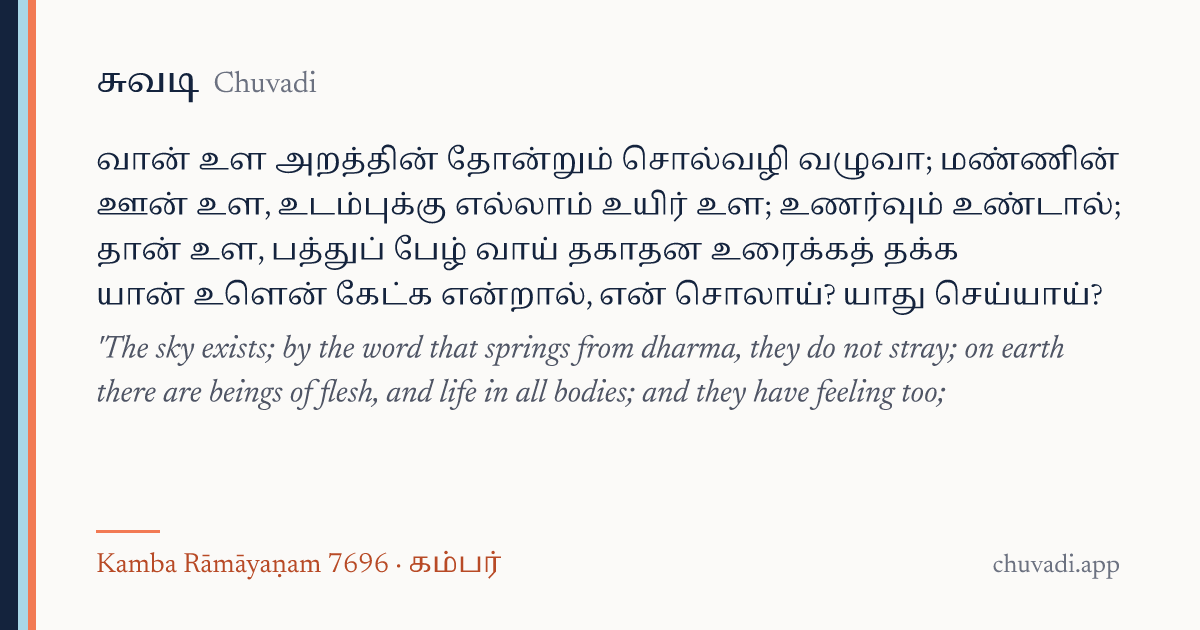
பாடல் · The poem
Tap a word to see its gloss in the commentary and where else it occurs.
பாட வேறுபாடு · Project Madurai reads
பொருள் · Meaning in Tamil
வான் உள - வானம் உளது; அறத்தின் தோன்றும் சொல் வழி - அறத்திற்கு உட்பட்டுத் தோன்றும் சொல்லின் படி; மண்ணின் வாழும் ஊன் உள - நிலவுலகில் வாழும் தசையால் போர்த்தி உள்ள; உடம்புக்கு எல்லாம் உயிர் உள - உடம்பு படைத்தவைகளுக்கு எல்லாம் உயிர் உள்ளன; உணர்வும் உண்டு - அவைகளுக்கு நல்லுணர்வும் உண்டு, (எனினும் அவை உன்னைப் போல் நடந்து கொள்வதும் பேசுவதும் இல்லை); தகாதன உரைக்கத்தக்க - உனக்குத் தகுதி இல்லாத சொற்களைச் சொல்லுவதற்கு; பத்துப் பேழ்வாய் தான் உள - பிளவுபட்ட பத்துவாய்கள் உள்ளன; கேட்க யான் உளன் - நீ சொல்லும் கொடிய சொற்களைக் கேட்க நான் உள்ளேன்; என்றால் - என்றால்; என் சொலாய் - எதைத்தான் (நீ) சொல்லமாட்டாய்; யாது? செய்யாய் - எதைத்தான் செய்ய மாட்டாய்.
தகாதன - இராவணன் கூறிய சொற்களைத் திருப்பிச் சொல்லக் கூச ஆவி குலைவுறும் நிலையில் கூறியது. உடம்பு - உடம்புள்ளவைகளுக்கு; ஆகு பெயர், தான் - அசை.
ஆங்கிலம் · English translationAI
Translation
- 'The sky exists; by the word that springs from dharma, they do not stray; on earth
- there are beings of flesh, and life in all bodies; and they have feeling too;
- yet you have ten gaping mouths to speak what is unfit,
- and I am here to hear it; what will you not say? What will you not do?'
What the poem says
Cītai contrasts Irāvaṇaṉ with the rest of creation. The heavens and all living beings on earth have sense and follow the law of dharma, but he has ten great mouths to pour out obscenities, and she is forced to listen. There is nothing he would not say or do.