



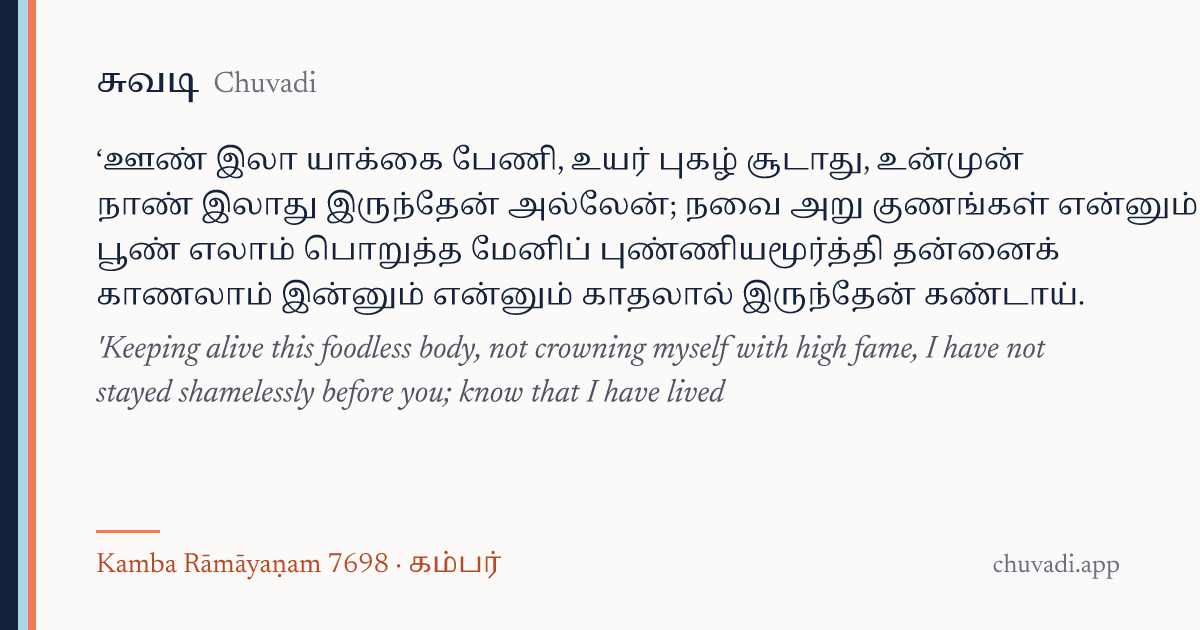
கம்பராமாயணம் 7698 · யுத்த 16.22
பாடல் · The poem
Tap a word to see its gloss in the commentary and where else it occurs.
பொருள் · Meaning in Tamil
ஊண் இலா யாக்கை பேணி - உணவு இன்றி இளைத்த உடம்பைக் காப்பாற்றிக் கொண்டு; உயர் புகழ் சூடாது - (கணவனைப் பிரிந்த உடன் இறந்தாள் என்னும்) பெரும் புகழ் பெறாது; உன்முன் நாண் இலாது இருந்தேன் அல்லேன் - உன் முன்னிலையில் நாணம் இல்லாது இருந்தேன் அல்லேன்; நவை அறுகுணங்கள் என்னும் - குற்றம் அற்ற பண்புகள் என்கிற; பூண் எலாம் பொறுத்த மேனி - அணிகலன்களை எல்லாம் தாங்கிய திருமேனியனும்; புண்ணிய மூர்த்தி தன்னைக் - புண்ணிய வடிவினனுமான இராமன் தன்னை; இன்னும் காணலாம் என்னும் - இன்னும் கண்ணால் காணலாம் என்னும்; காதலால் இருந்தேன் கண்டாய் - ஆசையால் உயிரோடு இருந்தேன் கண்டாய்.
உயர் புகழ் - கணவனைப் பிரிந்த உடன் இறந்து அதனால் பெரும் சிறந்த புகழ். “குணங்களை என் கூறுவது கொம்பினைச் சேர்ந்து அவை உய்யப் பிணங்குவன” (கம்ப. 683) எனப் பிராட்டியின் குணச் சிறப்பைக் கூறிய கம்பர் ஈண்டு பிராட்டியின் சொல் மூலம் பிரானின் குண நலம் சுட்டுகிறார் “நினைவு அருங்குணங் கொடன்றோ இராமன் மேல் நிமிர்ந்த காதல்” (கம்ப. 2339) என்பதையும் உன்னுக. மூர்த்தி - வடிவம். யாக்கை - தொழிலாகுபெயர். இலாது - எதிர்மறை வினையெச்சம்.
ஆங்கிலம் · English translationAI
Translation
- 'Keeping alive this foodless body, not crowning myself with high fame,
- I have not stayed shamelessly before you; know that I have lived
- in the longing that I may yet see that holy form
- whose body bears all the ornaments called flawless virtues.'
What the poem says
Cītai explains why she has not ended her life, which would have won the high fame of a wife who dies on losing her husband. It is not shamelessness; she endures, starving, only in the hope of seeing Irāmaṉ again, whose body is adorned with every perfect virtue as with jewels.