



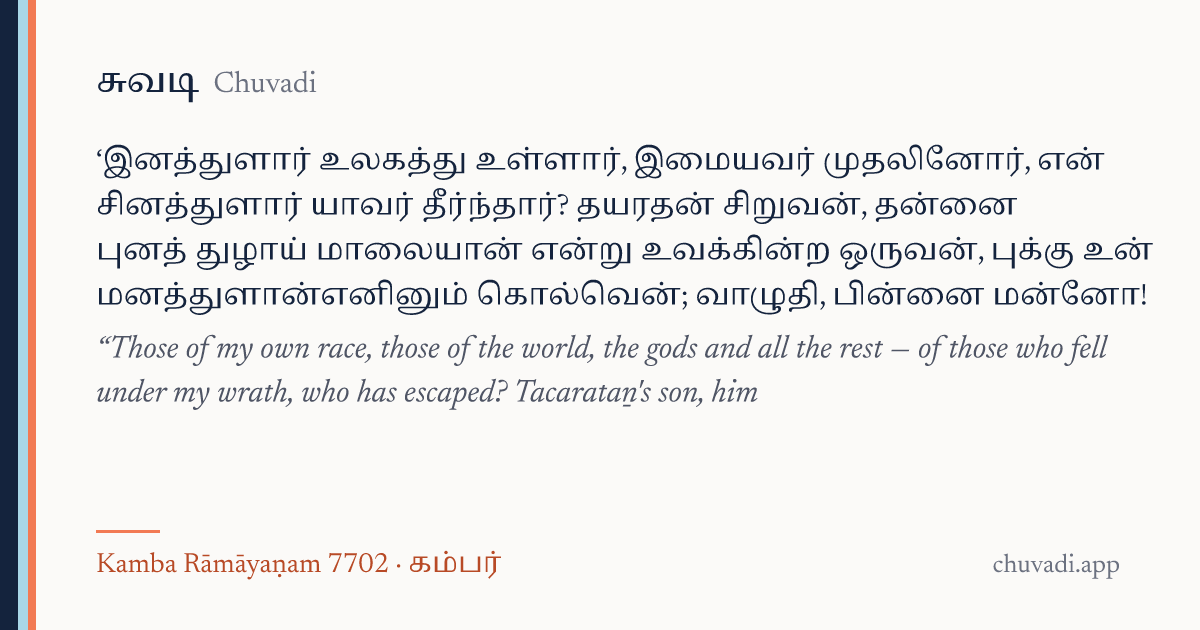
கம்பராமாயணம் 7702 · யுத்த 16.26
பாடல் · The poem
Tap a word to see its gloss in the commentary and where else it occurs.
பொருள் · Meaning in Tamil
இனத்துளார் - அரக்கர் இனத்தில் உள்ளவரும், உலகத்து உள்ளார் - இந்நில உலகத்துள்ள மனிதரும்; இமையவர் முதலினோர் - தேவர் முதலியவர்களும்; என் சினத்துளார் யாவர் தீர்ந்தார் - என் சினத்துக்கு இலக்கானவர் யாவர் உயிர் தப்பிப் பிழைத்தார்கள்; தசரதன் சிறுவன் தன்னை - தசரதன் மகனாகிய இராமன் தன்னை; புனத்துழாய் மாலையான் என்று உவக்கின்ற - துழாய் மாலையை அணிந்த திருமால் என்று சொல்லி மகிழ்கின்ற; ஒருவன் புக்கு - ஒருத்தன் புகுந்து; மனத்துளான் எனினும் கொல்வென் - உன் மனத்தில் கரந்து உறைவான் எனினும் (அவனைக்) கொல்வேன்; பின்னை வாழுதி மன்னோ - பின்பு அவனோடு வாழ்வாய்.
இனத்துளார் - அரக்க இனத்தவர், “விழி எதிர் நிற்றியேல் விளிதி” கம்ப. 6372. என்று தனக்கு அறிவுரை கூறிய தம்பியைப் பார்த்து இராவணன் கூறியது கொண்டு அவன் தனக்கு மாறுபட்டுச் செல்லும் தன் இனத்தாரையும் அழிப்பவன் என உணரலாம். தசரதன் சிறுவன் தன் வலி மெச்சிப் பகைவலி இகழ்தல் குறித்து வந்தது.
ஆங்கிலம் · English translationAI
Translation
- “Those of my own race, those of the world, the gods and all the rest — of those
- who fell under my wrath, who has escaped? Tacarataṉ's son, him
- whom they rejoice in calling the one with the garland of wild tulasi — even if he enters
- and hides in your heart, I will kill him; then live with him, if you can!”
What the poem says
Irāvaṇaṉ boasts that no one who has drawn his anger has survived, whether demons of his own race, men of the earth or the gods. Irāmaṉ is praised by others as Viṣṇu, wearer of the tulasi garland, but even if he hid inside Cītai's own heart, Irāvaṇaṉ says, he would kill him there. Only after that, he sneers, may she live with him. Calling Irāmaṉ merely “Tacarataṉ's boy” belittles the enemy while praising his own strength.